

Clinically reviewed by Kerry Andrek, Clinical Director
When I was trying to figure out which level of care I needed, I made the mistake almost everyone makes. I read the names, I tried to interpret them literally, and I picked the one that sounded like the right amount of effort. Partial hospitalization. Intensive Outpatient Program. OK. Half a hospital. That sounds like half as much.
It wasn’t half as much. It was a different thing entirely. And I had picked wrong because I didn’t understand what the difference actually meant for my life.
If you’re trying to decide between a partial hospitalization program (PHP) and an intensive outpatient program (IOP), here’s what the levels actually look like in practice and how to know which one fits.
How PHP and IOP Are Similar
PHP and IOP are both structured outpatient treatment programs. You return home after each day of treatment. Neither program requires an overnight stay.
Both programs combine individual therapy, group therapy, psychiatric care when needed, and evidence-based treatment. Both serve people who need more support than weekly therapy but don’t require 24-hour supervision.
That’s where the similarities stop.
The biggest differences involve treatment hours, clinical intensity, and the amount of structure built into each week. Those factors determine which program offers the right level of support.
The Real Difference Between PHP and IOP
Both programs help people recover. They simply meet different clinical needs.
Hours Per Week
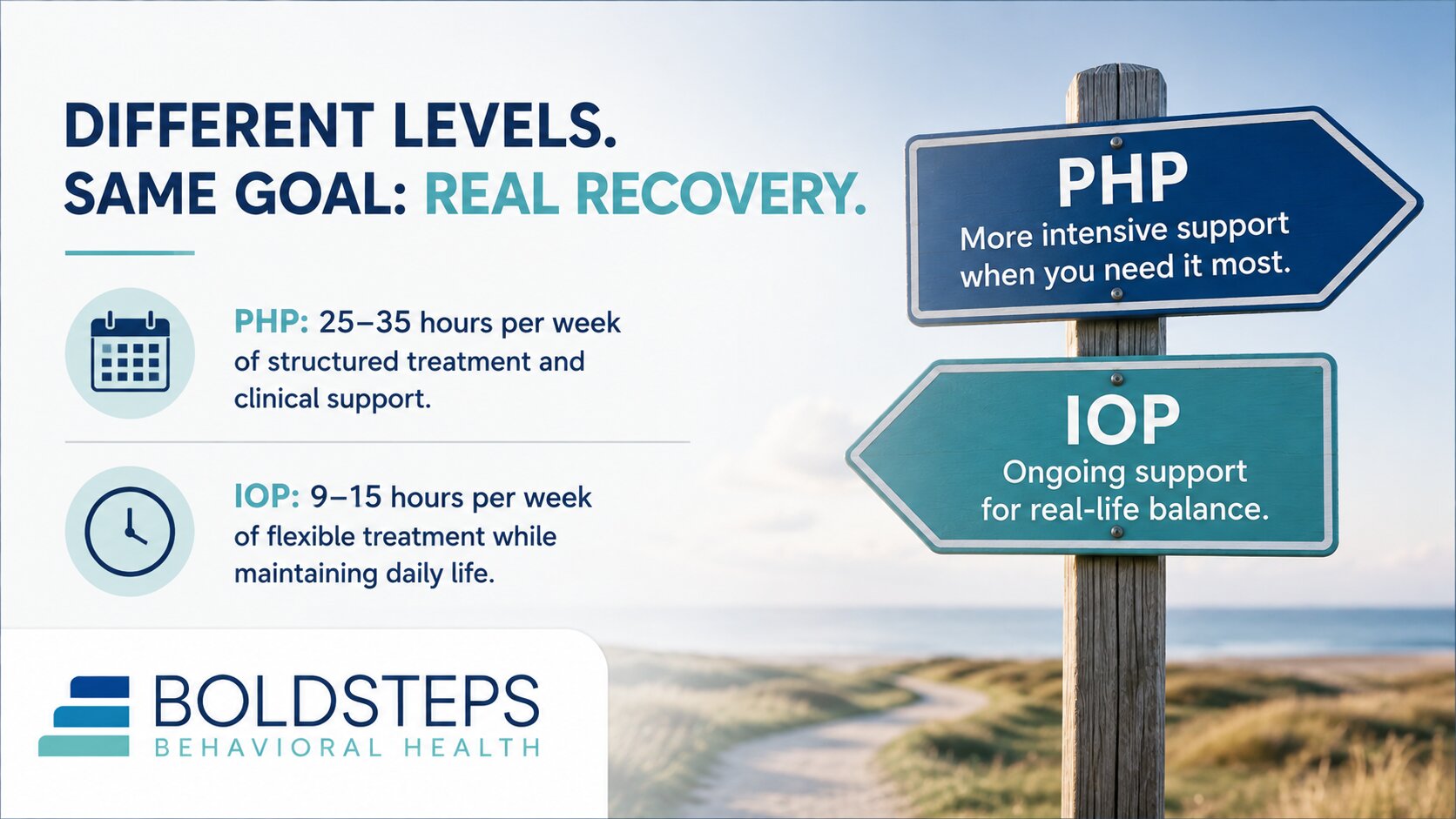
PHP provides the highest level of outpatient care. Most programs meet five days a week for several hours each day. Weekly treatment usually totals 25 to 35 hours.
IOP typically meets three to five days each week for about three hours per session. Most people spend 9 to 15 hours in treatment weekly.
Think of PHP as a full-time commitment. Think of IOP as a structured part-time schedule.
Clinical Support
Both programs include therapy, skills training, and medication management when appropriate.
PHP offers more frequent clinical contact. Clients spend more time with therapists, psychiatrists, and treatment staff throughout the week. That additional support helps people whose symptoms remain unstable or who recently completed inpatient care.
IOP provides regular clinical support while encouraging greater independence between sessions.
Daily Structure
Both programs allow you to live at home or in supportive housing.
PHP becomes the foundation of your weekly routine. Most of your daytime hours revolve around treatment.
IOP leaves more room for work, school, parenting, and other responsibilities while still providing consistent clinical care.
Insurance and Cost
PHP usually costs more because it includes more treatment hours.
Most major insurance plans cover both PHP and IOP when they are medically necessary. Your treatment needs should determine the level of care—not cost alone.
Who Benefits Most From PHP?
PHP works best for people who need significant structure without inpatient hospitalization.
Common reasons someone starts PHP include:
- Recent discharge from inpatient or residential treatment
- Symptoms that significantly interfere with daily functioning
- Co-occurring mental health and substance use disorders
- High relapse risk requiring frequent clinical support
- Ongoing medication management and close psychiatric oversight
Bold Steps’ Partial Hospitalization Program provides daily therapy, psychiatric care, and structured support designed for people who need intensive outpatient treatment.
Who Benefits Most From IOP?
IOP works well for people who need consistent support while maintaining daily responsibilities.
Common reasons someone starts IOP include:
- Weekly therapy no longer provides enough support
- Stable enough to live independently between sessions
- Working, attending school, or caring for family during treatment
- Transitioning from PHP
- Early recovery that benefits from regular clinical contact
Bold Steps’ intensive outpatient program combines therapy, skills training, and ongoing clinical support with a schedule that fits everyday life.
How PHP and IOP Work Together
Many people begin treatment in PHP and transition to IOP as symptoms improve.
This step-down approach maintains clinical support while gradually increasing independence.
Others begin in IOP and move temporarily into PHP if symptoms become more severe.
Neither program is “better.” Each serves a different purpose. Your needs determine the right starting point.
A quality treatment program evaluates your current symptoms and recommends the level of care that fits today. It also adjusts your treatment plan as your needs change.
Questions to Ask Before Choosing a Program
Ask these questions during your admissions call:
- What does a typical week look like in PHP and IOP?
- How do you decide which level of care I need?
- Can I move between levels if my symptoms change?
- How often will I meet individually with a therapist?
- Will you coordinate care with my psychiatrist, therapist, or primary care provider?
- Which insurance plans do you accept?
The answers reveal whether a program tailors treatment to each person or simply fills available spots.
FAQs About PHP and IOP
Can You Work or Go to School While in IOP?
Many people do. IOP is typically scheduled during morning or evening hours to accommodate work and school schedules. PHP, by contrast, is usually a full-day commitment and is harder to combine with outside responsibilities during the program period.
How Long Do Most People Stay in PHP Before Stepping Down?
It varies. Some people step down to IOP after a few weeks. Others stay in PHP for several months. The length of stay depends on symptom severity, progress in treatment, and the stability of the person’s support system outside the program.
Is PHP Covered by Insurance?
Most major insurance plans cover PHP when it is deemed medically necessary. Coverage varies by plan and provider. The admissions team at any program should be able to verify your benefits and explain your out-of-pocket costs before you commit.
If You Don’t Know Which One, That’s the Right Question to Bring to Admissions
You don’t have to figure this out on your own. The choice between PHP and IOP is a clinical decision, and it should be made with a treatment team that has actually evaluated your situation.
Reach out to our admissions team and we can talk through what you’re experiencing, what your week looks like, and which level of care is the right fit for where you are right now. If the answer is neither, we’ll tell you that too. Serving Merrimack, Hillsborough, Nashua and Essex County with convenient locations that make quality care accessible close to home.
The point isn’t to start at the highest level. The point is to start at the right level. Call (603) 915-4223 to explore personalized treatment options and begin your recovery journey.