

Medically reviewed by Kerry Andrek, Clinical Director
If you’re searching for meth withdrawal symptoms, you may be preparing to stop using methamphetamine or trying to understand what happens after someone quits. It’s normal to feel uncertain about what lies ahead. Many people worry they’ll be overwhelmed by withdrawal or that they’ll never feel like themselves again.
If you’re considering treatment, learning more about stimulant addiction treatment can help you understand the support available before withdrawal begins. One important thing to know is that meth withdrawal is often more psychologically challenging than physically dangerous. That doesn’t mean it’s easy—it means the emotional symptoms deserve just as much attention as the physical ones.
Understanding the timeline and knowing when to seek support can make the recovery process feel more predictable and less frightening.
Meth Withdrawal Symptoms
Methamphetamine changes how the brain produces and uses dopamine, a chemical involved in motivation, reward, and pleasure. When meth use stops, dopamine levels drop dramatically, leaving the brain temporarily unable to function as it normally would.
This is why withdrawal is often characterized by emotional and cognitive symptoms rather than severe physical illness.
Physical Symptoms
Although generally milder than alcohol or opioid withdrawal, physical symptoms can include:
- Extreme fatigue
- Sleeping much longer than usual (hypersomnia)
- Increased appetite
- Muscle aches
- Headaches
- Low energy
- Slowed movement
Many people spend much of the first few days sleeping as their body begins to recover.
Psychological Symptoms
For many individuals, the emotional symptoms are the most difficult part of methamphetamine withdrawal.
Common symptoms include:
- Depression
- Anxiety
- Irritability
- Intense meth cravings
- Difficulty concentrating
- Mental fog
- Lack of motivation
- Emotional numbness
- Inability to enjoy normally pleasurable activities (anhedonia)
These symptoms are a major reason relapse often occurs. The desire to escape emotional pain—not simply physical discomfort—can become overwhelming without support.
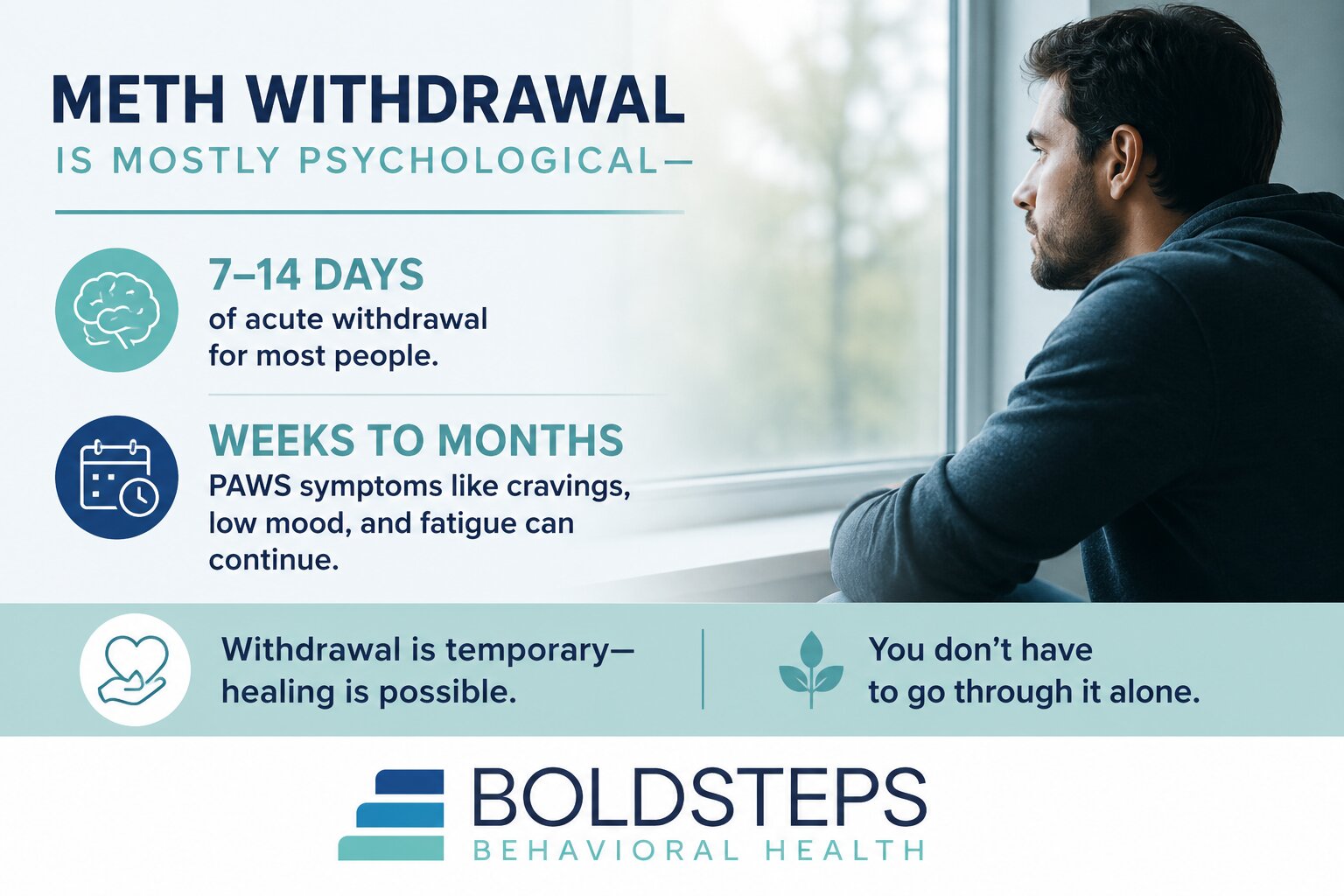
Meth Withdrawal Timeline
Recovery varies from person to person, but most people experience withdrawal in recognizable phases.
Phase |
What You May Experience |
|---|---|
| Crash (Days 1–3) | Extreme fatigue, sleeping for long periods, depression, increased appetite, low energy, intense exhaustion. |
| Acute Withdrawal (Days 4–14) | Persistent depression, anxiety, cravings, sleep disruption, irritability, mood swings, difficulty concentrating. |
| Subacute Recovery (Weeks 2–4+) | Physical energy gradually improves, but cravings, reduced motivation, emotional ups and downs, and anhedonia may continue. Some individuals experience symptoms similar to post-acute withdrawal. |
Everyone heals at a different pace. Factors such as length of meth use, amount used, overall health, co-occurring mental health conditions, and available support all influence recovery.
Why the Crash Is Mostly Psychological—and Why That Matters
Unlike withdrawal from alcohol or some sedative medications, meth withdrawal usually does not cause life-threatening physical complications.
Instead, the greatest challenge is often the psychological crash.
When dopamine levels suddenly fall, everyday activities may no longer feel rewarding. Simple tasks such as getting out of bed, eating, or talking with other people can feel incredibly difficult.
Many people describe feeling:
- Emotionally empty
- Hopeless
- Unable to experience pleasure
- Overwhelmingly tired
- Disconnected from life
These experiences are medical symptoms of withdrawal—not signs that recovery is impossible.
A Safety Note About Depression
During the crash phase, some people experience thoughts of hopelessness or suicidal thinking. This can happen because the brain is temporarily struggling to regulate mood as it adjusts to functioning without methamphetamine.
If suicidal thoughts develop during meth withdrawal, treat them as a medical symptom rather than something you have to manage alone. Reach out to a healthcare professional immediately or call or text 988 if you are in the United States. If you are outside the U.S., contact your local emergency services or your country’s mental health crisis service as soon as possible.
Most importantly, remember that these feelings can improve with treatment and support.
When Medical Support Helps
Although there is no single medication approved specifically to eliminate meth withdrawal, professional care can make recovery significantly more manageable.
Medical support may include:
- Monitoring your physical and emotional health
- Treating sleep problems
- Managing depression or anxiety symptoms when appropriate
- Providing nutritional support and hydration
- Offering 24-hour supervision during the most difficult phase
- Helping manage cravings
- Connecting you with counseling and ongoing recovery services
Professional treatment also reduces the likelihood of returning to meth simply to make withdrawal symptoms stop.
Structured care provides stability during a time when motivation and decision-making are often at their lowest.
Getting Support Before Withdrawal Begins
Many people wait until withdrawal feels unbearable before asking for help.
Whenever possible, it’s better to reach out before stopping meth. Planning ahead gives your treatment team the opportunity to develop a safe, individualized approach and prepare you for what to expect during each stage of recovery.
Recovery isn’t about proving how much discomfort you can tolerate. It’s about giving yourself the best chance to heal.
If you’re thinking about stopping methamphetamine, learn more about stimulant addiction treatment or call (603) 915-4223 to speak with the team at Bold Steps NH about your options. For those in Rockingham, Merrimack, Hillsborough, or Essex County, our nearby locations ensure care is always within reach.
Frequently Asked Questions
How long does meth withdrawal last?
The most intense phase usually occurs during the first one to two weeks. Fatigue often improves after several days, while depression, cravings, and reduced motivation may continue for several weeks. Some people experience lingering psychological symptoms beyond the first month.
Is meth withdrawal dangerous?
Meth withdrawal is generally not medically dangerous in the same way that alcohol or benzodiazepine withdrawal can be. However, the psychological symptoms—including severe depression and intense cravings—can be serious and may require professional support.
Is there medication for meth withdrawal?
There is currently no FDA-approved medication specifically for meth withdrawal. However, healthcare providers may recommend medications to help manage symptoms such as depression, anxiety, or sleep disturbances while providing counseling and ongoing support.