

Medically reviewed by Kerry Andrek, Clinical Director
You leave your EMDR appointment expecting to feel lighter, but instead you’re exhausted. Later that evening, old memories seem closer to the surface than they did before your session. You may even have unusually vivid dreams or find yourself feeling emotional over something that normally wouldn’t bother you.
If you’ve been searching for EMDR side effects, you’re not alone.
Many people worry that feeling different after a session means something went wrong or that therapy is making them worse. In reality, most after EMDR session side effects are temporary signs that your brain is continuing to process the work you began in therapy—not evidence that treatment has failed.
If you’re considering treatment, learning more about EMDR therapy can help you understand how the process works before your first appointment.
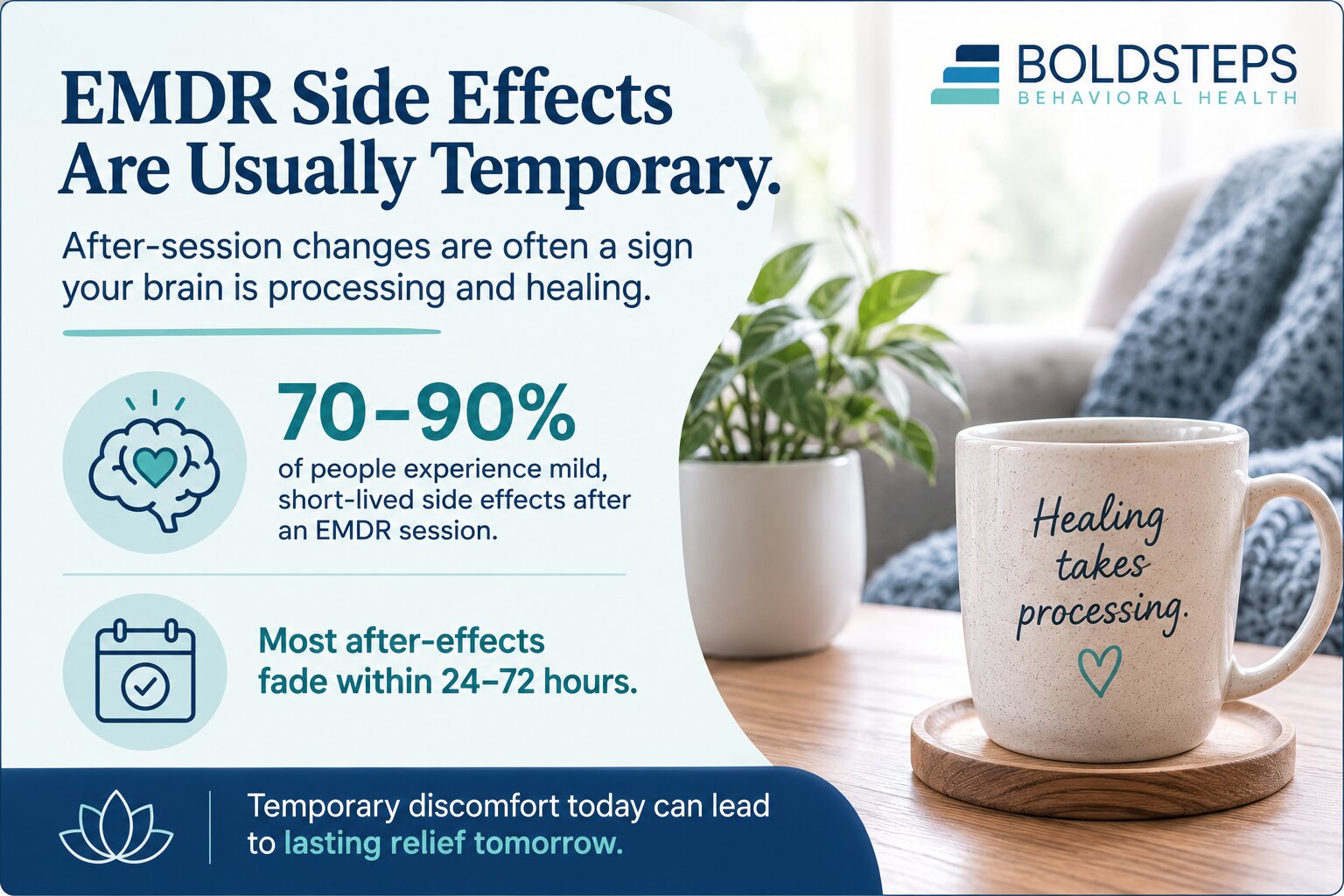
The key distinction is this: EMDR side effects are usually temporary after-effects of processing, not the same thing as treatment risks or dangers. Most people experience mild, short-lived changes that gradually settle as the brain integrates difficult memories.
Understanding what to expect after EMDR can make those temporary changes feel much less frightening.
Common EMDR After-Session Effects: Physical
EMDR (Eye Movement Desensitization and Reprocessing) asks your brain to revisit and reprocess memories that may have remained emotionally “stuck” for months or years.
That takes work.
Just as you might feel physically tired after an intense workout, your brain and nervous system may need time to recover after an emotionally demanding therapy session.
Fatigue
One of the most common EMDR after effects is simple exhaustion.
Many people describe feeling:
- Sleepier than usual
- Mentally drained
- Less motivated for the rest of the day
- Ready for an earlier bedtime
EMDR fatigue after session appointments is extremely common because the brain is actively organizing and integrating information.
Mild Headache
Some individuals experience:
- Mild headaches
- Pressure around the forehead
- Eye strain
- Neck or shoulder tension
These symptoms are generally short-lived and often improve with hydration, rest, and avoiding overstimulation.
A Feeling of Heaviness
Some people notice a temporary sense of physical heaviness throughout their body.
This isn’t usually dangerous. Instead, it can reflect emotional processing and nervous system regulation after working through difficult memories.
Brief Dizziness
Occasionally, people experience mild dizziness or feeling “a little off” immediately after a session.
This generally resolves quickly, especially after eating, drinking water, and allowing yourself time to transition before returning to work or other responsibilities.
For most people, these physical symptoms are mild and improve within 24 to 48 hours.
Common EMDR After-Session Effects: Emotional
Physical symptoms are only part of the picture.
Because EMDR focuses on emotionally significant memories, it’s common for emotional processing to continue after you leave your therapist’s office.
Feeling Emotionally Tender
Many people describe feeling emotionally “raw.”
You might:
- Cry more easily
- Feel unusually sensitive
- Need extra quiet time
- Feel emotionally vulnerable
This doesn’t necessarily mean you’re getting worse.
It often means your brain is continuing the work it started during therapy.
Unexpected Emotions
Old memories sometimes unlock emotions that have been buried for years.
You may notice:
- Sadness
- Grief
- Anger
- Anxiety
- Relief
- Compassion for your younger self
It’s not unusual for several emotions to appear in the same day.
Vivid Dreams
Dreams often become more detailed or emotionally intense following EMDR sessions.
Some people dream about:
- Past experiences
- People connected to traumatic memories
- Symbolic situations
- Completely unrelated stories that still feel emotionally meaningful
Dream activity can be part of ongoing memory processing between appointments.
Temporary Increase in Intrusive Thoughts
This is one of the experiences that worries people most.
Some memories may temporarily feel more noticeable before they begin losing their emotional intensity.
This isn’t usually a sign that trauma is becoming stronger.
Instead, it’s often part of how the brain reorganizes memories during treatment.
Your therapist expects this possibility and can help you understand what’s happening if it occurs.
How Long Do EMDR Side Effects Last?
One of the biggest questions people ask is how long these changes should continue.
Fortunately, most EMDR side effects are temporary.
Physical After-Effects
Physical symptoms like:
- Fatigue
- Mild headache
- Muscle tension
- Feeling mentally drained
often improve within several hours or by the following day.
Emotional After-Effects
Emotional changes may last a little longer.
It’s common for emotional processing to continue for 24 to 72 hours after a session.
Some people notice gradual changes throughout the week, including:
- New insights
- Reduced emotional intensity around memories
- Different perspectives on past experiences
- Increased emotional awareness
This ongoing processing is often a healthy part of treatment.
What Is Not Normal?
While temporary discomfort is expected, there are situations that deserve additional support.
Contact your therapist if symptoms:
- Continue becoming more intense instead of gradually settling
- Last longer than about a week without improvement
- Interfere significantly with daily functioning
- Feel frightening or unsafe
Your therapist wants to know if something feels different than expected.
Reaching out isn’t “bothering” them—it’s part of the therapeutic process.
How to Manage EMDR After-Effects
You don’t have to simply wait for the feelings to pass.
Several strategies can make recovery after a session much more manageable.
Prioritize Rest
Avoid scheduling demanding activities immediately after therapy whenever possible.
Give yourself permission to slow down.
Stay Hydrated
Drinking water throughout the day can help if you’re experiencing mild headaches or fatigue.
Gentle Movement
Rather than intense exercise, consider:
- Walking
- Gentle stretching
- Yoga
- Spending time outdoors
Movement can help regulate the nervous system without overwhelming it.
Journal
Writing about your thoughts can help organize emotions that continue surfacing after your appointment.
You don’t need to analyze every feeling.
Simply noticing what comes up can be helpful.
Practice Grounding Skills
Use the coping techniques you’ve learned in therapy.
These may include:
- Deep breathing
- Naming objects around the room
- Sensory grounding
- Progressive muscle relaxation
Use Your “Safe Place” or Container Exercise
Many EMDR therapists teach visualization techniques before beginning trauma processing.
Your “safe place” or container exercise is designed specifically for moments when emotions continue between sessions.
Using these exercises exactly as your therapist recommends can help your nervous system settle.
Avoid Major Decisions
Because emotions may temporarily feel heightened, it’s usually wise to postpone major life decisions immediately after an EMDR appointment.
Give yourself time for processing before making choices about relationships, work, finances, or other significant changes.
Normal After-Effect vs. When to Call Your Therapist
This is one of the most important distinctions to understand.
Usually Normal After-Effects
These commonly improve with time:
- Fatigue
- Mild headaches
- Emotional tenderness
- Vivid dreams
- Temporary increase in memories
- Feeling more emotional than usual
- Increased awareness of past experiences
While uncomfortable, these experiences generally indicate that processing is continuing.
Contact Your Therapist If…
Reach out promptly if you experience:
- Symptoms that feel unsafe
- Dissociation that doesn’t resolve with grounding techniques
- Emotional distress that continues escalating
- Feeling completely overwhelmed or unable to function
- Suicidal thoughts
- Any reaction that feels out of control or significantly different from what your therapist prepared you for
You know your own experience best.
If something feels concerning, contacting your therapist is always appropriate.
Clear communication helps your therapist adjust treatment, strengthen coping strategies, and ensure you’re progressing safely.
Getting Started with EMDR
Many people postpone EMDR because they’re afraid they’ll lose control or feel permanently worse after sessions.
Understanding the difference between temporary processing and genuine concerns can make that decision a little less intimidating.
Most people who experience EMDR after effects notice that the discomfort gradually gives way to reduced emotional intensity, greater insight, and a stronger sense of control over memories that once felt overwhelming.
No therapy is entirely free of emotional discomfort—especially one designed to help the brain process painful experiences—but temporary after-effects are not the same as something going wrong.
Working with a trained therapist means you’ll have support before, during, and after every stage of treatment.
If concerns about after-session reactions have been keeping you from exploring EMDR, now you have a clearer picture of what to expect after EMDR and when it’s appropriate to ask for additional guidance.
Frequently Asked Questions
How long do EMDR side effects last?
Most physical side effects, such as fatigue or a mild headache, improve within several hours or by the next day. Emotional after-effects often last between 24 and 72 hours, although some healthy processing may continue between sessions.
Is it normal to feel worse after an EMDR session?
Yes. Some people temporarily feel more emotional, tired, or aware of difficult memories after a session. These experiences are usually part of the brain’s natural processing and are not necessarily signs that therapy isn’t working.
When should I call my therapist after EMDR?
Contact your therapist if symptoms become increasingly intense, persist for more than a week without improvement, feel unsafe, involve dissociation that doesn’t resolve, include suicidal thoughts, or leave you feeling unable to manage daily life.
Final Thoughts
Starting trauma therapy can feel intimidating, especially if you’re worried about how you’ll feel afterward. Knowing that most EMDR side effects are temporary, manageable, and expected can help replace uncertainty with confidence.
Your therapist isn’t expecting you to navigate the process alone. Open communication before and after sessions is an important part of successful treatment. Serving Rockingham, Nashua and Essex County with convenient locations that make quality care accessible close to home.
If you’re considering EMDR or have questions about whether it’s right for you, call (603) 915-4223 or learn about EMDR therapy at Bold Steps NH.