At Bold Steps Behavioral Health, our Intensive Outpatient Program (IOP) in New Hampshire is designed to meet you where you are—offering structured, individualized care without the need for overnight stays. We know that no two people experience behavioral health challenges the same way, which is why our professional team creates treatment plans tailored to your unique needs, background, and goals. Our New Hampshire facilities are committed to providing compassionate, customized support that gives you the best chance at long-term success. To learn more about our Intensive Outpatient Program, call us today at (603) 915-4223.
An Intensive Outpatient Program (IOP) is a non-residential level of care that provides structured, therapeutic treatment several days per week while allowing individuals to live at home. IOP is designed for people who need more support than weekly outpatient therapy, but do not require 24/7 inpatient or residential care.
Key characteristics of an Intensive Outpatient Program include:
IOP offers a balance of clinical intensity and real-world flexibility, making it an effective option for many individuals navigating mental health conditions, substance use concerns, or both.
An Intensive Outpatient Program follows a consistent structure designed to support progress while fitting into daily life. While each treatment plan is individualized, most IOPs include the following components:
The goal is not just symptom relief during treatment, but lasting skills and stability beyond the program.
IOP is most effective when the level of care aligns with a person’s clinical needs, stability, and readiness for treatment. An Intensive Outpatient Program may be a good fit if you meet the following criteria:
Appropriate diagnoses and concerns may include:
Motivation and readiness:
Substance use stability expectations:
When a higher level of care may be more appropriate:
In those cases, Partial Hospitalization Programs (PHP) or inpatient treatment may be recommended before transitioning into IOP.
An IOP, or Intensive Outpatient Program, is a structured treatment program designed for individuals dealing with mental health issues, substance use disorders, or both. It’s a step up from regular outpatient therapy but less intensive than inpatient care, making it a good middle ground for those who need more support while still being able to live at home.
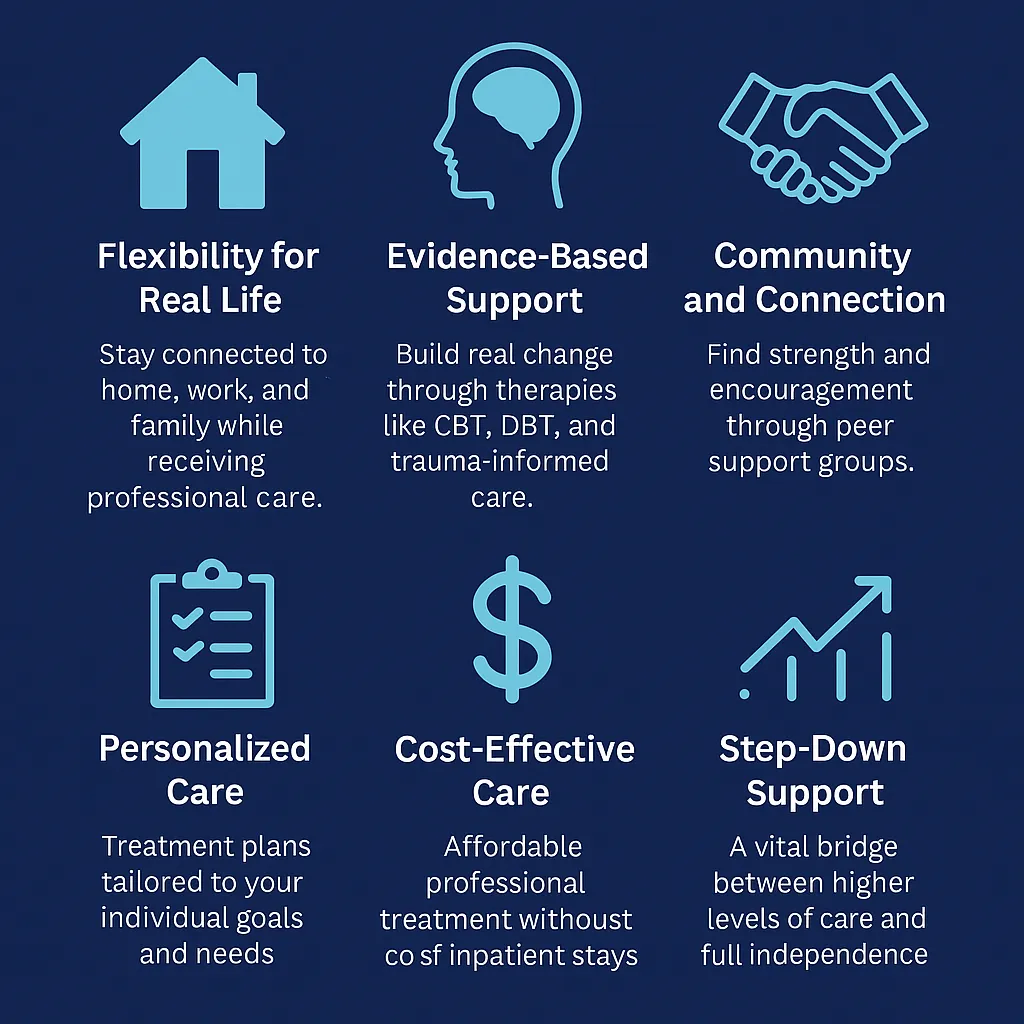
The benefits of an Intensive Outpatient Program (IOP) for behavioral health are numerous, offering a flexible yet effective treatment option for individuals seeking support. Some of the benefits of IOP for behavioral health include the following:
IOPs allow participants to live at home and maintain responsibilities like work, school, or caregiving while receiving treatment.
Sessions are often scheduled in the mornings, evenings, or weekends to fit different schedules.
Programs typically include individual therapy, group therapy, and family sessions, covering multiple aspects of mental health and relationships.
They address a wide range of issues like anxiety, depression, trauma, and substance use.
IOPs provide a structured approach to treatment, which helps participants stay focused on their recovery goals.
Regular check-ins with therapists or counselors help track progress and make adjustments as needed.
Group therapy sessions offer a sense of community and support, reducing feelings of isolation by connecting with others who share similar experiences.
Participants learn coping strategies, communication skills, and relapse prevention techniques that they can use in daily life.
IOPs are generally less expensive than inpatient treatment while still providing a high level of care.
IOPs are a great bridge for those stepping down from inpatient care or as a preventative measure to avoid hospitalization.
The intensive focus on treatment often leads to significant improvements in mental health, emotional regulation, and overall quality of life.
Overall, IOPs empower individuals to work through challenges while maintaining their independence, making them an effective option for many people.
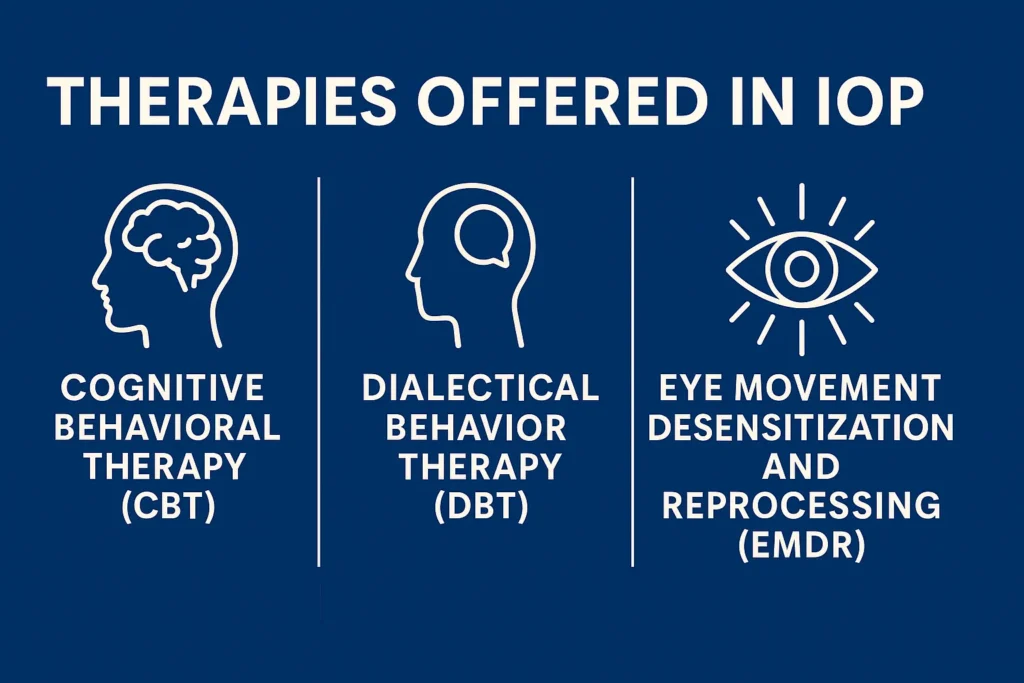
Learn more about the therapy treatment modalities that can make a difference in your recovery.
Intensive Outpatient Programs (IOPs) offer more than therapy. At Bold Steps, we treat the whole person—not just symptoms. This includes mental health disorders, medication needs, family dynamics, and practical recovery skills that support day-to-day life.
It’s common to struggle with both substance use and emotional distress. That’s why our IOP includes care for mental health conditions like depression, anxiety, and bipolar disorder. We believe healing happens faster when you don’t have to separate your treatment goals.
Supportive services may include:
Medication adjustments and medication management
Ongoing check-ins with your treatment team
Referrals for psychiatric evaluation or mental health treatment
You don’t have to hit pause on your life to get help. IOPs offer high-quality care several days per week, while giving you time to care for your responsibilities.
Many clients choose IOP because:
It fits around work, parenting, or school schedules
It’s more flexible than residential treatment but more structured than traditional outpatient therapy
It helps maintain connection to community and support systems
Recovery doesn’t happen in isolation—and it doesn’t end after discharge. Bold Steps provides a continuum of care that bridges levels of support over time, from our partial hospitalization programs to ongoing once-weekly therapy.
Here’s how we maintain your progress:
Collaborative treatment planning
Referrals to residential programs if higher care is needed
Support for family therapy and family counseling
Coordination between your providers, including multidisciplinary team input
We don’t just check boxes—we get personal. Our compassionate care model is rooted in dignity, respect, and evidence-based treatment methods. Clients often tell us they feel truly seen here.
You’ll benefit from:
Flexible scheduling
A supportive environment
A personalized mix of behavioral therapies, peer support, and clinical interventions
At Bold Steps in New Hampshire, we offer a range of IOP plans tailored to meet individual needs. We specialize in dual diagnosis treatment, helping clients manage both mental health challenges and substance use issues simultaneously. Our programs are designed with individualized treatment plans, ensuring each person gets the support and strategies that work best for them. We also emphasize the importance of aftercare planning, providing the tools and resources needed for long-term success once the program ends. It’s all about helping you take bold steps toward a healthier, more balanced life.
An IOP program for behavioral health might be a great fit for you if you’re looking for more support than weekly therapy but don’t need full-time inpatient care. It’s especially helpful if you’re managing challenges like anxiety, depression, or substance use and want a structured approach that still lets you live at home. If you’re motivated to work on your recovery and open to group and individual therapy, an IOP could provide the balance of flexibility and focus you need. It’s all about finding what works best for your goals and lifestyle. Read: PHP vs IOP for more information.
If you’re looking for an intensive outpatient program near Rockingham County, or Merrimack county, NH, Bold Steps Behavioral Health is here to help. Our intensive outpatient program offers a supportive, structured environment for those navigating mental health and substance use challenges. Located right here in New Hampshire, we’re focused on providing personalized care, whether it’s through dual diagnosis treatment, group therapy, or aftercare planning. Reach out to us today, and let’s take the first step together toward a healthier, more balanced life.
National Alliance on Mental Illness. “Mental Health in New Hampshire.” NAMI, Feb. 2021, https://www.nami.org/NAMI/media/NAMI-Media/StateFactSheets/NewHampshireStateFactSheet.pdf.
National Alliance on Mental Illness. “Mental Health in New Hampshire.” NAMI, Feb. 2021, https://www.nami.org/NAMI/media/NAMI-Media/StateFactSheets/NewHampshireStateFactSheet.pdf.
National Alliance on Mental Illness. “Mental Health in New Hampshire.” NAMI, Feb. 2021https://www.nami.org/NAMI/media/NAMI-Media/StateFactSheets/NewHampshireStateFactSheet.pdf.
Mental Health America. “State of Mental Health in America: 2024 Statistics – Ranking the States.” mhanational.org, 29 July 2024, https://www.mhanational.org/issues/2024/ranking-states.
Insurance coverage for Intensive Outpatient Programs in New Hampshire varies based on your provider, plan type, and clinical needs. Understanding how coverage works can help reduce stress and clarify expectations before starting treatment.
Types of insurance commonly used for IOP:
Important insurance considerations:
Factors that influence overall cost include program length, session frequency, insurance coverage details, and individual treatment needs. Our admissions team can help verify benefits, explain coverage, and walk you through your options before treatment begins.
Yes. One of the benefits of IOP is that it offers flexible scheduling. Many clients attend IOP in the mornings or evenings while continuing with work, school, or family responsibilities.
PHP is more intensive and involves longer sessions (typically 6 hours a day). IOP offers similar therapeutic services but with fewer hours per week—usually around 3–4 hours per day.
Most Intensive Outpatient Programs last between 6 to 12 weeks, depending on your clinical needs and personal progress. The exact length of stay is determined in collaboration with your care team.
IOP is a great fit for individuals who are stepping down from inpatient or PHP care—or for those who need structured support while maintaining their daily routines. We offer free assessments to help you determine the right level of care.
Bold Steps Behavioral Health proudly provides Intensive Outpatient Programs (IOP) to individuals throughout New Hampshire. Whether you’re located in a larger city or a nearby town, our care team is ready to support you.
If you’re searching for an IOP in New Hampshire that meets you where you are, Bold Steps can help. Reach out today to learn more.
Friendly Operators are Standing By
You never walk alone. From 1:1 counseling to group talk therapy, we cultivate an environment of compassion and support
We take a holistic view of patients during the recovery process, providing individualized care with an emphasis on comfort and respect.
Recovery touches every part of your life, and we give clients the tools and mindset they need to thrive in work, life, and relationships.