

Structured, daytime treatment programs aren’t just for crisis care. They’re designed for people who need more support than weekly therapy—but don’t require round-the-clock treatment.
You don’t have to be in crisis to need help. You don’t have to hit a rock bottom, get a diagnosis, or call it addiction. Sometimes you just feel… off. Untethered. Like you’re going through the motions without really living.
If that sounds familiar—and you’ve been wondering what kind of support might actually help—there are structured treatment options designed for exactly this in-between space.
One of those options is a partial hospitalization program (PHP), which offers a higher level of support than traditional outpatient care while still allowing you to live at home.
What a PHP Looks Like Day to Day
A partial hospitalization program is a structured, daytime treatment option for people who need more support than weekly therapy, but don’t require 24/7 care.
Programs typically run five days a week for several hours each day, combining group therapy, individual counseling, skill-building, and other evidence-based approaches. At the end of the day, you return home—giving you the ability to stay connected to your daily life while still receiving consistent, meaningful support.
It’s Not Just for People in Crisis
The biggest misconception about PHP is that it’s only for people at their breaking point.
But many people enter PHP without a formal diagnosis. Some are exploring sobriety. Others are dealing with stress, burnout, grief, or anxiety that hasn’t been named yet—but is clearly affecting their quality of life.
You might live in Merrimack County, work full time, and be handling life on the outside just fine. But inside, things feel harder than they used to.
That’s not failure. That’s a signal. And PHP is one way to respond before everything unravels.
How PHP Supports the Sober Curious
If you’re questioning your relationship with alcohol, cannabis, or other substances—but don’t feel like you “need rehab”—you’re not alone.
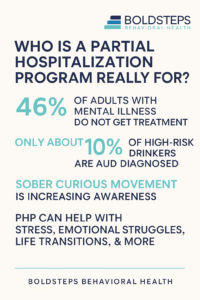
Sober curiosity is a growing movement rooted in reflection, not crisis. PHP gives you space to explore these questions without forcing you into a box or asking you to claim an identity you’re not sure fits.
In PHP, you’ll gain tools to manage emotions, navigate social pressure, and understand what drives your habits. You’ll also learn what calm actually feels like—not just what it looks like to others.
Who Else Can Benefit from PHP?
PHP is incredibly versatile. Here are just a few kinds of people who often find it helpful:
- High-functioning adults feeling emotionally drained. If you’re successful on paper but privately struggling with anxiety, disconnection, or irritability, PHP offers space to recalibrate.
- People going through major life transitions. Whether it’s divorce, a new diagnosis, or an identity shift, PHP can provide structure and support while you figure out your next chapter.
- Folks burned out from therapy that isn’t enough. If 50-minute weekly sessions aren’t cutting it, PHP offers a more immersive level of care that still fits into real life.
- Individuals managing dual challenges. Maybe you’re dealing with trauma and anxiety. Or work stress and substance use. PHP allows you to address multiple layers of your experience—without being reduced to just one.
What a Day in PHP Actually Looks Like
Each day is structured but supportive. You’ll typically experience:
- Morning Check-In: A chance to ground yourself, share how you’re feeling, and set the tone for your day.
- Group Therapy: Facilitated conversations around themes like emotion regulation, boundaries, identity, and communication.
- Skills-Based Sessions: Learn tools like mindfulness and distress tolerance strategies through cognitive behavioral therapy (CBT).
- Individual Therapy: One-on-one support to dig deeper into your unique story.
- Creative or Experiential Practices: Some programs include expressive arts, guided journaling, or meditation practices to support emotional integration.
All of this happens in a safe, non-judgmental environment led by licensed clinicians. And it’s worth noting: many clients say it’s the first time they felt truly seen and supported.
Why PHP Makes Sense for the “In-Between” Phase
Not in crisis, but not okay. That in-between space can feel impossible to explain—and even harder to get help for.
PHP is designed for exactly this. It catches you in the gray area before things escalate. Before anxiety becomes panic. Before burnout becomes breakdown. Before “a few drinks after work” becomes something you can’t stop.
In a culture that pushes people to wait until things are dire, choosing help early is a radical kind of self-respect.
It’s Not Just Therapy—It’s Community
One of the most overlooked benefits of PHP is the community it creates.
You’ll meet people at different stages of reflection, recovery, and healing. You’ll hear stories that make you feel less alone. You’ll have space to show up as you are—without needing to impress or perform.
For many sober curious or emotionally stuck individuals, this sense of belonging is what finally makes change feel possible.
It’s Local, Accessible, and Judgement-Free
If you’re looking for a partial hospitalization program in Rockingham County, NH or Hillsborough County, Bold Steps Behavioral Health in Concord is easily accessible and grounded in real-world support—not shame or pressure.
Whether you’re rethinking your relationship with substances or just need a space to feel like yourself again, you deserve real care. PHP offers that—without waiting for a crisis to give you permission. Call 603-915-4223 today to learn more.
FAQ: Partial Hospitalization Program
What’s the difference between PHP and inpatient treatment?
Inpatient treatment requires you to live at the facility full-time, often for crisis stabilization or detox. PHP lets you return home at night, while still offering intensive, daily therapeutic care. It’s ideal for people who need more than weekly therapy but don’t need 24/7 supervision.
Do I need a diagnosis to join a PHP?
No. While some people enter PHP with existing diagnoses like anxiety, depression, or PTSD, others come in with questions and curiosity. Clinicians will help you explore what’s going on without pressure to fit into a label.
Is PHP only for addiction?
Not at all. While some PHPs do support people dealing with substance use, many (like Bold Steps in Concord) focus on mental and emotional wellness. You don’t need to call yourself an addict or even be sure you want to be sober to participate.
Can I keep working while in PHP?
It depends on your schedule and your employer’s flexibility. PHP typically runs during daytime hours—often 9am to 3pm—so some people take time off or arrange partial leave. It’s worth asking your provider about flexible scheduling options.
How long does PHP last?
The average PHP program lasts 2–4 weeks, though some people stay longer based on their needs. You’ll collaborate with your care team to create a plan that works for your goals and life circumstances.
Will insurance cover it?
Most commercial insurance plans, as well as Medicaid and Medicare, offer coverage for PHP services—especially if your provider documents the clinical need. The admissions team at Bold Steps can walk you through verification and options.
What happens after PHP ends?
Many clients step down into an intensive outpatient program (IOP) or traditional therapy. Others continue working with their individual therapist. The goal of PHP is not just stability—but sustainable momentum for whatever comes next.
📞 Ready to Talk?
Call (603) 915-4223 or visit to learn more about our partial hospitalization program services in Concord, NH. You don’t have to be in crisis to reach out. Sometimes curiosity is the best reason to begin.