

You don’t have to wake up in a hospital.
You don’t have to lose your job.
You don’t have to call yourself an addict.
Sometimes it’s quieter than that.
You notice you’re drinking more on the nights you feel heavy. You rely on something to fall asleep. You feel flat during the day and wired at night. And somewhere in the middle of a normal week, a thought appears:
What if this isn’t just stress?
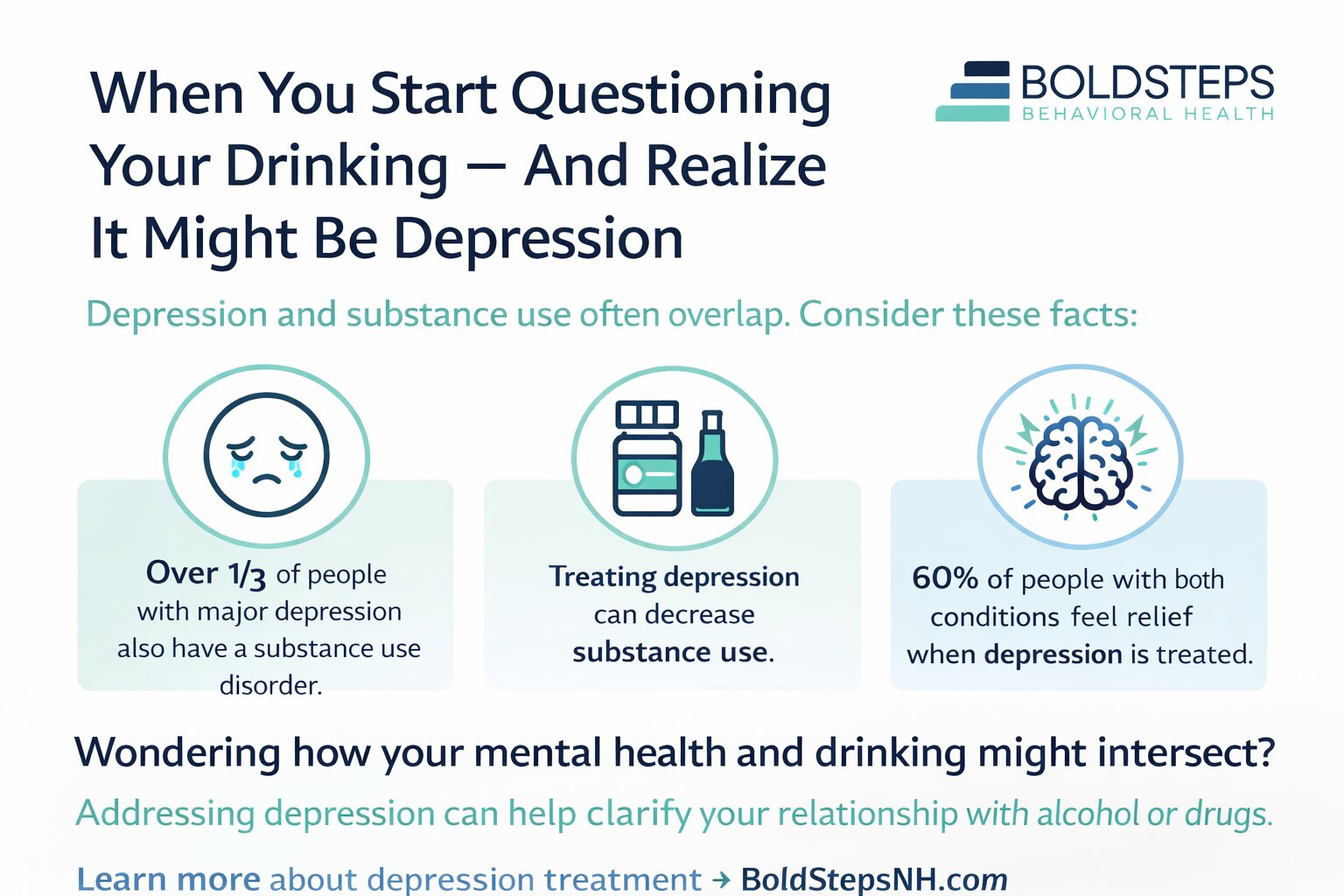
If you’re sober curious — not in crisis, but questioning — exploring support like depression treatment isn’t about slapping on a label. It’s about getting clear.
Here’s how addressing your mental health can shift your relationship with alcohol or drugs in ways you might not expect.
1. You Finally Separate the Mood from the Habit
When depression is untreated, it quietly shapes everything.
You wake up already tired. Small tasks feel heavy. Socializing feels like performance. Your brain looks for relief.
Alcohol can temporarily soften the edges. Some drugs can energize or numb. For a few hours, you feel different.
But when you start working on your mood directly — through therapy, structured daytime care, medication support if appropriate, or multi-day weekly treatment — something important happens:
You get data.
You begin to see what your baseline actually feels like without constantly adjusting it with substances. You can observe your thoughts more clearly. You notice patterns.
Instead of asking, “Do I have a drinking problem?”
You might start asking, “What am I trying not to feel?”
That shift changes everything.
2. You Understand What You’ve Been Self-Medicating
Most sober curious people aren’t chasing chaos. They’re chasing relief.
Relief from:
- Persistent sadness that doesn’t fully lift
- Irritability that makes you feel unlike yourself
- Anxiety that hums under the surface
- Emotional numbness that feels worse than sadness
Depression doesn’t always look dramatic. Sometimes it looks like functioning… but joyless.
When you begin real mental health care, you start naming the underlying pain instead of managing it indirectly. And when the underlying symptoms improve, your relationship with substances often changes naturally.
You may find:
- You don’t crave the same level of escape.
- You drink more intentionally — or less frequently.
- You’re more aware of how substances affect your mood the next day.
It’s not about forcing sobriety. It’s about increasing awareness.
3. Your Nervous System Stabilizes Instead of Swinging
Substances create spikes and crashes.
Alcohol depresses your central nervous system — then anxiety rebounds.
Stimulants increase dopamine — then exhaustion follows.
Even cannabis, for some, can intensify low mood over time.
When depression is treated appropriately, your nervous system begins to regulate more steadily.
You sleep more consistently.
Your energy evens out.
Your emotional reactions soften.
And here’s the part people don’t talk about enough:
When your internal state feels manageable, you stop reaching for emergency exits.
You don’t need to numb what you can tolerate.
4. You Rebuild Pleasure Without the Shortcut
One of the biggest fears in becoming sober curious is this:
What if life gets boring?
If alcohol is how you connect socially…
If drugs are how you access creativity…
If substances are how you relax…
Letting them go, even temporarily, can feel like losing a personality trait.
But untreated depression is what truly flattens life.
When mood improves, something subtle happens. Colors sharpen. Music hits differently. Conversations feel less exhausting. Food tastes better. Laughter comes more easily.
It’s not instant fireworks.
It’s more like the slow return of sensation.
And when real pleasure comes back online, the shortcut loses its power.
5. You Make Decisions from Clarity — Not Shame
Sober curiosity can get tangled in extremes.
“I’m fine.”
“I’m probably worse than I think.”
“I should quit forever.”
“I’m overreacting.”
Depression distorts perception. It amplifies guilt and minimizes hope.
When you address your mental health directly, your decisions become less reactive.
Instead of quitting out of shame or continuing out of denial, you can evaluate:
- How do I actually feel after drinking?
- What happens to my mood the next day?
- Do I like the version of myself I become?
- Is this helping — or complicating my healing?
Clarity feels calm. It’s not dramatic. It’s steady.
And steady is powerful.
6. You Interrupt the Quiet Loop Between Low Mood and Substance Use
For some people, depression and substance use create a feedback loop:
Low mood → use to cope → worsened mood → more use.
It doesn’t always look extreme. Sometimes it looks like:
- Drinking more during emotionally heavy weeks
- Using to fall asleep because your mind won’t shut off
- Feeling extra hopeless the morning after
Addressing the depression underneath can break that loop.
And when both issues need attention, integrated support — when mental health and substance use collide — can provide structure without overwhelm.
At Bold Steps Behavioral Health, we work with individuals who are sober curious, actively using, or somewhere in between. You don’t have to fit into a box to deserve care.
7. You Discover Who You Are Without the Buffer
This is the part people don’t expect.
When the fog lifts, you may realize:
- You’re more sensitive than you thought.
- You’re more anxious in certain environments.
- You’ve been tolerating things that don’t align with you.
- You’re actually more creative, more direct, or more thoughtful than you gave yourself credit for.
Substances can buffer personality. Depression can mute it.
When both are addressed, your authentic self has more room to breathe.
That can feel vulnerable. It can also feel freeing.
8. You Stop Waiting for a Crisis to Justify Change
There’s a quiet belief many people carry:
“I’m not bad enough to get help.”
You don’t have to lose everything to deserve support. You don’t need a dramatic story.
If you’re waking up thinking, I don’t want to feel like this anymore, that’s enough.
Exploring depression treatment is not an admission of failure. It’s an act of curiosity. And curiosity is powerful.
If you’re in New Hampshire and considering support, our team offers structured, compassionate care designed to help stabilize mood and restore clarity. You can explore options for depression treatment services in New Hampshire to see what might fit your life right now.
You don’t need to declare sobriety.
You don’t need to commit to forever.
You just need to be willing to look honestly at what’s underneath.
Frequently Asked Questions
Is it possible that I’m just stressed — not depressed?
Absolutely. Stress, burnout, and depression can overlap. The key difference is duration and depth. If your low mood, irritability, loss of interest, or fatigue has lasted for weeks — and feels heavier than a temporary rough patch — it may be worth evaluating more closely.
You don’t have to self-diagnose. You just have to notice patterns.
If I address my depression, will I have to stop drinking completely?
Not necessarily.
For some people, improving mental health naturally leads to drinking less. For others, it becomes clear that alcohol significantly worsens mood, and reducing or stopping feels aligned.
The goal isn’t to force abstinence. It’s to increase awareness and help you make informed decisions.
What if I don’t think I have a substance problem?
That’s okay.
Being sober curious doesn’t mean you have a diagnosis. It means you’re questioning your relationship with something.
Many people seek depression treatment without identifying as having a substance use disorder. If substance use becomes relevant, it’s addressed thoughtfully — not assumed.
Can therapy really change how I relate to alcohol or drugs?
Yes — because therapy changes how you relate to yourself.
When you understand your triggers, regulate emotions more effectively, and build healthier coping strategies, substances often lose their central role.
It’s less about restriction and more about replacement.
What does treatment actually look like?
Care can vary depending on your needs.
Some individuals benefit from traditional weekly therapy. Others may need more structured support — such as daytime programming several days per week — especially if mood symptoms are significantly interfering with work, relationships, or daily functioning.
The right level of care is determined collaboratively. You’re not dropped into something overwhelming without explanation.
What if I’m scared to look too closely?
That makes sense.
Sometimes substances feel like protective layers. Looking underneath can feel vulnerable.
But clarity is rarely as terrifying as the anticipation of it. And you don’t have to do it alone.
You don’t need a dramatic turning point to deserve steadiness. If you’re sober curious and tired of feeling low, this might be your sign to look beneath the habit — and support your mental health directly.
Call (603)915-4223 or visit our depression treatment services in New Hampshire to learn more about our depression treatment services in New Hampshire.