

A new mental health diagnosis can feel like someone quietly rearranged your entire life overnight.
One appointment turns into a conversation about symptoms, and suddenly you’re holding a prescription or hearing words that feel heavy and unfamiliar. Many people expect relief in that moment—but instead, they feel fear.
If medication feels overwhelming right now, you’re not alone. And you’re not failing treatment by having doubts. Many people begin their healing with conversation, skill-building, and emotional support before deciding what role medication should play in their life.
At Bold Steps Behavioral Health, we often support individuals through that early uncertainty with approaches like DBT-informed therapy support, which focuses on helping people feel more steady, capable, and in control of their emotions.
For many newly diagnosed individuals living in Rockingham County, New Hampshire, or Merrimack County, New Hampshire, having a supportive place to talk through those fears can make the difference between feeling overwhelmed and feeling hopeful.
The Moment Everything Starts to Feel Real
Many people describe the moment of diagnosis as strangely quiet.
It’s not always dramatic. There’s no movie soundtrack playing in the background. Instead, it’s often something simple—a doctor explaining symptoms, a therapist offering clarity, or a conversation that suddenly makes years of confusion make sense.
But clarity can bring a different kind of fear.
You might find yourself wondering:
- What does this diagnosis mean for my future?
- Will medication change my personality?
- What if I feel numb or different?
- What if I depend on it forever?
These questions are incredibly common. In fact, they often show that someone is thinking carefully about their mental health rather than rushing through decisions.
Why Medication Can Feel So Intimidating
For many people, the fear around medication isn’t really about the medication itself.
It’s about identity.
Mental health symptoms can already make you feel like you’re losing control of your thoughts or emotions. The idea of taking something that affects your brain can raise a deeper question:
What if I stop feeling like myself?
Some people worry they’ll feel emotionally flat. Others worry they’ll lose creativity, motivation, or the parts of their personality they value most.
These fears deserve to be taken seriously.
Mental health care should never feel like something being done to you. It should feel like something you’re actively participating in, with time to ask questions, explore options, and move at a pace that feels manageable.
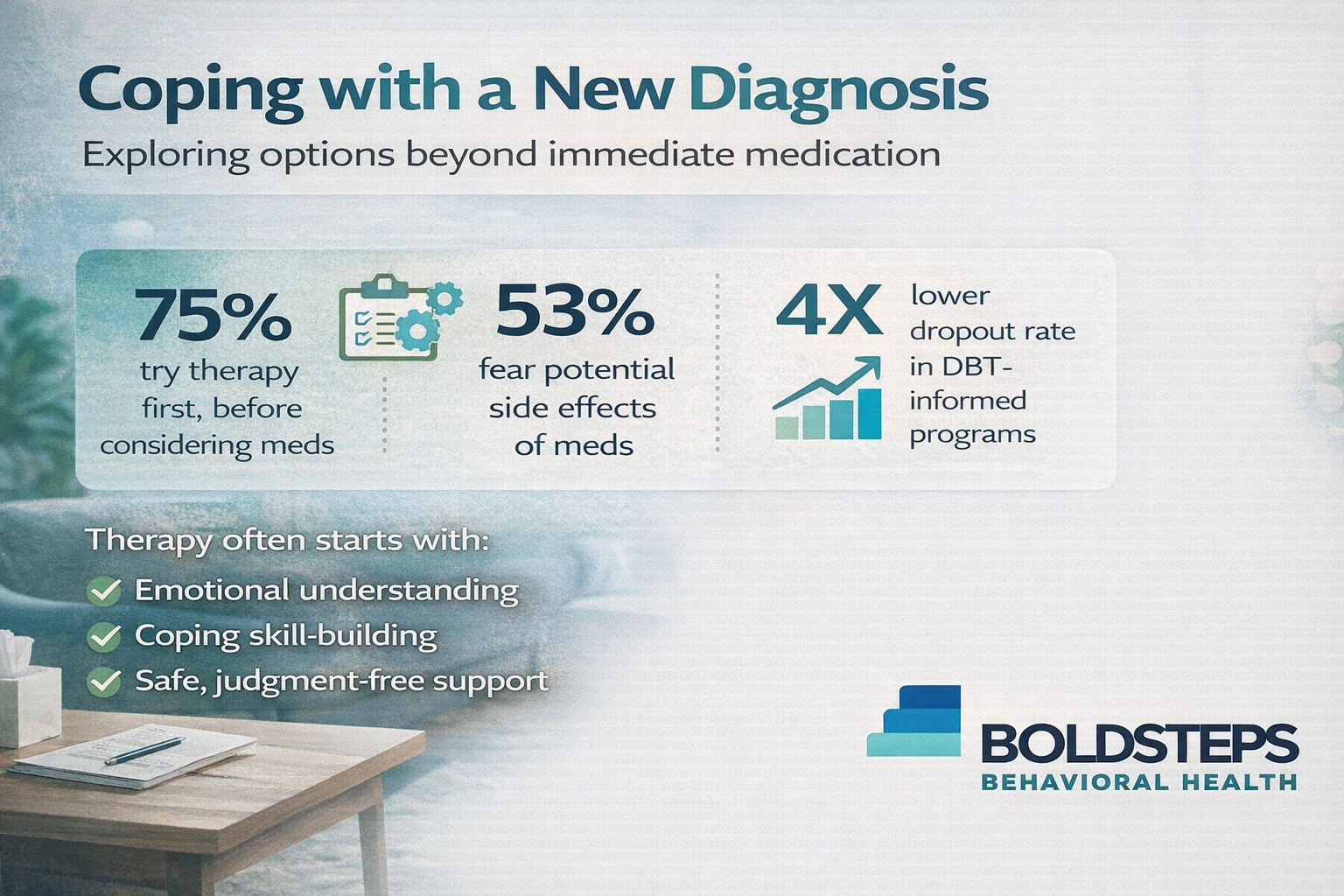
Healing Doesn’t Always Start With Medication
One of the most reassuring things many newly diagnosed people learn is that medication isn’t always the first or only step.
For many individuals, the early phase of healing focuses on understanding emotions, building coping skills, and learning how to navigate stress in healthier ways.
Think of it like learning how to steer a boat in rough water.
If you’ve never been taught how to navigate emotional storms, every wave can feel overwhelming. But when you start learning practical tools—ways to calm your body, slow racing thoughts, and manage emotional spikes—you begin to realize something powerful:
Your emotions are intense, but they’re not uncontrollable.
This realization alone can dramatically reduce anxiety around treatment decisions.
Learning Skills That Calm the Nervous System
One of the reasons structured skill-based therapy is so effective for newly diagnosed individuals is because it addresses the daily experience of emotional overwhelm.
When someone is dealing with anxiety, mood instability, or intense emotional swings, they often feel like their reactions happen automatically.
Something stressful occurs—and suddenly their body is flooded with tension, racing thoughts, or emotional pain.
Skill-based therapy focuses on helping people interrupt that cycle.
Over time, individuals learn ways to:
- Pause before reacting emotionally
- Regulate physical stress responses
- Recognize emotional triggers earlier
- Respond to difficult situations with clarity instead of panic
At first, these tools can feel surprisingly simple. But when practiced consistently, they help people regain a sense of control that may have felt lost.
Many clients eventually describe the experience as learning how to “turn down the volume” on overwhelming emotions.
The Relief of Feeling Understood
Another powerful part of therapy is something far less technical.
It’s being heard.
New diagnoses often come with a strange emotional mix of relief and grief. On one hand, there’s finally an explanation for what you’ve been experiencing. On the other hand, you may feel sadness, anger, or fear about what the diagnosis means.
Therapy provides space for those emotions to exist without judgment.
You can talk about the parts that scare you. The parts that frustrate you. The parts you’re not ready to accept yet.
And when those conversations happen with someone trained to guide you through them, the experience can feel profoundly validating.
For many people, the first step toward healing isn’t medication.
It’s simply feeling understood.
You’re Allowed to Move Slowly
Mental health treatment often gets portrayed as something that must happen quickly.
But real healing rarely works like that.
Instead, it’s more like adjusting your eyes to a dark room. At first, everything feels confusing and uncertain. But as you take small steps forward—learning new skills, gaining emotional insight, asking thoughtful questions—things gradually become clearer.
You begin to notice patterns in your emotions.
You start recognizing when stress is building before it becomes overwhelming.
And you slowly develop confidence in your ability to handle difficult moments.
This confidence often makes later treatment decisions feel far less intimidating.
Why DBT Skills Can Be So Empowering
One approach that has helped many newly diagnosed individuals is dialectical behavior therapy.
Rather than focusing only on symptoms, this style of care focuses on teaching practical emotional skills that people can use in everyday life.
The goal is not perfection.
The goal is balance.
Many people discover tools that help them:
- Manage emotional intensity without shutting down
- Navigate relationships more effectively
- Tolerate distress without feeling overwhelmed
- Stay grounded during stressful situations
These skills can be especially helpful for individuals who feel emotionally flooded or reactive.
Instead of feeling like emotions control their life, people gradually learn how to respond to those emotions with awareness and stability.
And that shift can be incredibly empowering.
Hope Often Arrives Quietly
One of the most surprising things about healing is that hope rarely arrives in a dramatic moment.
Instead, it appears quietly.
It might happen during a therapy session when something finally makes sense.
Or during a stressful moment when you realize you used a coping skill without thinking about it.
Or when you notice that a situation that once triggered panic now feels manageable.
These moments may seem small—but they add up.
And over time, they create something incredibly important:
Confidence in your ability to handle life again.
FAQs About Starting Therapy After a Diagnosis
Is it normal to feel scared about medication after a diagnosis?
Yes. Many people feel uncertain about medication when they’re first diagnosed with a mental health condition. Fear often comes from not knowing how the medication will affect your thoughts, emotions, or personality. Having open conversations with mental health professionals can help clarify options and reduce anxiety about treatment.
Can therapy help even if I’m not ready for medication?
Absolutely. Therapy often focuses on emotional understanding, coping skills, and behavioral changes that improve mental health regardless of medication decisions. Many individuals begin treatment through therapy alone while exploring what works best for them over time.
How long does it take to feel more stable in therapy?
Everyone’s timeline is different. Some people begin noticing small improvements within a few weeks, especially when learning new emotional skills. Others take longer as they unpack deeper patterns and experiences. The important thing is consistent support and progress at a pace that feels sustainable.
What if I change my mind about medication later?
Treatment decisions are not permanent commitments. Many people explore different approaches at different stages of their mental health journey. Therapy can help you develop the clarity and confidence needed to make informed choices about medication if and when you feel ready.
Is it possible to manage emotional intensity with skills alone?
For some individuals, learning emotional regulation skills significantly improves daily functioning and stability. Others find that a combination of therapy and medication provides the best support. Mental health care is not one-size-fits-all, and finding the right approach often involves thoughtful exploration.
What should I look for in a therapist after being diagnosed?
Look for a therapist who listens carefully, respects your concerns, and collaborates with you on treatment decisions. Feeling safe, understood, and supported in therapy is one of the most important factors in successful mental health care.
A new diagnosis can feel overwhelming at first. But it’s also the beginning of understanding yourself more clearly than ever before.
With the right support, tools, and guidance, what once felt like chaos can gradually become something you know how to navigate.
Call (603)915-4223 to learn more about our Dialectical Behavior Therapy in Concord, New Hampshire.