

I didn’t fall apart.
That’s what made it confusing.
There was no big crash. No moment where everything clearly stopped working. From the outside, my life looked stable—maybe even better than it had been in years.
But internally, something felt off in a way I couldn’t explain.
Not broken. Not overwhelmed. Just… disconnected.
If you’ve been in recovery or doing the work for a while, you probably know this feeling. It’s not talked about much, because it doesn’t fit the usual story. You’re not struggling in the obvious ways anymore. But you’re also not fully there.
And that space—the in-between—is where I realized I needed help again.
Not because I failed.
Because I changed.
If you’re exploring support like CBT therapy, this part matters more than most people admit.
You’re Doing Everything Right—But It Feels Hollow
You keep your commitments.
You show up for people.
You follow through on what you’ve built.
But it starts to feel like you’re moving through a script.
There’s no urgency, no chaos—but also no real connection to what you’re doing.
You might catch yourself thinking:
- Why does this feel so flat?
- I should feel more than this
- Is this just what stability feels like?
That question sticks.
Because part of you knows this isn’t what you worked for.
You Don’t Talk About It Because It Doesn’t Sound “Serious Enough”
This is where a lot of people stay stuck.
You don’t feel bad enough to justify needing help.
You’re not in crisis. You’re not unraveling.
So you minimize it.
You tell yourself:
- Other people have it worse
- This is normal
- I should be grateful
And maybe all of that is true.
But it doesn’t change the fact that something inside you feels distant.
For a lot of people in Rockingham County, New Hampshire, this quiet disconnection goes unnoticed for a long time—not because it isn’t real, but because it doesn’t look urgent.
The Old Tools Still Work—Just Not All the Way
You still use what you’ve learned.
You challenge your thoughts.
You ground yourself.
You try to stay present.
And it helps.
Just not enough.
It keeps you functioning. It keeps things steady.
But it doesn’t bring you back to yourself.
That’s the difference.
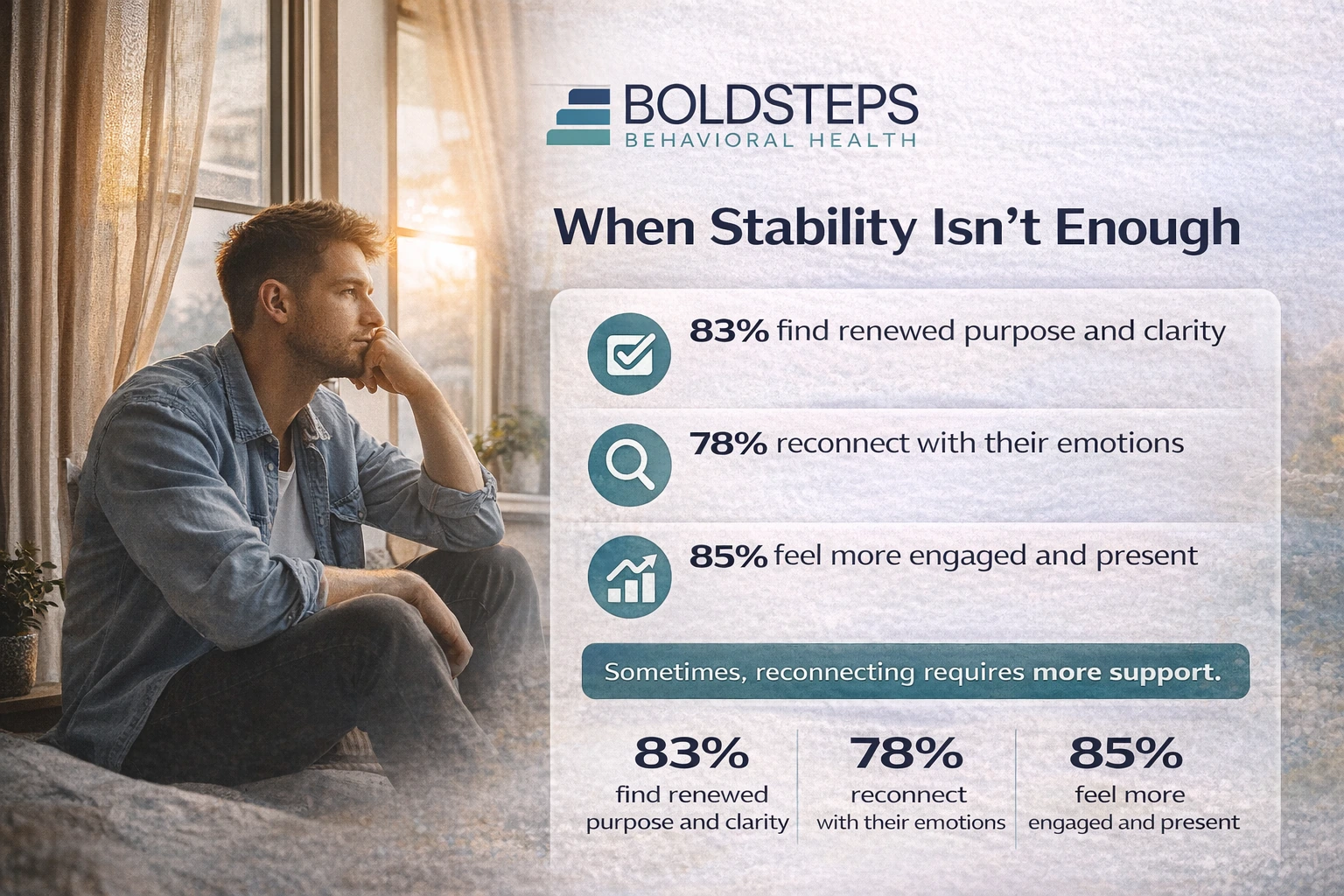
You’re not falling apart—you’re just not fully connected.
Your Thinking Gets Quieter, But More Controlling
This part is subtle.
It’s not loud negative thoughts anymore. It’s not obvious self-criticism.
It’s quieter than that.
It sounds like:
- Don’t make this a big deal
- Just push through
- It’s fine, stop overthinking
It feels reasonable. Logical, even.
But over time, those thoughts create distance.
They keep you from asking deeper questions.
From slowing down.
From actually listening to what’s going on underneath.
And eventually, you stop noticing how much they shape your experience.
You Start Wondering If This Is Just “How Life Is Now”
This is the moment that hit me the hardest.
Not fear. Not panic.
Just a quiet acceptance starting to form:
Maybe this is it.
Not terrible. Not amazing. Just… okay.
And that’s where things can stall.
Because when you’re not in pain, it’s easy to stop reaching for something better.
But “okay” isn’t the same as connected.
Going Back Feels Like Admitting Something Went Wrong
I didn’t want to go back.
It felt like I was undoing progress. Like I was supposed to be past this stage.
There’s a pride that comes with getting through hard things—and going back for support can feel like losing ground.
But that’s not what it is.
Going back isn’t regression.
It’s responding to a new version of yourself.
The person you are now has different patterns, different blind spots, different needs.
And ignoring that doesn’t keep you strong—it keeps you stuck.
The Shift Isn’t About Fixing—It’s About Seeing Clearly Again
What surprised me most was how familiar it felt.
Not in a repetitive way—but in a grounding way.
Like coming back to something I didn’t realize I’d drifted from.
The work wasn’t about learning everything from scratch.
It was about:
- Catching thoughts I’d started to overlook
- Questioning patterns I’d normalized
- Reconnecting to feelings I’d been pushing aside without noticing
For some people looking for an anxiety counselor Concord NH, it’s not about crisis—it’s about this exact feeling of being slightly out of sync with yourself, and finally deciding to pay attention to it.
You’re Allowed to Want More Than Stability
This is the part that can feel uncomfortable to admit.
You can have stability—and still want more.
More clarity.
More presence.
More connection to your own life.
That doesn’t make you ungrateful.
It makes you aware.
And awareness is usually the first sign that something needs to shift.
The Change Feels Small—Until It Doesn’t
There wasn’t a big breakthrough moment for me.
It was smaller than that.
I started noticing:
- I was more present in conversations
- I reacted less automatically
- I felt things more clearly, instead of vaguely
Nothing dramatic.
But over time, those small changes added up.
And for the first time in a while, I didn’t feel like I was just going through the motions.
You Haven’t Lost Yourself—You’ve Just Drifted a Bit
That’s the part I wish someone had said to me earlier.
You’re not broken.
You’re not back at the beginning.
You haven’t undone your progress.
You’ve just drifted.
And drifting happens slowly. Quietly. Without you noticing right away.
But the good news is—you can come back the same way.
Slowly. Intentionally. Without forcing anything.
Even in places like Merrimack County, New Hampshire, where life moves fast and expectations stay high, that return to yourself is still possible.
FAQs
Why do I feel disconnected even after doing a lot of work on myself?
Because growth doesn’t stop. The tools and awareness that helped you before might not fully meet where you are now. Feeling disconnected can be a sign that you’re ready for a deeper level of understanding.
Does needing therapy again mean I’ve failed?
No. It usually means you’ve reached a new stage where different support can help. Growth isn’t linear, and returning to therapy can be part of maintaining progress—not losing it.
How do I know if this feeling is “serious enough” to address?
If it’s persistent and noticeable to you, it matters. You don’t have to wait until things get worse to seek support.
Why do my thoughts feel quieter but still impact me?
As you grow, your thinking patterns often become more subtle. They may sound logical or harmless, but they can still shape how you feel and act over time.
Can CBT still help if I’ve done therapy before?
Yes. It can help you identify current thought patterns and reconnect with yourself in a way that fits who you are now—not who you were before.
What’s the goal if I’m not in crisis?
The goal is connection. Feeling present, aligned, and engaged with your life—not just functioning through it.
If something in you has been quietly saying, This isn’t it, you don’t have to ignore that voice.
Call (603)915-4223 or visit our therapy, cbt services to learn more about our therapy, Cognitive-Behavioral Therapy in Concord, NH.