

I remember thinking, This isn’t doing anything.
Not dramatically. Not in a frustrated, storm-out kind of way. More like a quiet, steady doubt.
Like… I’m showing up, I’m trying, and somehow I’m still the same person having the same reactions.
If you’ve been there—or you’re there right now—I’m not going to try to convince you with big promises.
Because honestly, this kind of work doesn’t feel impressive at first. It feels slow. Sometimes repetitive. Sometimes pointless.
But that doesn’t mean it’s not working.
And if you’re in a place like Hillsborough County, New Hampshire, trying to figure out whether to give something like this another shot, it helps to know what’s actually happening beneath the surface.
It Doesn’t Feel Like Progress Because It’s Not Dramatic
A lot of us expect change to feel obvious.
Like:
- You suddenly stop reacting
- You handle everything calmly
- You feel “fixed”
That’s not how this goes.
Instead, progress looks like things you almost miss:
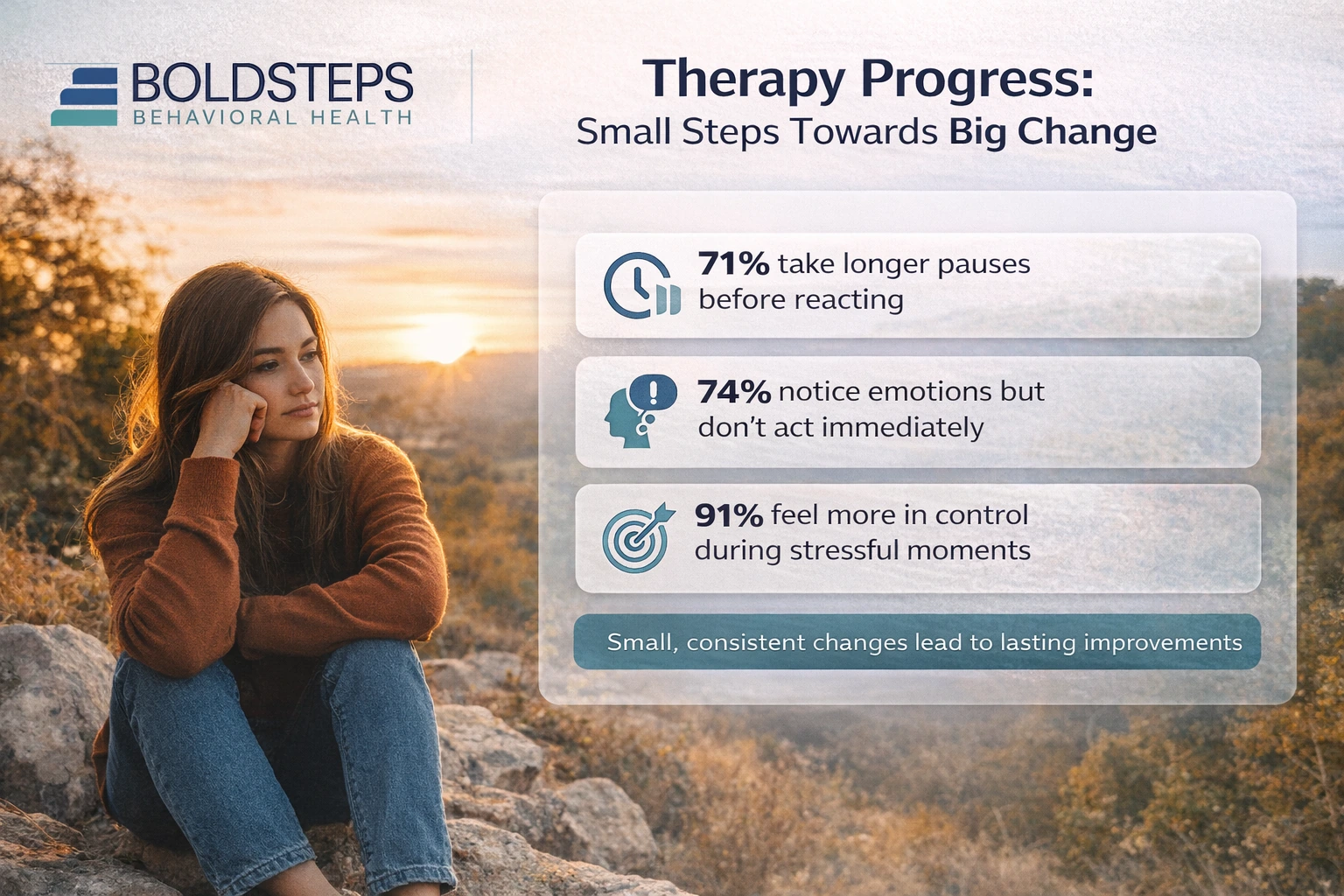
- You pause for half a second longer than usual
- You notice the feeling before it explodes
- You walk away from one argument you would’ve stayed in before
It’s subtle. Almost annoyingly subtle.
And because of that, it’s easy to dismiss.
But those small shifts? That’s where everything starts.
You’re Not Being Asked to “Try Harder”—You’re Being Asked to Notice More
If therapy hasn’t worked for you before, there’s a good chance it felt like effort without payoff.
Like you were supposed to:
- Think differently
- Act differently
- Be more in control
And when that didn’t happen, it felt like failure.
What’s different here is the focus.
It’s not about forcing change.
It’s about noticing what’s already happening—so you’re not stuck on autopilot.
Because you can’t change a pattern you don’t fully see.
The Hard Truth: Insight Alone Doesn’t Change Behavior
This part took me a while to accept.
You can understand your triggers.
You can explain your past.
You can even predict your reactions.
And still… react the exact same way.
That’s not because you’re resistant.
It’s because awareness without tools doesn’t hold up in real moments.
That’s where structured support comes in—something like DBT therapy isn’t just about talking. It’s about practicing what to do while the feeling is happening, not after.
The Moment That Matters Isn’t in the Session
The real work doesn’t happen in a quiet room.
It happens:
- In the middle of an argument
- When your chest tightens and your thoughts speed up
- When you feel misunderstood, dismissed, or overwhelmed
That’s where everything you’ve been learning either shows up—or doesn’t.
And yeah, at first, it probably won’t.
You’ll still react. Still say things you wish you didn’t. Still feel like you’re back at square one.
But then something small shifts.
You catch it a second sooner.
You hesitate.
You feel the choice.
That’s new.
The Skills Can Feel Basic—Until You Actually Need Them
There’s a moment where you might think, This is too simple to help me.
Pause. Breathe. Step away. Name the emotion.
It can feel almost insulting.
But here’s the reality—when everything is intense, your brain isn’t looking for complex strategies. It needs something immediate. Something usable.
That’s why people search for something like a distress tolerance skills class. Not because they want theory—but because they need something that works right then.
And those simple tools? They’re built for that exact moment.
It Doesn’t Change Who You Are—It Changes How You Experience Yourself
This is the part most people worry about, even if they don’t say it out loud.
What if I lose something?
Your personality. Your intensity. Your edge.
But that’s not what happens.
You don’t become less emotional.
You become less overwhelmed by your emotions.
There’s a difference.
You still feel deeply.
You still react—but with more awareness.
You still care—but without spiraling as often.
It’s not about becoming someone new.
It’s about finally being able to stay connected to yourself, even when things get intense.
When You’ve Tried Before, Starting Again Feels Different
There’s a specific kind of hesitation that comes from having tried something before.
It’s not fear—it’s skepticism.
You’re not asking, Will this help?
You’re thinking, Why would this be any different?
That’s a fair question.
The difference isn’t just the approach—it’s the timing, the fit, and sometimes even your own readiness to engage with it differently.
Not perfectly. Just differently.
And if you’re somewhere like Essex County, Massachusetts, juggling stress, expectations, and everything else life throws at you, it makes sense that previous attempts didn’t land the way you needed them to.
That doesn’t mean nothing will.
Progress Feels Boring Before It Feels Empowering
No one really talks about this part.
Growth can feel… boring.
Repetitive.
Unremarkable.
Slow.
Until one day, something happens—and you respond differently without even thinking about it.
You don’t escalate.
You don’t spiral as far.
You don’t carry it for as long.
And that’s when it clicks.
Not in a big, dramatic way.
But in a quiet, steady realization:
I’m not stuck like this.
You’re Not Failing—You’re Learning a New Way to Respond
If you’ve walked away from therapy before thinking it didn’t work, it’s easy to assume the problem was you.
That you didn’t try hard enough.
Didn’t stick with it.
Didn’t “get it.”
But most of the time, that’s not it.
Sometimes you just didn’t have the right tools for the moments that matter most.
And learning those tools doesn’t erase who you are.
It gives you a way to stay connected to yourself—especially when things get hard.
FAQs
Why does therapy feel like it’s not working at first?
Because the changes are small and internal before they become visible. You’re building awareness and new responses, which take time to show up in real-life situations.
What if I’ve already tried therapy and it didn’t help?
That’s more common than people admit. Different approaches work for different people, and sometimes timing matters. Trying again doesn’t mean starting over—it means starting differently.
Are emotional reactions really something you can change?
Yes, but not by forcing them away. You learn to recognize them earlier and respond differently, which gradually shifts the pattern over time.
Why do the skills seem so simple?
Because they’re designed to work under pressure. When emotions are intense, your brain needs something clear and immediate—not complicated strategies.
Will this make me less emotional or less “myself”?
No. It helps you stay grounded in your emotions without being overwhelmed by them. You keep your personality—you just gain more control over how it shows up.
How long does it take to notice a difference?
It varies, but many people start noticing small changes within weeks. Bigger shifts tend to build gradually as those small changes add up.
If you’re still unsure, that’s okay. You don’t have to be fully convinced to take the next step.
Call (603)915-4223 or visit our therapy, dbt services to learn more about our Dialectical Behavior Therapy in Concord, New Hampshire.