

Starting treatment for the first time can feel like standing at the edge of something unfamiliar.
You may already know a lot about your struggles. You may have spent years thinking about them, talking with friends, or trying to figure things out on your own. By the time many people reach out for help, they already understand parts of their story.
But there’s a moment many treatment seekers eventually experience.
It’s the moment you realize that understanding the problem isn’t the same as knowing how to change it.
You might know why you react the way you do. You might understand how certain habits developed. And yet, in stressful moments, the same reactions keep happening.
For many people, the turning point comes when they start looking not just at their experiences—but at the thinking patterns that shape their reactions every day. That deeper focus is part of the work people explore through approaches like cognitive behavioral therapy.
Instead of only revisiting the past, this approach helps people notice how their thoughts influence emotions and decisions in the present moment.
For someone seeking treatment for the first time, that shift can feel like discovering the missing piece of the puzzle.
Why Understanding Your Past Doesn’t Always Change the Present
Many people assume therapy will mostly involve discussing past experiences.
And in many cases, those conversations are valuable.
Talking about difficult memories can help people feel understood. It can bring clarity to experiences that once felt confusing. It can also reduce the isolation that often comes with carrying painful stories alone.
But there’s something many people notice after a while.
Even with insight into the past, the same reactions may continue showing up in daily life.
You might still feel overwhelmed during conflict.
You might still jump to worst-case conclusions.
You might still fall into familiar habits when stress builds.
This happens because the brain often runs on automatic thinking patterns.
These patterns operate quickly, sometimes so quickly that we don’t notice them.
Understanding where those patterns came from is helpful—but learning how to recognize and interrupt them in real time can make an even bigger difference.
The Invisible Conversations Happening in Your Mind
Every day, your mind is constantly interpreting what’s happening around you.
Most of the time, this happens automatically.
A stressful situation appears, and a thought pops up almost instantly.
Maybe it sounds like:
“This is going to go badly.”
“I can’t handle this.”
“They’re judging me.”
“I always mess things up.”
These thoughts can feel so natural that we rarely question them.
But thoughts influence emotions.
And emotions influence behavior.
If your mind repeatedly interprets situations in a negative or hopeless way, your emotional responses will follow that interpretation.
Over time, these reactions can shape entire life patterns.
When someone begins noticing those internal conversations, it often becomes clear how powerful they really are.
Small Thoughts Can Create Big Patterns
One of the most surprising discoveries people make in treatment is that major life patterns often begin with small, repeated thoughts.
A person who repeatedly tells themselves:
“I’ll probably fail anyway”
may avoid opportunities that could have helped them grow.
Someone who often thinks:
“No one understands me”
may withdraw from people who are actually trying to help.
These thoughts don’t always feel dramatic. They often feel like simple assumptions about reality.
But over time, repeated thoughts become beliefs.
Beliefs influence choices.
Choices create life patterns.
Once someone recognizes this process, they begin seeing their experiences in a completely different way.
The Power of Catching a Thought in Real Time
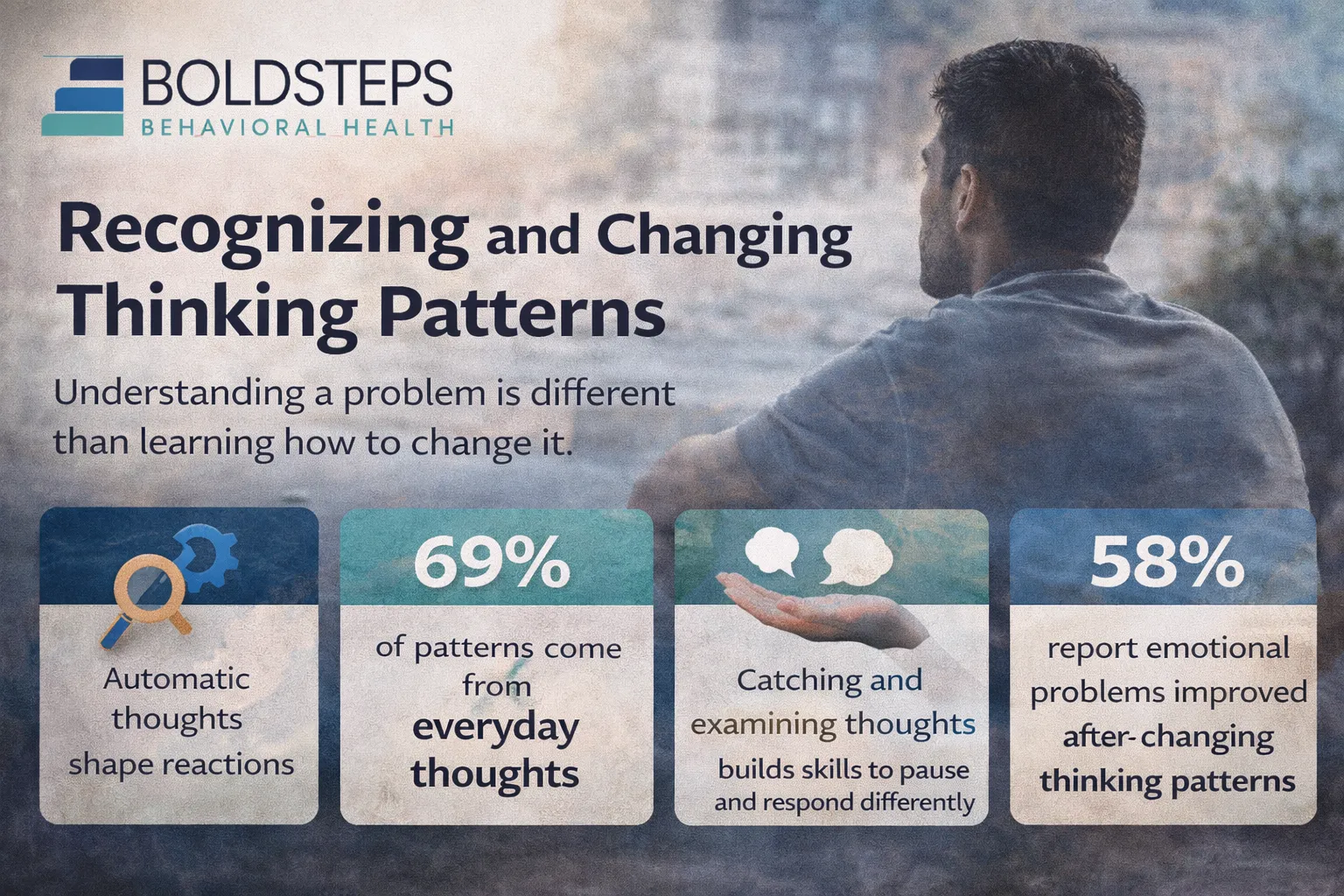
One of the most empowering skills people develop in treatment is learning to notice their thoughts as they happen.
Instead of reacting immediately to a situation, they begin asking themselves questions like:
“What just went through my mind?”
“Is that thought accurate?”
“Is there another way to see this situation?”
At first, this process may feel unfamiliar.
Many people aren’t used to observing their thoughts. They’re used to reacting to them.
But once someone develops this awareness, something important happens.
The thought loses some of its control.
Instead of automatically believing every thought that appears, a person gains the ability to pause and examine it.
That pause can dramatically change how someone responds to stress, disappointment, or conflict.
Why This Approach Feels Different From What People Expect
When people imagine therapy for the first time, they often picture emotional conversations about feelings.
Emotions absolutely matter.
But understanding the thinking patterns that create those emotions often provides a clearer path toward change.
Think of it like learning how the engine of a car works.
Before understanding the engine, someone might feel frustrated when the car stalls. They know something is wrong, but they don’t know how to fix it.
Once they understand the engine, they gain insight into what’s happening under the hood.
The same idea applies to mental patterns.
When someone understands how their thoughts influence reactions, they gain tools for navigating difficult moments more effectively.
Awareness Often Leads to Unexpected Breakthroughs
Many people expect treatment breakthroughs to be dramatic.
But in reality, some of the most meaningful moments are surprisingly simple.
Someone might suddenly notice:
“I always assume the worst about myself.”
Or:
“I interpret silence as rejection.”
These realizations might seem small at first.
But they can change everything.
Because once someone sees the pattern, they’re no longer trapped inside it.
They can begin experimenting with different ways of interpreting situations.
Over time, these small changes often lead to new emotional responses and healthier behaviors.
Growth Happens Gradually, Not All at Once
One of the most important things for first-time treatment seekers to understand is that meaningful change takes time.
Thinking patterns often develop over years. They’re shaped by experiences, relationships, disappointments, and successes.
Rewriting those patterns isn’t instant.
At first, the changes might feel subtle.
You might simply notice your thoughts more often.
You might catch yourself before reacting emotionally.
You might begin asking questions about your assumptions.
These moments may seem small.
But over time, they add up to powerful shifts in perspective.
Across Hillsborough County, New Hampshire, many individuals beginning treatment discover that learning to recognize their thinking patterns helps them feel less overwhelmed by emotions that once seemed uncontrollable.
Instead of feeling trapped inside their reactions, they begin realizing they have options.
You Don’t Have to Navigate This Alone
Starting treatment can feel intimidating.
You might wonder whether you’ll say the wrong thing. You might question whether the process will really help.
Those doubts are completely normal.
Many people seeking help for the first time feel uncertain about what to expect.
But the goal of treatment isn’t to judge you or analyze every detail of your past.
The goal is to help you understand how your mind works—and to build skills that allow you to respond to life’s challenges with greater clarity and confidence.
For many individuals throughout Essex County, Massachusetts, learning to recognize and rethink their thought patterns becomes one of the most empowering parts of the recovery journey.
It turns confusion into awareness.
And awareness creates the possibility for real change.
FAQs
Why do some people feel stuck even after talking about their problems?
Talking about experiences can bring valuable insight, but long-standing habits often continue unless someone learns to recognize the thoughts driving their reactions in everyday situations.
Can changing thinking patterns really improve emotional reactions?
Yes. Thoughts influence emotions, and emotions influence behavior. When people learn to question certain thought patterns, they often experience calmer and more balanced emotional responses.
What if my thoughts feel completely true?
Many thoughts feel convincing in the moment. Part of the process involves examining whether those thoughts are facts or interpretations shaped by past experiences.
How long does it take to notice changes in thinking patterns?
It varies for everyone. Some people notice shifts relatively quickly, while others experience gradual improvement as they practice recognizing and questioning their thoughts.
Is it normal to feel nervous before starting treatment?
Absolutely. Many first-time treatment seekers feel unsure about what the process will be like. Those feelings often ease once they begin working with a supportive professional.
What if I’ve tried counseling before and it didn’t help?
Different approaches work for different people. Sometimes exploring a method that focuses on recognizing thinking patterns can offer tools that were missing from previous experiences.
Can this process really help with long-standing habits?
Many people find that once they understand the thoughts behind their habits, they gain the ability to respond differently in situations that once felt overwhelming.
If you’re considering treatment and wondering whether it could help you move beyond the same cycles, you don’t have to figure it out alone. Call 603-915-4223 or visit our Cognitive-Behavioral Therapy (CBT) in Concord, New Hampshire to learn more.