

I remember the moment it hit me.
Not in treatment. Not in group.
Not while sitting in a room full of people nodding along as we talked about triggers and thinking patterns.
It hit me after I slipped.
The tools that once felt automatic suddenly felt distant. The mental pause that used to stop me before spiraling into bad decisions just… didn’t show up. And the quiet thought crept in:
Maybe none of it actually worked.
If you’ve ever been there, you know how heavy that thought feels. It can make everything you learned feel pointless. It can make you wonder if you were just pretending to get better.
But there’s a truth many alumni eventually learn the hard way:
The tools work.
They just stop working when we stop practicing them.
That truth can feel frustrating at first. But it’s also hopeful. Because it means your progress wasn’t fake. It means the skills you learned are still there.
They just need to be used again.
Why Recovery Skills Fade When Life Gets Busy
Think about any skill you’ve ever learned.
Driving. Playing an instrument. Learning a new language. Even working out.
If you stop doing it for long enough, the muscle memory fades.
Recovery tools work the same way.
During treatment, you’re practicing constantly. You’re talking through thoughts in group, writing things down, slowing down reactions, noticing emotional triggers. Your brain is getting repetition every day.
Then treatment ends and real life speeds up.
Work stress comes back. Family issues show up again. Sleep schedules get messy. Bills pile up. Life doesn’t slow down just because you’re trying to stay healthy.
Slowly, the daily practice fades.
It usually doesn’t happen dramatically. It happens quietly. One skipped coping strategy here. One ignored thought pattern there.
Before long, the skills that once felt automatic start gathering dust.
Not because they failed.
Because they weren’t being used.
The Brain Loves Familiar Patterns
Here’s the part many people don’t talk about openly.
Your brain prefers familiar patterns—even unhealthy ones.
If you’ve spent years reacting a certain way to stress, those reactions are deeply wired. They’re efficient. They’re fast. They don’t require conscious effort.
Recovery skills create new mental pathways. But those pathways start out fragile.
They’re more like trails through the woods than highways. And if you stop walking those trails, nature slowly takes them back.
Old thinking patterns are still there, waiting. When stress builds, the brain naturally reaches for the quickest path it knows.
That’s why structured approaches used in therapy often focus on repetition. The goal isn’t just to learn a concept once. The goal is to practice it enough that the healthier thought pattern becomes automatic.
But that automatic response only sticks if the practice continues.
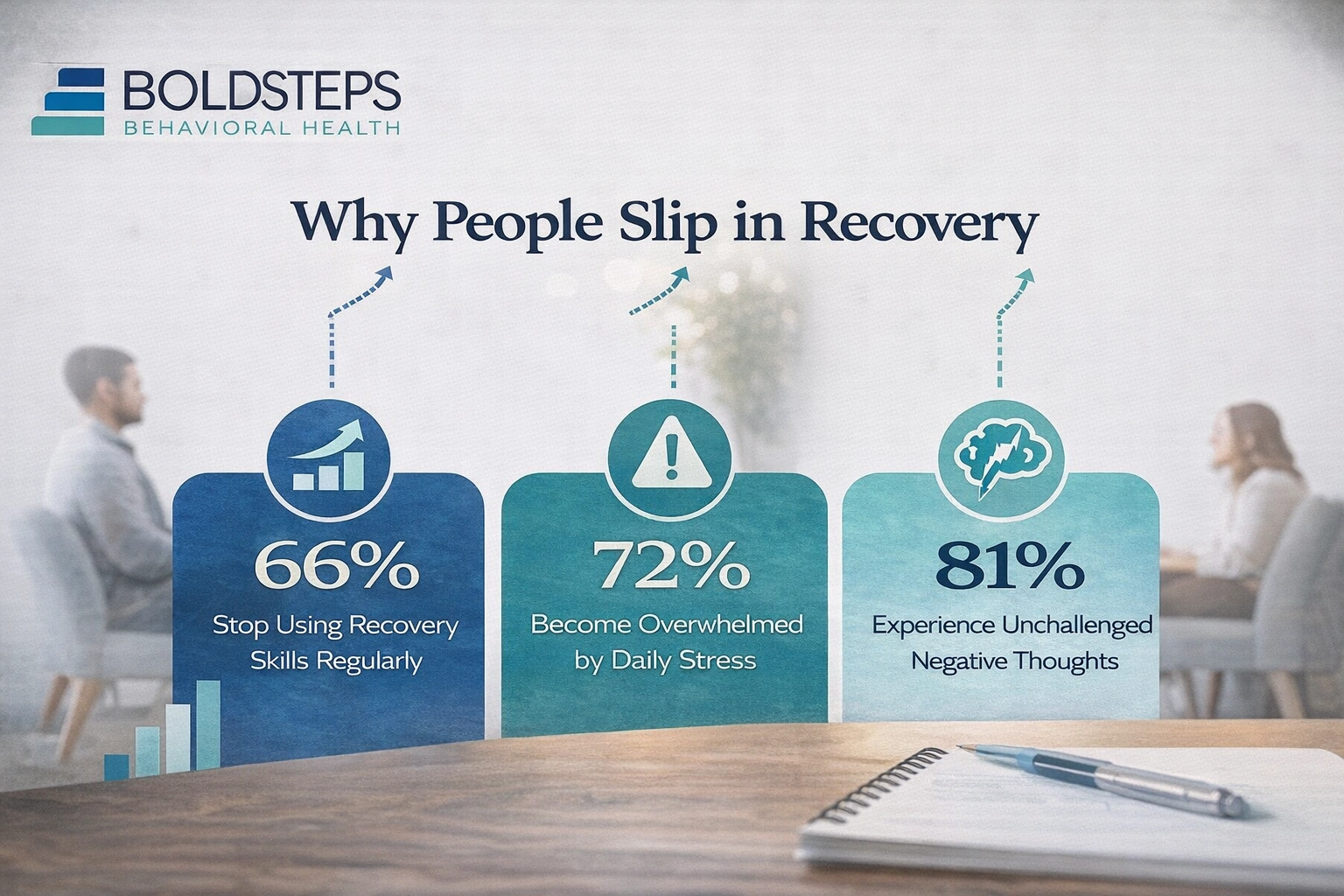
Relapse Doesn’t Mean the Tools Failed
One of the most painful beliefs people carry after a relapse is the idea that everything they learned was pointless.
It’s a convincing story.
“I tried the program.”
“I learned the skills.”
“And look what happened anyway.”
But relapse rarely means the tools failed.
More often, the tools slowly faded out of daily life before the relapse happened.
Maybe stress started building quietly. Maybe negative thoughts started repeating without being challenged. Maybe emotional isolation crept in. Maybe old coping strategies started feeling easier than slowing down and checking your thinking.
By the time things escalated, the skills weren’t front-of-mind anymore.
That doesn’t mean they didn’t work.
It just means they weren’t being used in the moments they mattered most.
That’s not a moral failure. It’s a reminder that recovery is something that requires ongoing attention.
Practicing Recovery Skills Again Can Feel Strange
Returning to recovery tools after slipping can feel awkward.
Sometimes even embarrassing.
You might find yourself thinking:
“I already learned this.”
“I should be better at this by now.”
“Why am I starting over?”
But here’s something that might surprise you.
People who stay sober long term still practice these skills regularly.
They don’t stop examining their thoughts.
They don’t stop questioning their assumptions.
They don’t stop checking their emotional reactions.
Not because they’re struggling every day.
Because they understand something important: recovery tools aren’t a temporary assignment. They’re a lifelong maintenance system for the mind.
Just like brushing your teeth doesn’t stop cavities forever, practicing mental habits doesn’t permanently eliminate unhealthy thinking. It keeps things healthy through repetition.
Why Repetition Matters More Than Understanding
Many people leave treatment feeling like they understand everything intellectually.
They can explain thought patterns.
They know their triggers.
They can describe the coping strategies they learned.
But understanding something and practicing it daily are two very different things.
Approaches like cbt focus heavily on repetition because our brains change through repeated experience, not just knowledge.
You might know that a negative thought is distorted.
But unless you challenge it repeatedly, your brain still reacts as if it’s true.
That’s why writing things down, slowing thoughts, and examining patterns can feel repetitive in treatment settings. The repetition isn’t accidental. It’s how new mental habits become stronger than old ones.
Without repetition, the brain simply returns to its default patterns.
Progress Doesn’t Disappear After a Slip
After relapse, it’s common to feel like all progress vanished.
That feeling is powerful. It can make people avoid reaching out for help again because they believe they’ve lost everything they built.
But recovery progress doesn’t vanish overnight.
You still have awareness you didn’t have before.
You still recognize patterns faster than you once did.
You still understand your triggers more clearly.
Even the discomfort you feel after slipping is a sign of growth. That discomfort often means your values have changed.
Years ago, the same behavior might not have bothered you at all.
Now it does.
That’s not failure.
That’s evidence that something inside you shifted.
Practicing Skills in Real Life Is the Hard Part
The controlled environment of treatment makes skill-building easier.
Schedules are structured. Support is constant. People around you are working toward similar goals.
Real life isn’t structured that way.
Stress appears without warning. Conflicts happen suddenly. Old environments and old relationships return.
That’s why practicing recovery tools outside of treatment is often the hardest part.
It requires intentional effort.
It means pausing when emotions spike.
It means questioning automatic thoughts.
It means noticing patterns before they spiral.
At first, that effort can feel exhausting.
But over time, the practice becomes more natural. The pause happens faster. The thought challenge becomes instinctive.
That’s where the real power of the tools shows up.
Recovery Skills Are Like Mental Fitness
One way to think about recovery skills is like physical fitness.
Imagine someone who worked out consistently for three months and got stronger.
Then they stopped exercising for six months.
When they return to the gym, the strength isn’t completely gone—but it isn’t at its peak either.
The body remembers how to rebuild it.
The same thing happens with mental habits.
The thinking skills you practiced didn’t disappear. They just need repetition again to become strong.
And just like fitness, the first few sessions back can feel uncomfortable.
That discomfort doesn’t mean it isn’t working.
It usually means you’re rebuilding something important.
A Quiet Truth Many Alumni Eventually Learn
Over time, many people in recovery come to a realization that isn’t talked about enough.
Recovery isn’t about mastering a set of tools once.
It’s about continuing to use them—even when things feel stable.
Especially when things feel stable.
Because the moment we stop practicing awareness is usually the moment unhealthy patterns quietly start returning.
That doesn’t mean recovery has to feel like constant work forever. Many people reach a place where the skills feel natural.
But even then, they remain mindful of their thinking patterns.
Not out of fear.
Out of respect for how powerful the mind can be.
FAQs
Why do recovery tools feel harder to use after relapse?
After a relapse, emotions like shame and discouragement can make it harder to slow down and apply the tools you learned. Those emotions can create mental noise that makes clear thinking more difficult. With practice and support, those skills often become easier to access again.
Does relapse mean the treatment approach didn’t work?
Not necessarily. Many people relapse at some point during recovery. It doesn’t mean the tools were ineffective. Often it means the skills weren’t being used consistently during stressful periods.
How long does it take for recovery skills to feel natural again?
This varies from person to person. Some people feel more comfortable using the skills again within weeks, while others take longer. What matters most is consistent practice, not speed.
Is it normal to feel embarrassed about starting again?
Yes. Many alumni feel awkward returning to tools they learned before. But returning to those tools is often a sign of strength and self-awareness rather than failure.
Can practicing thinking skills really change behavior over time?
Yes. Repeatedly examining and challenging thoughts can gradually change emotional reactions and decision-making patterns. Over time, healthier thought patterns can become the brain’s default response.
Why do structured thinking tools matter so much in recovery?
Because our thoughts often shape our emotions and behaviors. Learning to examine those thoughts can interrupt negative spirals before they lead to unhealthy decisions.
Many people continuing their recovery journey across Rockingham County, New Hampshire and Merrimack County, New Hampshire find that returning to structured thinking skills can make a meaningful difference in rebuilding momentum and confidence after setbacks.
If you’re ready to rebuild those mental habits and strengthen the tools that support long-term recovery, you don’t have to do it alone.
Call 603-915-4223 or visit our Cognitive-Behavioral Therapy (CBT) in Concord, New Hampshire to learn more.