

When you’re the parent of a young adult in crisis, everything feels like an emergency and a mystery at the same time. One minute they’re quiet and withdrawn. The next they’re explosive. You start questioning everything—your instincts, your parenting, your hope.
Depression doesn’t always look like sadness. Sometimes it looks like rage, shutdown, silence, or self-sabotage. And when things get scary or strange, most parents try what seems reasonable first—therapy, medication, school supports. But when none of that helps—or when things spiral faster than expected—you need more than the basics.
That’s where depression treatment programs can help. Not just counseling, but real structure. Not just a plan, but people who understand what this kind of crisis really looks like.
Depression Treatment Isn’t Just “More Therapy”
Let’s be real: a once-a-week therapist can only do so much when your kid is breaking down in real time. Depression that disrupts daily life, school, safety, or relationships often requires a more layered approach. That might mean intensive outpatient care, medication adjustment, group therapy, trauma-specific work, or skills training that helps them handle real-world stress.
Comprehensive treatment programs create space for multiple pieces of support to happen at once. It’s about putting your child in an environment where everything points toward healing—not just one hour a week of talk.
At Bold Steps, our depression treatment is structured to address both the symptoms and the systems that feed them. We focus on function, not just feelings—so your child can begin to stabilize, not just cope.
You Don’t Need a Diagnosis to Deserve Help
It’s a common roadblock: “But we don’t even have a diagnosis yet.” Or worse—“The last therapist said it wasn’t that bad.”
Here’s the truth: you don’t need a formal label to notice something is deeply wrong. If your child is pulling away from everyone, if they’ve stopped engaging with school or work, if they’re sleeping all day or saying things like “What’s the point?”—you’re not overreacting.
Depression treatment doesn’t require a definitive diagnosis to begin. In fact, the right program can help provide one if it’s needed, and adjust treatment as new patterns emerge.
You don’t have to wait for a crisis to become a catastrophe.
Treatment Provides Structure When Everything Feels Chaotic
When you’re parenting through a mental health crisis, everything feels like guesswork. Do I give them space or sit beside them? Push or pull back? Say something or stay silent?
A structured depression treatment program takes that burden off your shoulders. It gives your child a safe container for their emotions, behaviors, and questions. And it gives you—yes, you—a break from playing detective, therapist, and first responder all at once.
Programs like ours at Bold Steps offer a clear rhythm: scheduled group sessions, one-on-one therapy, psychiatric check-ins, and evidence-based support designed for complex cases. Your child won’t be “figuring it out alone.” Neither will you.
You’re Allowed to Be Scared—and Still Ask for Help
Let’s name it: this is terrifying. Maybe they’ve said something that made your blood run cold. Maybe you’ve started sleeping with one ear open. Maybe you’re scared to leave them alone—but scared to bring it up, too.
As a parent, it’s tempting to minimize, to hope it’ll blow over, to tell yourself “they’re just going through a phase.” But if you’re here reading this, your gut is already telling you the truth.
Asking about treatment isn’t admitting failure. It’s saying: I love this kid enough to get them the help I can’t give alone.
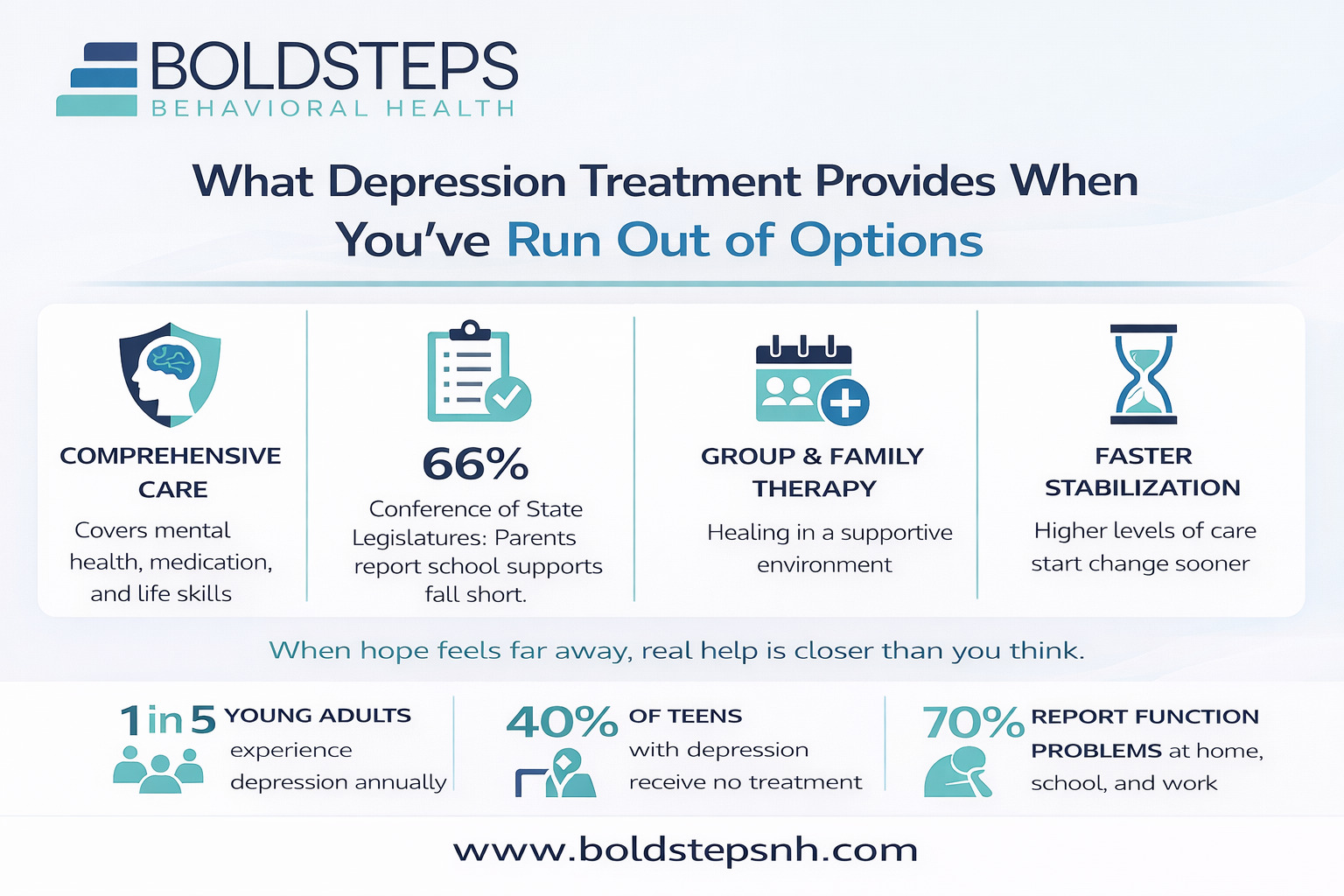
Treatment Helps Parents, Too
You are not a bad parent for needing help. In fact, the parents who reach out are the ones holding everything together—often for months or years—before admitting they can’t do it alone anymore.
When your child begins depression treatment, you’re not just signing them up for care. You’re getting clarity, communication, and support for yourself too. Many programs (including ours) include parent sessions, family education, and opportunities to be involved in the healing process without having to carry all of it yourself.
You shouldn’t have to guess what’s happening behind closed doors. With a quality program, you won’t.
What Real Depression Treatment Looks Like
While every program is different, a high-quality depression treatment plan for young adults might include:
- Psychiatric evaluation and medication support
- Individual and group therapy sessions
- Family involvement and communication plans
- Skills training for emotion regulation, interpersonal communication, and crisis management
- Crisis planning and relapse prevention strategies
- Step-down support like IOP or outpatient services after stabilization
At Bold Steps Behavioral Health, our depression treatment services are built with these layers in mind. Whether your child is just starting to show signs or already deep in crisis, we meet them where they are—and help them begin to come back to themselves.
You’re Not Alone—and You’re Not Too Late
“I thought we waited too long.”
“I thought it had to get worse before we asked for help.”
“I thought treatment was only for extreme cases.”
We hear this all the time. Parents carrying the weight of silence, waiting for permission to act. This is your permission.
If something feels off, it probably is. And if you’re wondering whether treatment could help—it probably can.
Local Help Is Here in New Hampshire
If you’re looking for trusted, compassionate depression treatment in New Hampshire, Bold Steps Behavioral Health is here to help. Our programs are designed with families in mind—so you never have to face this alone.
FAQ: What Parents Ask About Depression Treatment
How do I know if my child needs more than outpatient therapy?
If therapy hasn’t helped after several months, or if your child’s safety, daily functioning, or relationships are suffering, it may be time to explore structured depression treatment. You don’t need to wait for a crisis to take action.
Is medication always part of depression treatment?
Not always. Some clients benefit from therapy and skills work alone. Others respond well to a combination of medication and counseling. We work collaboratively with each client and family to find the right balance.
Will I be involved in my child’s treatment?
Yes. At Bold Steps, we believe families are key partners in recovery. Depending on your child’s age and preferences, we include family education, updates, and sessions as appropriate.
What if my child refuses treatment?
This is a common concern. We can help guide you through options, including how to talk to your child about treatment in a way that feels respectful, not forceful. Sometimes, a parent consult can be the first step—even if your child isn’t ready yet.
How long does depression treatment last?
It depends on the severity and needs of the individual. Some clients benefit from several weeks of intensive support, followed by outpatient care. We adjust the plan based on progress and goals.
If you’re ready to understand what real depression treatment can offer, we’re here to talk. And if you’re looking for local support, we encourage you to explore all available treatment options in New Hampshire. For those in Rockingham, Merrimack, Hillsborough, or Essex County, our nearby locations ensure care is always within reach.
📞 Call (603)915-4223 or visit to learn more about our depression treatment services in New Hampshire.