

There’s a certain kind of exhaustion that comes from trying to get better and feeling like nothing changes.
Not dramatic exhaustion. Quiet exhaustion.
The kind where you still answer emails. Still show up for work. Still tell people you’re “just tired.” But inside, everything feels heavier than it should. Depression and anxiety can wear people down slowly, especially after months or years of trying to manage it alone.
For many people, the hardest part isn’t admitting they’re struggling anymore. It’s admitting they already tried getting help once — and walked away disappointed.
Maybe therapy felt too surface-level. Maybe medication helped briefly and then stopped. Maybe you opened up in treatment and still found yourself back in the same mental place weeks later.
That disappointment changes people. It makes them skeptical in a way that’s hard to explain to someone who’s never felt it.
So if you’ve found yourself searching for a mental health day program near me, not because you’re hopeful but because you’re running out of ways to cope, you’re not alone in that either.
At Bold Steps Behavioral Health’s partial hospitalization program, we work with many people who never thought they’d try treatment again.
Sometimes Weekly Therapy Isn’t Enough for What You’re Carrying
There’s nothing wrong with outpatient therapy. For many people, it’s incredibly helpful.
But depression and anxiety exist on a spectrum. Some people need more than one hour a week to stabilize emotionally, mentally, and physically.
That’s especially true when:
- Getting through the day already feels overwhelming
- Anxiety is affecting sleep, appetite, or concentration
- Depression has started isolating you from people you care about
- You feel emotionally numb most of the time
- You’ve stopped believing things can actually improve
- You keep functioning externally while falling apart internally
A therapist can offer insight and support. But if the rest of your week is spent spiraling, dissociating, shutting down, or barely surviving, progress can feel painfully slow.
That’s where structured daytime care becomes different.
Instead of trying to hold yourself together between occasional appointments, you receive consistent support several days each week. Not to control your life, but to help create enough stability for healing to actually take root.
The Hidden Cost of Looking “Fine”
One of the cruelest parts of anxiety and depression is how often people around you miss it.
You may still be productive. You may still joke around. You may still show up for responsibilities while quietly feeling detached from your own life.
People often assume mental health struggles have to look obvious. But many people experiencing severe depression or anxiety become experts at appearing functional.
Internally, though, they’re exhausted.
Every interaction feels rehearsed. Every task feels heavier than it should. Even small decisions become mentally draining.
Some people describe it like carrying wet cement around in their chest all day.
Others say it feels like their nervous system never fully powers down.
And eventually, survival mode becomes normal.
That’s often the point where people begin searching for a mental health day program near me. Not because they want attention. Not because they’ve “given up.” But because they can feel themselves disappearing underneath the pressure.
Why Treatment Sometimes Feels Like It “Didn’t Work”
This matters to say clearly:
Not every treatment experience is the right fit.
That doesn’t mean you failed.
People respond differently to therapy styles, treatment environments, group dynamics, medications, and levels of care. Sometimes a person enters treatment before they feel emotionally safe enough to engage. Sometimes they leave too early because life responsibilities pull them back out.
And sometimes the support simply wasn’t intensive enough for what they were experiencing.
We meet many people who blame themselves for not getting better faster.
But healing isn’t a performance. It’s not something you fail because you still struggle.
Depression and anxiety are also deeply physical experiences. They affect sleep, energy, concentration, memory, motivation, and emotional regulation. You cannot “logic” your way out of a dysregulated nervous system.
That’s why structured care often focuses on more than talking.
It creates rhythm.
Routine.
Connection.
Accountability.
Daily therapeutic support.
For people who’ve spent months isolated inside their own thoughts, that consistency can matter more than they expected.
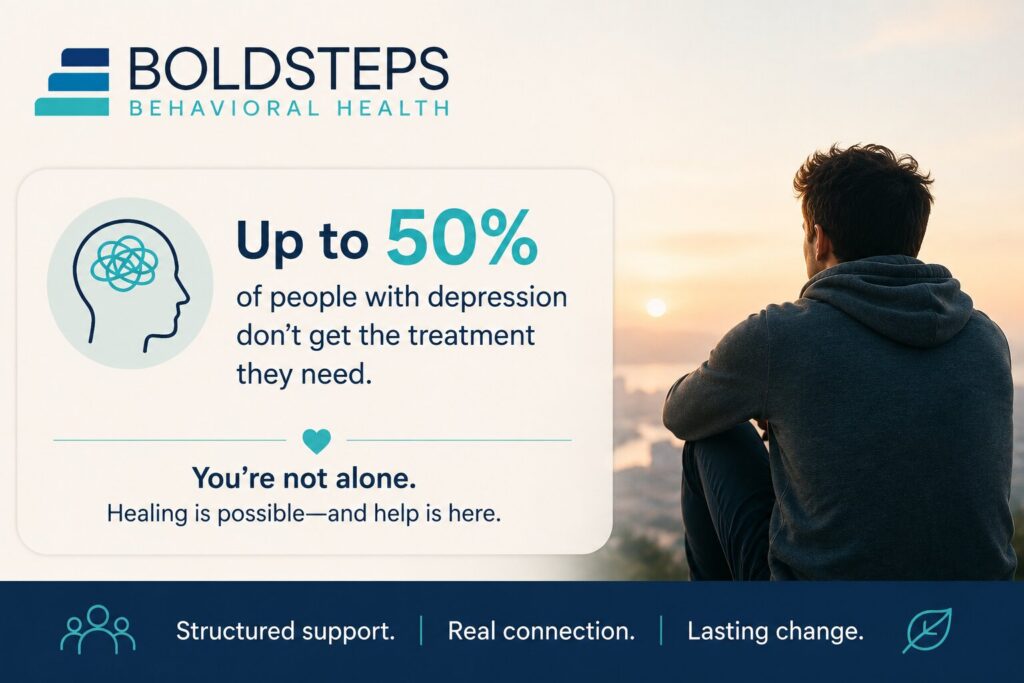
Real Support Should Feel Human — Not Like You’re Being Processed
A lot of people avoid returning to treatment because they’re afraid of feeling judged, pressured, or treated like a checklist.
That fear is valid.
Mental health care should never feel like you’re being rushed through a system while someone nods politely and waits for your hour to end.
The people we see who are most skeptical are often the people who’ve been hurting the longest.
They don’t want big promises.
They want honesty.
They want to know someone actually sees how hard they’ve been trying.
At our facility, we understand that trust often comes back slowly. Some people arrive guarded. Quiet. Emotionally flat. They don’t always believe treatment will help.
That’s okay.
You don’t have to arrive optimistic to deserve support.
A Different Level of Care Doesn’t Mean You’re “Severe”
This is another misconception that keeps people stuck.
Many people hear “partial hospitalization program” and immediately imagine something extreme. They picture losing all independence or stepping entirely away from normal life.
But structured daytime mental health care is often designed for people who still want connection to their everyday lives while receiving more intensive support.
That includes people who:
- Still work or attend school in some capacity
- Live at home
- Need more structure without overnight care
- Are struggling to function consistently because of anxiety or depression
- Feel stuck in cycles that outpatient therapy alone hasn’t improved
Sometimes people wait until they’re completely overwhelmed before considering a higher level of care because they think they need to “earn” help by getting worse first.
You don’t.
You’re allowed to seek more support before things completely collapse.
Progress Usually Looks Smaller Before It Looks Bigger
This is something many people don’t hear enough.
Real mental health progress often begins quietly.
It may look like:
- Getting out of bed without bargaining with yourself for an hour
- Feeling emotionally present during a conversation
- Driving somewhere without panic sitting in your chest
- Sleeping through the night
- Eating regularly again
- Not crying in the bathroom at work
- Feeling moments of calm instead of constant dread
These changes can seem small from the outside.
But to someone who’s been barely surviving, they matter deeply.
Healing from depression and anxiety is rarely one giant breakthrough moment. More often, it’s a slow rebuilding of emotional capacity.
Like learning how to breathe normally again after holding tension for years.
You Don’t Need to Be Certain Before Reaching Out
A lot of people delay getting help because they think they should feel more confident first.
They wait to become “ready.”
But many people enter treatment unsure. Skeptical. Burned out. Emotionally numb.
Readiness is often much quieter than people expect.
Sometimes it simply sounds like:
“I can’t keep living like this.”
That sentence alone is enough.
Searching for a mental health day program near me doesn’t mean you’re weak. It doesn’t mean you failed therapy. And it doesn’t mean you’re broken beyond repair.
It may simply mean your current level of support no longer matches the amount of pain you’ve been carrying.
And recognizing that takes honesty.
FAQ
How do I know if I need more than weekly therapy?
If your symptoms are affecting your ability to function consistently, maintain relationships, work, sleep, or care for yourself, a higher level of support may help. Many people benefit from structured daytime treatment when weekly sessions no longer feel sufficient.
What happens in a structured daytime mental health program?
Programs typically include multiple therapy sessions throughout the week, group support, coping skill development, psychiatric care when needed, and consistent therapeutic structure. The goal is to provide more support without requiring overnight treatment.
Is a partial hospitalization program only for severe mental illness?
No. Many people entering structured care are dealing with depression, anxiety, emotional burnout, panic attacks, or worsening mental health symptoms that haven’t improved through traditional outpatient therapy alone.
What if treatment didn’t help me before?
Previous treatment experiences don’t automatically predict future outcomes. Different programs, therapy approaches, environments, and levels of support can create very different experiences. Many people who felt disappointed by past treatment respond better once they find care that matches their actual needs.
Can I still live at home while getting treatment?
Yes. A partial hospitalization program allows people to receive intensive support during the day while continuing to return home in the evenings.
Is it normal to feel skeptical about treatment?
Very normal. Many people seeking help for depression and anxiety feel emotionally exhausted after trying multiple approaches already. You do not need to feel fully hopeful or confident before reaching out for support.
Will people think I’m “crazy” for needing more help?
Needing more support does not mean you’re broken. Mental health conditions can become difficult to manage alone, especially after long periods of stress, isolation, or emotional exhaustion. Seeking appropriate care is a form of self-awareness, not failure.
There’s no perfect moment to ask for help.
Sometimes there’s just a moment where continuing exactly as you are starts feeling harder than trying something different.
Call (603)915-4223 or visit our partial hospitalization program services to learn more about our partial hospitalization program services in New Hampshire.