

Some people relapse after celebrations. Some after loneliness. But for a lot of people, it happens after a day that simply drained them dry.
A stressful shift. A fight at home. A panic-filled drive home from work. Bad news that sits heavy in your chest all afternoon. Pressure stacking quietly until your brain starts reaching for the one thing that used to shut the noise off.
If that’s where you are right now, you’re not weak. You’re not broken either. Your brain may have learned to connect stress with temporary relief. That connection can feel automatic after months or years of drinking to cope.
And the hard part? Stress doesn’t ask whether you’re trying to recover before it shows up.
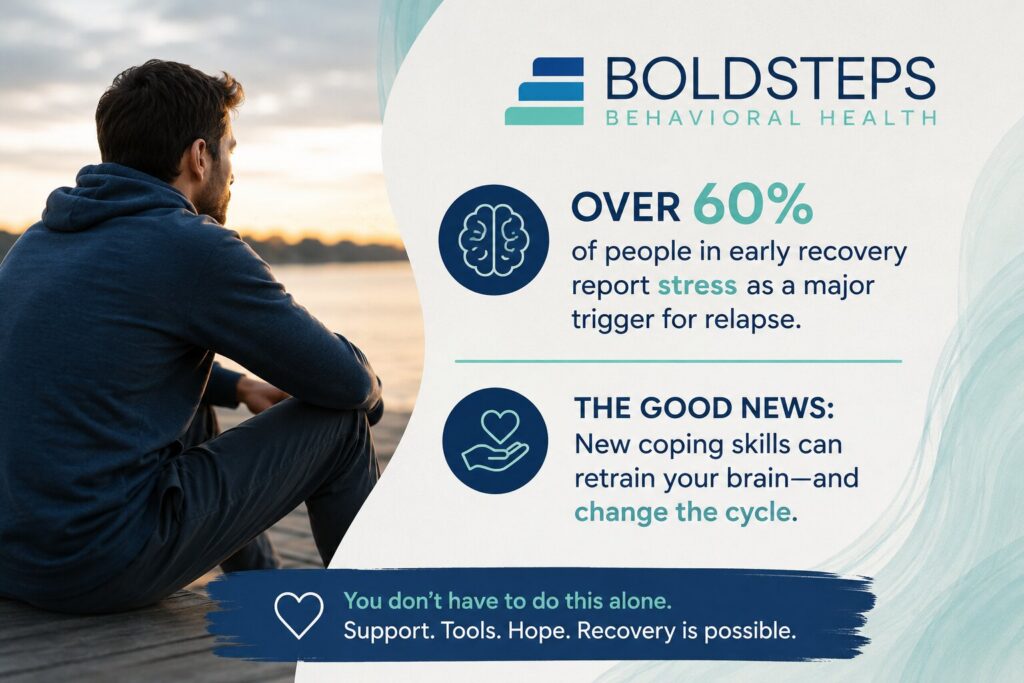
The good news is that relapse patterns can change. Treatments like cognitive behavioral therapy for addiction recovery are often designed to help people understand the thoughts, emotions, and habits underneath the urge to drink — especially during high-stress moments.
Stress Changes More Than Your Mood
Most people think cravings are just about wanting alcohol.
But stress changes the way your brain processes discomfort, urgency, and decision-making. After a hard day, your nervous system can start acting like it’s under threat. That’s why drinking urges can suddenly feel overwhelming at night, even if you felt completely committed to sobriety earlier in the day.
The brain wants relief fast.
That’s what makes relapse so confusing for many people. One part of you genuinely wants to stop drinking. Another part feels desperate for escape.
Those two things can exist at the same time.
For people trying to recover, stressful days often create thoughts like:
- “I can’t calm down.”
- “I deserve one drink after today.”
- “I’ll quit again tomorrow.”
- “I just need to turn my brain off.”
- “Nobody understands how exhausted I am.”
These thoughts don’t mean you secretly want to fail. They usually mean your nervous system is overloaded.
Alcohol may have become your brain’s emergency exit.
Relapse Usually Starts Before the First Drink
One of the biggest myths about relapse is that it happens suddenly.
In reality, relapse often begins quietly — emotionally, mentally, and physically — long before alcohol enters the picture.
It might start with:
- Constant stress without recovery time
- Isolation
- Skipping therapy or support meetings
- Poor sleep
- Bottling emotions up
- Feeling emotionally numb
- Believing you have to “handle everything yourself”
People often imagine relapse as one dramatic bad decision. But many relapses are built from dozens of small moments where stress slowly outpaces support.
Think of it like carrying heavy grocery bags for too long. At first, it feels manageable. Then your hands start aching. Then your arms shake. Eventually something drops.
That doesn’t mean you were weak for carrying them. It means you were overloaded.
The Shame Spiral Keeps People Stuck
A lot of people relapse once and immediately decide they’ve ruined everything.
That shame becomes dangerous.
Because once shame takes over, people often stop reaching out. They isolate. They hide. They drink more because they feel hopeless about the relapse itself.
This is one reason recovery can feel so emotionally exhausting. You’re not only fighting cravings. You’re often fighting the belief that you should be able to do this perfectly by now.
But relapse does not erase progress.
A difficult night does not cancel every healthy choice you made before it.
Many people who eventually build stable recovery went through periods where stressful days kept pulling them backward. The difference wasn’t perfection. It was learning how to interrupt the cycle before shame fully took over.
You Don’t Need More Punishment — You Need Different Tools
People struggling with alcohol use are often incredibly hard on themselves already.
They call themselves lazy. Weak. Selfish. Broken.
Usually, they’ve been doing that for years.
What they actually need is support that helps them respond differently to stress in real life.
That’s where therapy can help.
For many people working to stop alcohol cravings, therapy becomes less about “fixing” themselves and more about understanding:
- What triggers the urge to drink
- What emotions feel hardest to tolerate
- Which thoughts appear right before relapse
- How stress affects their body
- What healthier coping patterns can realistically replace alcohol
This matters because cravings are rarely random.
There’s usually a story happening underneath them.
The Body Remembers Stress Even If You Try to Ignore It
One thing many people don’t realize is how physical stress can become.
After enough overwhelm, your body can start living in survival mode:
- Tight chest
- Racing thoughts
- Irritability
- Restlessness
- Trouble sleeping
- Feeling emotionally “on edge”
- Mental exhaustion that turns into numbness
In those moments, alcohol can feel less like pleasure and more like relief.
That’s why recovery often involves calming the nervous system — not just removing alcohol.
Simple things can matter more than people expect:
- Eating consistently
- Getting enough sleep
- Moving your body
- Talking honestly instead of suppressing emotions
- Building routines that create stability
- Learning grounding techniques during stressful moments
These things sound small. But small stabilizers can prevent emotional overload from becoming relapse.
Tiny Interruptions Matter More Than Perfect Control
A lot of people think recovery means never wanting to drink again.
That belief can make every craving feel terrifying.
But sometimes recovery starts with smaller victories:
- Delaying the urge by 15 minutes
- Calling someone instead of isolating
- Leaving the bar parking lot
- Throwing away alcohol before opening it
- Admitting, “I’m not okay right now.”
Those moments count.
Recovery is often less dramatic than people imagine. Sometimes it looks like sitting in your car gripping the steering wheel while trying not to stop at the liquor store on the way home.
That moment matters.
Sometimes healing begins in the pause.
Quick Ways to Slow a Stress-Fueled Craving
Pause before acting
Cravings rise fast, but they also change. Giving yourself even 20 minutes can reduce the intensity.
Change your environment
Stress grows louder in isolation. Walk outside. Sit somewhere public. Interrupt the setting tied to drinking.
Eat and hydrate first
Low blood sugar and dehydration can make emotional overwhelm worse.
Stop arguing with yourself
You don’t need to solve your entire future tonight. Focus on getting through the next hour safely.
Reach out earlier than feels necessary
You do not have to wait until you’re on the edge of relapse to ask for support.
Therapy Can Help You Understand What’s Really Happening
For many people, alcohol becomes connected to emotional survival.
Maybe drinking helped you:
- Shut off anxiety
- Escape pressure
- Sleep after stressful days
- Feel less emotionally numb
- Quiet self-criticism
- Avoid painful memories
- Feel temporarily safe
That doesn’t mean alcohol is helping you now. But it explains why urges can feel so emotionally loaded.
Therapy approaches like CBT help people slow these patterns down and examine them honestly.
For example, someone might notice this cycle:
- Stressful day
- Thought: “I can’t handle this.”
- Emotional overwhelm
- Craving
- Drinking
- Shame
- More stress
- Repeat
Once people can identify the cycle clearly, they can start interrupting it earlier.
That’s why many people trying to stop alcohol cravings benefit from structured support instead of relying on willpower alone.
You don’t have to figure this out perfectly by yourself.
You Are Not Failing Because Stress Affects You
A lot of people in recovery are carrying far more than others realize.
They’re parenting while struggling silently. Working full-time while emotionally exhausted. Smiling in public while fighting urges privately every night.
From the outside, they may look functional.
Inside, they feel like they’re drowning quietly.
If that sounds familiar, it’s important to hear this clearly: struggling after stressful days does not make you incapable of recovery.
It makes you human.
Recovery is not about becoming emotionless. It’s about learning how to move through stress without destroying yourself in the process.
And that takes practice.
FAQ: Stress, Relapse, and Alcohol Urges
Why do I always want to drink after stressful days?
Stress activates the brain’s desire for relief and comfort. If alcohol became your main coping tool in the past, your brain may automatically associate stress with drinking. That pattern can change with support, awareness, and healthier coping strategies.
Does relapse mean treatment failed?
No. Many people relapse during the recovery process. Relapse can be a sign that certain stressors, emotional triggers, or coping gaps still need attention — not proof that recovery is impossible.
How can I stop alcohol urges at night?
Nighttime cravings are common because stress and exhaustion tend to build throughout the day. Helpful strategies may include creating evening routines, reducing isolation, eating consistently, avoiding triggers, and working with a therapist to identify emotional patterns connected to drinking.
What should I do during a strong craving?
Try to slow the moment down instead of fighting the craving aggressively. Change environments, call someone supportive, drink water, eat something nourishing, or distract your nervous system with movement or grounding exercises. Cravings often peak and fade over time.
Can therapy really help with relapse patterns?
Yes. Therapy can help people understand the thoughts, emotions, behaviors, and stress responses connected to alcohol use. CBT is especially helpful for recognizing patterns that happen before relapse and developing healthier responses.
Why do I relapse even when I genuinely want to quit?
Wanting recovery and struggling with urges can exist together. Addiction changes stress responses, habits, and coping systems in the brain. Recovery often requires learning new ways to regulate stress, emotions, and overwhelm over time.
You’re Allowed to Ask for Help Before Things Completely Fall Apart
A lot of people wait until they lose everything before reaching out.
But you do not have to earn support by suffering longer.
If stressful days keep ending with drinking, that matters. If you’re exhausted from starting over, that matters too.
There is nothing weak about needing help learning new ways to cope.
And there is still hope here — even if you’ve relapsed before, even if you’re discouraged, even if part of you is scared treatment won’t work.
Call (603)915-4223 or explore our therapy and CBT services to learn more about support at Bold Steps Behavioral Health NH.