

I remember the moment I realized something wasn’t adding up.
I had years of sobriety.
Not weeks.
Not months.
Years.
The crisis that once dominated my life was gone. The substances were gone. The chaos had largely settled down. Relationships were better. Work was stable. People trusted me again.
From the outside, my recovery looked successful.
Inside, I felt disconnected.
That realization scared me more than I expected.
Because if sobriety wasn’t making me feel whole, then what was missing?
For a while, I felt guilty even asking that question.
After all, wasn’t this what I wanted?
Wasn’t this what I worked so hard to achieve?
But the truth is that many long-term alumni quietly wrestle with the same experience.
They’re sober.
They’re functioning.
They’re doing all the right things.
Yet something still feels off.
If that’s where you are, I want you to know something important:
You are not failing recovery.
You may simply be discovering that recovery has layers.
Many people exploring DBT therapy and emotional wellness support eventually reach this realization. They learn that staying sober and feeling emotionally healthy are connected, but they are not identical.
And understanding that difference changed my life.
The Goalposts Move in Recovery
Early recovery is often focused on survival.
Can I make it through today?
Can I avoid relapse?
Can I rebuild some stability?
Those questions matter.
In fact, they can be life-saving.
But something interesting happens over time.
As the immediate crisis fades, different questions begin appearing.
Questions like:
- Why am I still so angry?
- Why do relationships feel difficult?
- Why do I feel lonely around people who care about me?
- Why do small setbacks affect me so strongly?
- Why do I still feel emotionally exhausted?
These questions can feel confusing because they’re not about sobriety itself.
They’re about quality of life.
And quality of life often becomes the next stage of recovery.
I Mistook Stability for Healing
For years, I assumed emotional health would happen automatically.
Stay sober long enough and everything else will eventually sort itself out.
At least that’s what I believed.
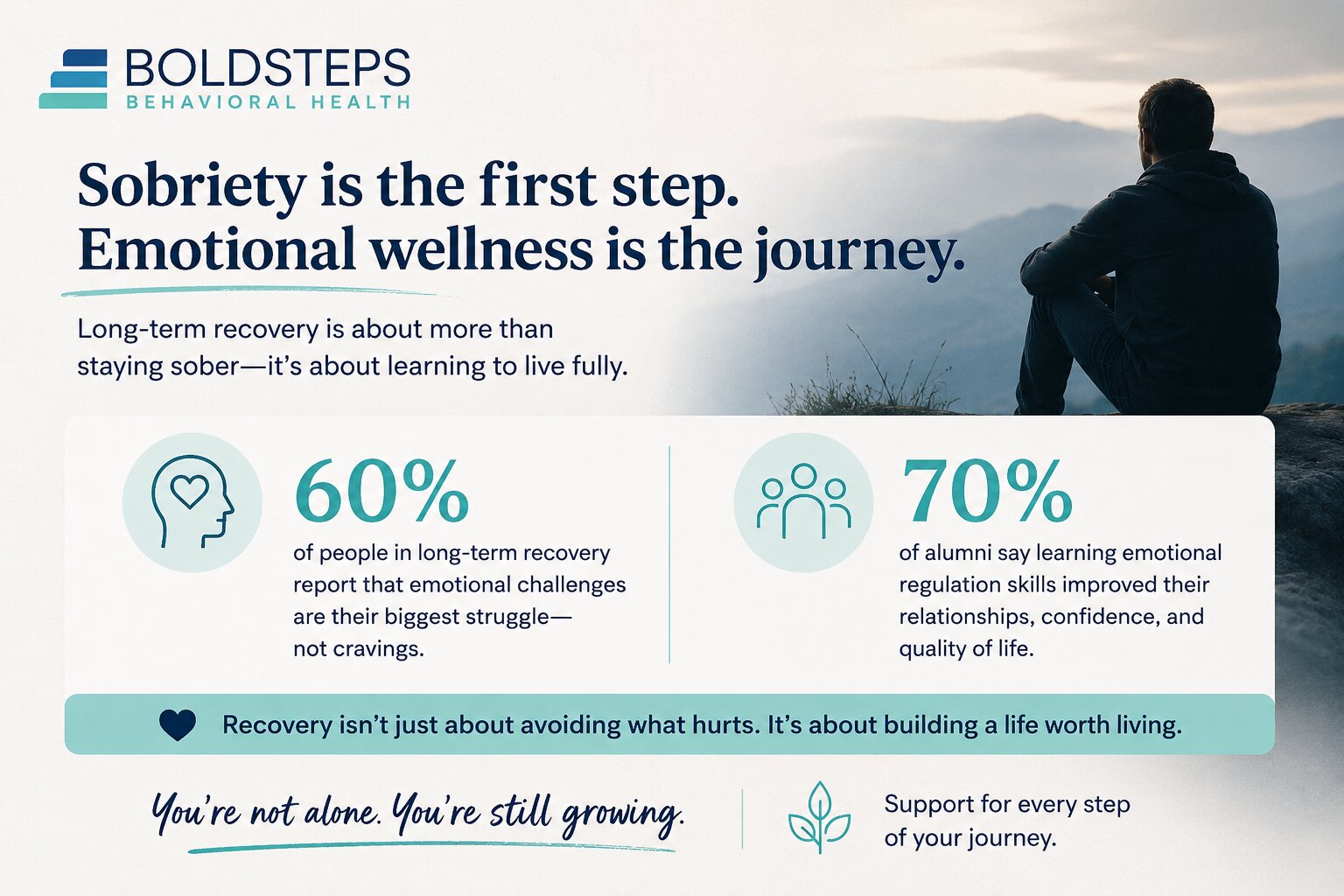
The problem is that removing substances and building emotional wellness are not the same process.
Substances may disappear.
The emotional patterns underneath often remain.
I still avoided conflict.
I still struggled with criticism.
I still shut down when conversations became vulnerable.
I still carried shame I had never fully addressed.
My behavior changed.
My emotional habits largely hadn’t.
That realization was uncomfortable.
But it was also freeing.
Because once I understood the problem, I could finally begin working on it.
The Emotional Skills I Never Learned
Nobody teaches most people how to regulate emotions.
At least not directly.
Many of us grow up learning how to survive difficult situations.
We learn how to suppress feelings.
We learn how to distract ourselves.
We learn how to avoid discomfort.
What we don’t always learn is how to:
- Tolerate distress
- Manage intense emotions
- Communicate effectively
- Set healthy boundaries
- Navigate conflict
- Process disappointment
- Respond instead of react
Those skills sound simple.
They’re not.
Especially for people who spent years using substances to escape emotional pain.
Recovery removes the escape hatch.
Then life asks us to learn new tools.
White-Knuckling Emotions Is Still White-Knuckling
Most people understand what it means to white-knuckle sobriety.
You fight cravings.
You force yourself through difficult days.
You hold on tightly.
What I didn’t realize was that I had simply transferred that approach to emotions.
I wasn’t drinking anymore.
But I was still fighting every feeling.
I resisted sadness.
I feared anxiety.
I avoided vulnerability.
I pushed away disappointment.
From the outside, it looked like self-control.
Inside, it felt exhausting.
Eventually I realized something important:
Emotional health isn’t about controlling every feeling.
It’s about learning how to experience feelings without being controlled by them.
That distinction changed everything.
The Loneliness Nobody Talks About
One of the strangest parts of long-term recovery can be loneliness.
Not because people aren’t around.
Because emotional connection can still feel difficult.
I had relationships.
Friends.
Family.
Support.
Yet there were times when I felt completely alone.
The problem wasn’t physical isolation.
It was emotional distance.
I wasn’t fully sharing what I felt.
I wasn’t fully expressing what I needed.
I wasn’t allowing people to truly know me.
Many alumni experience this.
The substance use may be gone, but emotional walls remain.
Those walls once served a purpose.
They helped us survive.
Eventually they begin preventing connection.
And connection is one of the most important parts of emotional wellness.
The Anger That Wasn’t Really Anger
For years, I described myself as someone with an anger problem.
It seemed obvious.
I got irritated quickly.
I became defensive.
Small frustrations felt huge.
Then something surprising happened.
I started paying closer attention.
And I realized anger was rarely the first emotion.
It was usually the second.
Underneath the anger was:
- Fear
- Shame
- Embarrassment
- Loneliness
- Disappointment
- Insecurity
Anger simply arrived first because it felt safer.
Many people in recovery discover similar patterns.
They aren’t reacting to the situation itself.
They’re reacting to emotions they’ve never learned how to identify or process.
That awareness can feel overwhelming at first.
But it also creates opportunities for growth.
The Success Stories That Changed My Perspective
One of the most influential people in my recovery had over a decade sober.
I assumed he had everything figured out.
Then one day he told me something surprising.
He said:
“The hardest work I ever did wasn’t getting sober. It was learning how to handle my emotions afterward.”
That stuck with me.
Because this was someone I respected deeply.
Someone who seemed calm, grounded, and emotionally healthy.
What I eventually learned was that his emotional wellness wasn’t automatic.
He worked on it intentionally.
He learned communication skills.
Practiced self-awareness.
Developed healthier coping strategies.
He treated emotional growth the same way he once treated sobriety:
As something worth investing in.
Why Emotional Growth Requires Practice
Many people assume emotional health is a personality trait.
You either have it or you don’t.
I don’t believe that anymore.
Emotional wellness is a skill set.
And skills improve through practice.
Think about physical fitness.
Nobody expects to build strength by exercising once.
The same principle applies emotionally.
Healthy emotional responses are often built through repetition.
You practice:
- Pausing before reacting
- Naming emotions accurately
- Communicating honestly
- Setting boundaries respectfully
- Managing stress effectively
Over time those practices become habits.
And habits shape daily life.
When I Stopped Asking Why and Started Asking How
For years I kept asking:
“Why do I still feel stuck?”
Eventually I started asking:
“How do I build the skills I’m missing?”
That shift was powerful.
Because “why” often kept me trapped in analysis.
“How” moved me toward action.
Many people begin exploring resources like an emotion regulation class near me because they’re ready for practical tools.
They’re tired of understanding the problem intellectually.
They want skills they can actually use.
And that’s a reasonable goal.
Insight matters.
But insight without action rarely creates lasting change.
Recovery Becomes Different When You Stop Surviving
One of the best descriptions I’ve ever heard came from another alumni member.
He said:
“Sobriety stopped me from dying. Emotional health taught me how to live.”
At first, that sounded dramatic.
Now I understand exactly what he meant.
The first stage of recovery helped him survive.
The second stage helped him thrive.
That’s the difference.
One removes destruction.
The other creates fulfillment.
Many long-term alumni eventually discover they want more than stability.
They want joy.
Meaning.
Connection.
Peace.
Growth.
Those desires are not selfish.
They’re signs of healing.
Support Doesn’t End When the Crisis Ends
One mistake I made was assuming support was only necessary during emergencies.
I believed therapy, skill-building, and emotional growth resources were for people actively struggling.
I was wrong.
Support can also help people who are stable but want more from life.
People who want healthier relationships.
People who want stronger emotional resilience.
People who want to feel connected instead of simply functional.
Many individuals find valuable resources through support in Areas We Serve and local opportunities focused on emotional wellness.
Others explore treatment options in Merrimack County NH because they recognize that personal growth doesn’t stop after early recovery.
That’s not weakness.
That’s maturity.
Real Strength Looks Different Than I Thought
For a long time, I believed strength meant enduring.
Pushing through.
Handling things alone.
Not needing help.
Today, I see strength differently.
Strength is being honest when you’re struggling.
Strength is admitting something still feels missing.
Strength is choosing growth even when life looks fine from the outside.
Strength is allowing yourself to become healthier than you were yesterday.
That’s the version of recovery I wish more people talked about.
Not just staying sober.
Becoming emotionally healthy.
Because those two things together can create a life that feels genuinely meaningful.
And for many alumni, that may be the next chapter waiting to be written.
Frequently Asked Questions
Can someone be sober but still emotionally unhealthy?
Yes. Sobriety removes substances, but emotional challenges such as anxiety, anger, shame, loneliness, or unhealthy coping patterns can still remain. Emotional wellness often requires additional growth and skill development.
Why do I feel stuck even after years of sobriety?
Many alumni reach a point where survival is no longer the goal. Once stability is established, emotional health, relationships, purpose, and personal growth often become the next areas needing attention.
Is it normal to feel disconnected in long-term recovery?
Absolutely. Many people experience periods of loneliness, emotional distance, or dissatisfaction even after achieving long-term sobriety. These experiences do not mean recovery is failing.
What are emotion regulation skills?
Emotion regulation skills help people identify, understand, and respond to emotions in healthier ways. They can improve relationships, communication, stress management, and overall emotional well-being.
Why do some people seek emotional wellness support years after getting sober?
Because recovery evolves over time. Many people realize they want more than abstinence. They want stronger relationships, better coping skills, and a greater sense of fulfillment.
Does asking for help mean I’m struggling?
Not necessarily. Many people seek support because they want to continue growing emotionally, strengthen existing recovery, and build a more meaningful life.
Call (603)915-4223 or visit our DBT therapy services to learn more about our therapy, dbt services in Rockingham County, NH.