

When someone you love starts behaving in ways that no longer make sense, it can leave you feeling scared, confused, and helpless.
Maybe your brother seems like himself for a few days, then suddenly vanishes without explanation.
Maybe he stops answering calls, misses family events, or disappears for an entire weekend.
When he finally returns, his mood feels completely different. Sometimes he’s energetic and talkative. Other times he’s angry, withdrawn, or emotionally distant.
If you’ve found yourself wondering what is happening, you’re not alone.
At Bold Steps Behavioral Health NH, many families reach out after noticing these exact patterns. They aren’t looking for a diagnosis. They simply want to understand why someone they care about seems to be changing in front of their eyes.
In many situations, ongoing pill use and emotional instability can be connected. Learning more about when mental health and substance use collide can help families understand why these behaviors may be occurring and what options may exist moving forward.
The Changes Often Happen Gradually
One reason families feel so confused is because the situation rarely changes overnight.
At first, there may be small things that seem easy to explain away.
Your brother may become more tired than usual.
He may cancel plans occasionally.
You may notice periods where he seems emotionally distant.
Over time, those small changes can become larger and harder to ignore.
The disappearances become longer.
The excuses become less believable.
The mood shifts become more intense.
Eventually, family members find themselves wondering whether they are even talking to the same person they once knew.
This gradual progression often makes it difficult to recognize how serious the situation has become.
Why Someone Might Disappear for Days at a Time
When a loved one disappears repeatedly, families often assume the person simply doesn’t care.
The reality is usually much more complicated.
People struggling with pill misuse often isolate for several reasons.
Some disappear because they want privacy while using substances.
Others withdraw because they feel embarrassed or ashamed about what is happening.
Some avoid family because they know difficult questions will be asked.
Others disappear because their daily routines have become increasingly centered around obtaining, using, or recovering from substances.
In many cases, the person isn’t intentionally trying to hurt loved ones.
Instead, the substance begins taking priority over responsibilities, relationships, and commitments.
That shift can be painful for families to witness.
It can also create feelings of anger, sadness, fear, and frustration that are difficult to process.
The Emotional Roller Coaster Families Experience
Living with uncertainty can be exhausting.
Many siblings describe feeling trapped on an emotional roller coaster.
One day they feel hopeful because their brother seems motivated to make changes.
The next day he disappears again.
One week he talks about getting help.
The following week he insists everything is fine.
This cycle can leave family members constantly questioning what is real.
You may begin monitoring your phone more closely.
You may struggle to concentrate at work.
You may find yourself imagining worst-case scenarios every time your brother stops responding.
Many people describe this experience as carrying a heavy backpack that never comes off.
Even during good moments, the worry remains.
Why Mood Changes Can Become So Extreme
Substances affect much more than physical health.
They can influence emotions, thinking patterns, energy levels, motivation, and behavior.
Depending on the substance involved, a person may appear unusually energetic one day and deeply depressed the next.
Sleep disruption can make these changes even more noticeable.
Poor sleep often increases irritability, impulsivity, anxiety, and emotional sensitivity.
Over time, many families begin researching mood swings from substance use because the emotional changes seem impossible to understand.
What makes this particularly confusing is that these shifts may not happen immediately after someone uses a substance.
The effects can continue during withdrawal periods, recovery phases, and attempts to cut back or quit.
As a result, families often see the mood changes without recognizing the role substances may be playing behind the scenes.
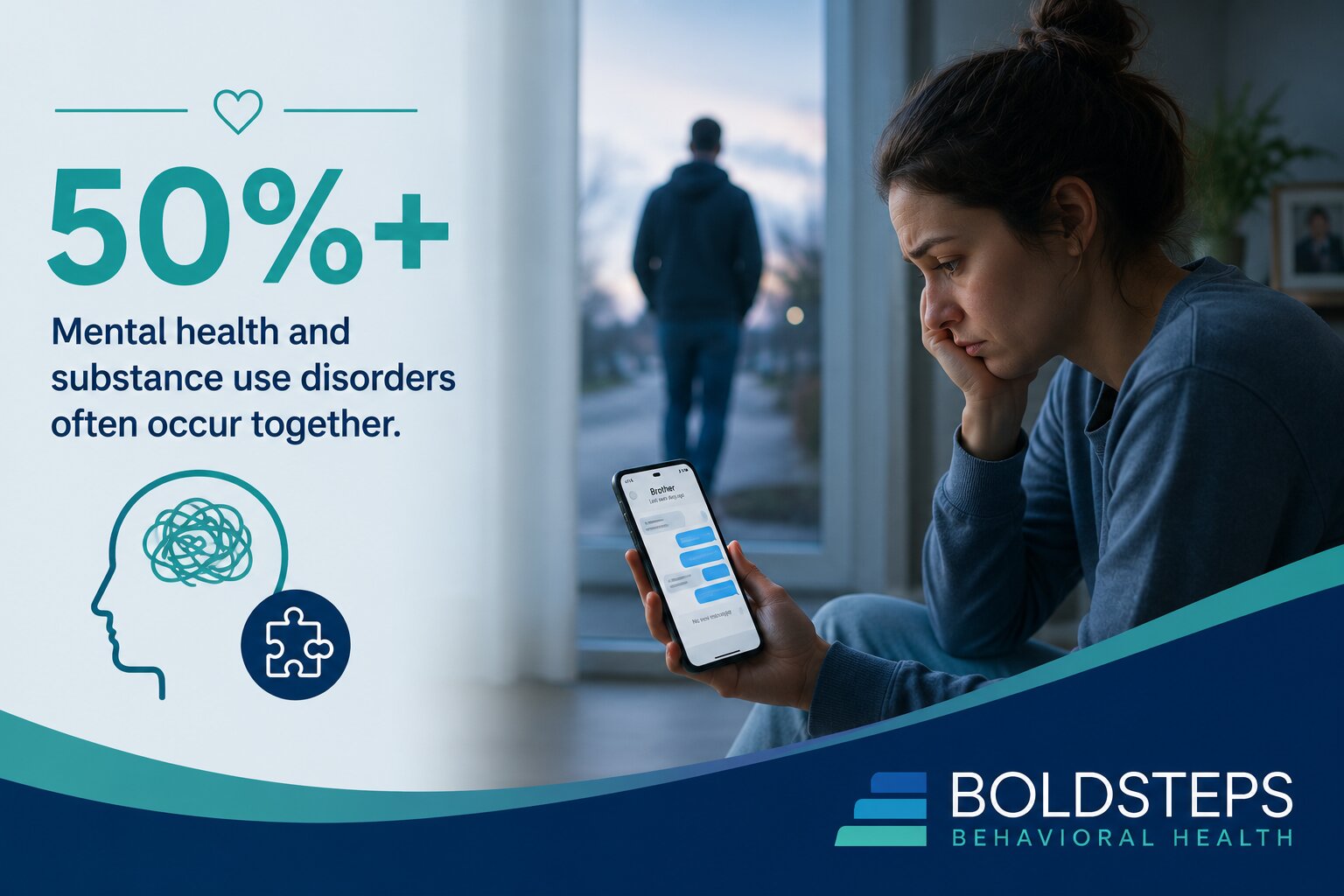
Sometimes Mental Health Is Part of the Picture
One of the most misunderstood aspects of addiction is that emotional struggles and substance use frequently occur together.
Someone may be experiencing depression while also misusing pills.
Another person may be living with anxiety and using substances to temporarily quiet overwhelming thoughts.
Others may be coping with unresolved trauma, grief, stress, or emotional pain.
When mental health concerns and substance use exist together, symptoms often become more complicated.
Family members may notice:
- Increased irritability
- Unpredictable emotional reactions
- Isolation
- Lack of motivation
- Persistent sadness
- Anxiety
- Difficulty maintaining relationships
- Trouble managing daily responsibilities
Because both issues can influence one another, it can become difficult to separate where one ends and the other begins.
This is one reason comprehensive support often focuses on both challenges rather than viewing them as separate problems.
Why Promises to Change May Not Lead to Lasting Change
Families often hear statements like:
“I’ll stop next week.”
“I don’t need help.”
“I’ve got this under control.”
“I can quit whenever I want.”
These conversations can be incredibly frustrating.
Especially when the same promises are followed by the same behaviors.
It’s important to understand that many people genuinely mean what they say in those moments.
They may sincerely want to stop.
They may truly believe they can handle things on their own.
The problem is that addiction affects decision-making, impulse control, and judgment.
Wanting to change and being able to change are not always the same thing.
This doesn’t excuse harmful behavior.
But it can help explain why repeated promises often fail to produce lasting results without additional support.
What Families Should Pay Attention To
Families sometimes wait for a major crisis before taking their concerns seriously.
But smaller warning signs often appear long before an emergency occurs.
Some signs worth paying attention to include:
- Frequent disappearances
- Increased secrecy
- Sudden financial problems
- Changes in friend groups
- Unexplained mood shifts
- Missing work or school
- Sleeping at unusual times
- Increased defensiveness
- Neglecting responsibilities
- Loss of interest in activities they once enjoyed
No single sign confirms a substance use problem.
However, when several of these patterns appear together, they may indicate that something deeper is happening.
Trusting your instincts does not mean you’re being judgmental.
It means you’re paying attention.
You Cannot Fix This Alone
One of the hardest lessons many siblings learn is that love alone cannot solve addiction.
You may have tried reasoning.
You may have tried encouraging.
You may have tried setting boundaries.
You may have spent countless hours worrying, researching, and searching for answers.
None of that means you’ve failed.
Substance use disorders are complex conditions that affect behavior, emotions, and decision-making in ways that are difficult for families to control.
Supporting someone is important.
Trying to carry the entire burden yourself is not.
Families deserve support too.
Understanding what is happening can often reduce some of the confusion and fear that accompanies these situations.
Hope Exists Even When Things Feel Unpredictable
When someone you love continues disappearing and their emotions seem all over the place, it can feel impossible to imagine things improving.
Many families become exhausted from constantly waiting for the next crisis.
Yet recovery happens every day.
People who once seemed unreachable reconnect with their families.
Individuals who struggled with pills for years find stability.
Relationships begin healing.
Trust is rebuilt one step at a time.
The journey is rarely simple.
But difficult situations are not hopeless situations.
The fact that you’re seeking answers right now shows how deeply you care.
And understanding what may be happening is often the first step toward finding a path forward.
Families seeking support in Areas We Serve or looking for care in Rockingham County NH can benefit from learning more about the connection between emotional health and substance use challenges.
Frequently Asked Questions
Why does my brother disappear after using pills?
People may isolate for many reasons, including shame, fear of confrontation, withdrawal symptoms, or spending time obtaining and using substances. Disappearing does not necessarily mean they no longer care about their family, but it can indicate that substance use is significantly affecting their behavior.
Are mood changes common when someone is misusing pills?
Yes. Certain substances can affect emotions, energy levels, sleep, and decision-making. Mood changes may occur while using substances, during withdrawal, or during attempts to stop using.
Could mental health problems be contributing to these behaviors?
Sometimes. Anxiety, depression, trauma, and other mental health concerns frequently occur alongside substance use challenges. When both are present, symptoms can become more unpredictable and difficult to understand.
How do I know if the situation is serious?
If you notice ongoing disappearances, increasing secrecy, significant mood changes, relationship problems, or neglected responsibilities, it may be worth seeking professional guidance. Early intervention is often easier than waiting for a crisis.
What should I do if my brother refuses help?
You cannot force someone to change if they are not ready. However, you can continue expressing concern, set healthy boundaries, learn about available resources, and seek support for yourself and other family members.
Can people recover from situations like this?
Yes. Many individuals who struggle with pills, emotional instability, and relationship challenges eventually find recovery. While every journey is different, positive change is possible with appropriate support and treatment.
Call 603-915-4223 or visit our addiction and dual diagnosis services to learn more about our addiction, dual diagnosis services in New Hampshire.