

From the outside, I seemed to have it all together.
Good job. Invited to dinners. Projects that got noticed. A laugh people liked. A reputation I didn’t want to ruin.
But the one thing no one saw—no matter how many compliments I got—was how much I needed a drink just to make it through the day.
I didn’t wait for a DUI.
I didn’t lose a job.
I didn’t get confronted by someone significant.
I simply realized one morning that I was more afraid of waking up without alcohol than I was of continuing to drink.
That’s when I chose an intensive outpatient program—before it got ugly, before life blew up, before I had to admit I was “that person.”
This is how and why I did it.
I Looked Fine. But Inside I Was Running on Empty
Most people thought I was just… busy.
And maybe I was. But I was also drowning.
Work looked great.
My calendar looked full.
People thought I had it together.
But “together” was now just a mask.
Before meetings.
After meetings.
To unwind.
To sleep.
Quite literally, alcohol became the duct tape holding my days together.
I functioned. But I didn’t actually live.
And that’s a big difference.
The High‑Functioning Myth: If You’re Doing Okay, You Don’t Need Help
High‑functioning doesn’t mean low‑risk.
It means your problems are quieter.
It means your breakdown might happen slowly, in whispers instead of bangs.
I knew something was off.
I knew I was drinking too much.
I knew it was affecting me.
But everyone around me still saw success. So I told myself this story:
“I can handle this. I’ll just cut back later.”
Sound familiar?
It did to me too.
And that’s exactly the trap that kept me stuck longer than I wanted.
When Denial Sounds Like Responsibility
I convinced myself I was being responsible by not “ruining” my life.
I wasn’t irresponsible.
I wasn’t unreachable.
I showed up — every day.
That’s the tricky thing about high‑functioning addiction: the lies you tell yourself don’t sound ridiculous. They sound like logic.
They sound like commitment.
They sound like resilience.
But they’re not resilience if the cost is your peace, your sleep, your clarity, your heart.
I started to see it that way. Quietly. Slowly. Before anything “big” happened.
Why I Chose an Intensive Outpatient Program
I didn’t want inpatient treatment. I had responsibilities I couldn’t just walk away from.
I had responsibilities I wanted to keep.
I didn’t want to explain long absences at work.
I didn’t want to tell friends, “I’m away for weeks.”
I didn’t want my life to stop.
Intensive outpatient treatment let me keep living my life — while finally dealing with the stuff I had been burying under booze.
I could work, see people, handle commitments — and still get help.
That was huge.
And it’s exactly what an intensive outpatient program offers:
- Structure without loss of daily life
- Accountability without isolation
- Support without dramatic disruption
- Real tools, not platitudes
I didn’t go because I was at rock bottom.
I went because I saw the cliff ahead and didn’t want to end up there.
What Everyday Healing Actually Looks Like
Let’s get honest about something:
Healing doesn’t always look dramatic.
It doesn’t always look like epic declarations or life‑changing revelations.
Sometimes it looks like:
- Showing up sober for brunch
- Answering a text instead of avoiding it
- Not needing a “nightcap” after a long day
- Sleeping without blackout fog
- Saying no — and meaning it
These might seem small. But when your nervous system has been in survival mode for years, small becomes huge.
My friends didn’t necessarily notice at first.
But I did.
I noticed that mornings were less heavy.
I noticed that silence didn’t scare me as much.
I noticed that I could think again — without chemical fog.
That’s progress.
The People in IOP Weren’t Broken. They Were Real.
One of the biggest lies I told myself was this:
“The only people who go to treatment are the ones who are wrecked.”
Not true.
In my intensive outpatient program, I met:
- Lawyers
- Parents
- Creatives
- People with kids
- People who looked successful
- People who felt scared and tired
We weren’t a broken emergency ward.
We were a group of people finally being honest with ourselves.
There was no shame in the room — just truth.
And that honesty was healing.
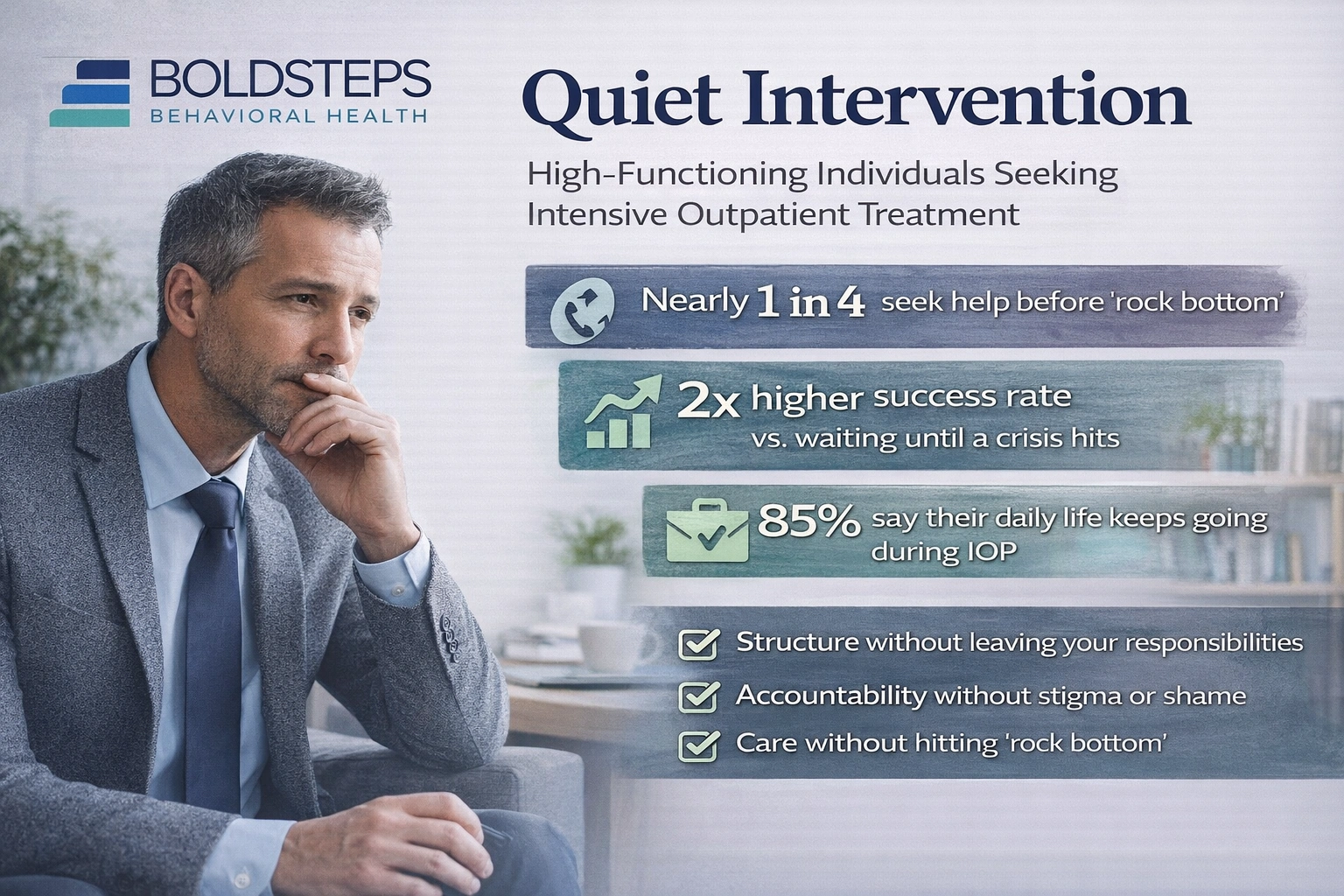
High Functioning Doesn’t Mean Healthy
Here’s the reality most people don’t talk about:
You can be highly functioning and deeply unhealthy.
You can be the best version of you on the outside
while internally you’re rotting from stress, anxiety, booze, fear, guilt, or avoidance.
That’s exactly where I found myself.
I was good at coping.
I was bad at healing.
I had strategies… not solutions.
In my intensive outpatient program in Concord — and even for folks looking for intensive outpatient program in Merrimack County, NH or Rockingham County, NH — people weren’t there because they failed.
They were there because they were done pretending.
That’s strength.
That’s insight.
That’s forward motion.
If You’re Reading This and Something in You Is Quietly Nodding…
Let’s be clear:
You don’t have to hit rock bottom to reach out.
You don’t have to wait for a crisis to get help.
You don’t have to lose everything before you decide you deserve support.
High‑functioning addiction still matters.
Quiet desperation still matters.
The “almost tipping point” still matters.
If your drinking is costing you:
- Sleep
- Peace
- Clarity
- Confidence
- Joy
- Relationships
- Goals
Then it’s worth asking: Is this sustainable? Is this what I want?
And it’s also okay to admit:
I don’t want this to get worse.
That doesn’t make you weak.
It makes you wise.
FAQs: Intensive Outpatient Program (IOP)
Who is intensive outpatient treatment for?
IOP is for people who need structured support but don’t require 24/7 care. If you’re functioning in your life but know your drinking is out of control, IOP can meet you where you are.
What does an intensive outpatient program look like?
Typically you attend therapy and support groups several days a week for a few hours at a time. You still live at home — but you get real care and accountability.
Can I still work while in IOP?
Yes. That’s one of the biggest benefits: you keep your life running while you heal.
How long does IOP last?
It varies based on personal needs, but most programs run several weeks with a sliding level of intensity as you progress.
Does IOP treat mental health too?
A good program addresses underlying mental health — anxiety, depression, trauma — alongside addiction, because they often feed each other.
Will people judge me in IOP?
Not in my experience. You meet people who are honest, thoughtful, tired of pretending, and ready for change — just like you.
I Didn’t Lose My Life — I Got It Back
Intensive outpatient treatment didn’t erase my achievements.
It didn’t ask me to abandon everything I cared about.
It simply helped me find a healthier way to live inside the life I already had.
I didn’t have to hit a bottom to choose help.
I chose help before it came with a cost.
And that choice changed everything.
If you’re ready to talk it through — not because you’re failing, but because you’re smart enough to stop before it gets worse — call (603) 915‑4223 to learn more about our intensive outpatient program services in Concord, NH.
You don’t have to let your worst day be the only day that changes you.
You can change before that — on your terms.