

Sometimes parents describe the situation the same way.
“It feels like we’re living inside a storm.”
One day things seem manageable. The next day everything explodes—arguments, panic, shutdowns, anger, tears. Small stressors seem to trigger overwhelming reactions, and as a parent you’re left trying to stabilize something that feels impossible to control.
If you’re living in that reality right now, you’re not alone. Many parents reach a point where they feel exhausted, confused, and deeply worried about their child’s emotional well-being.
And beneath that worry is often a painful thought:
What if things never calm down?
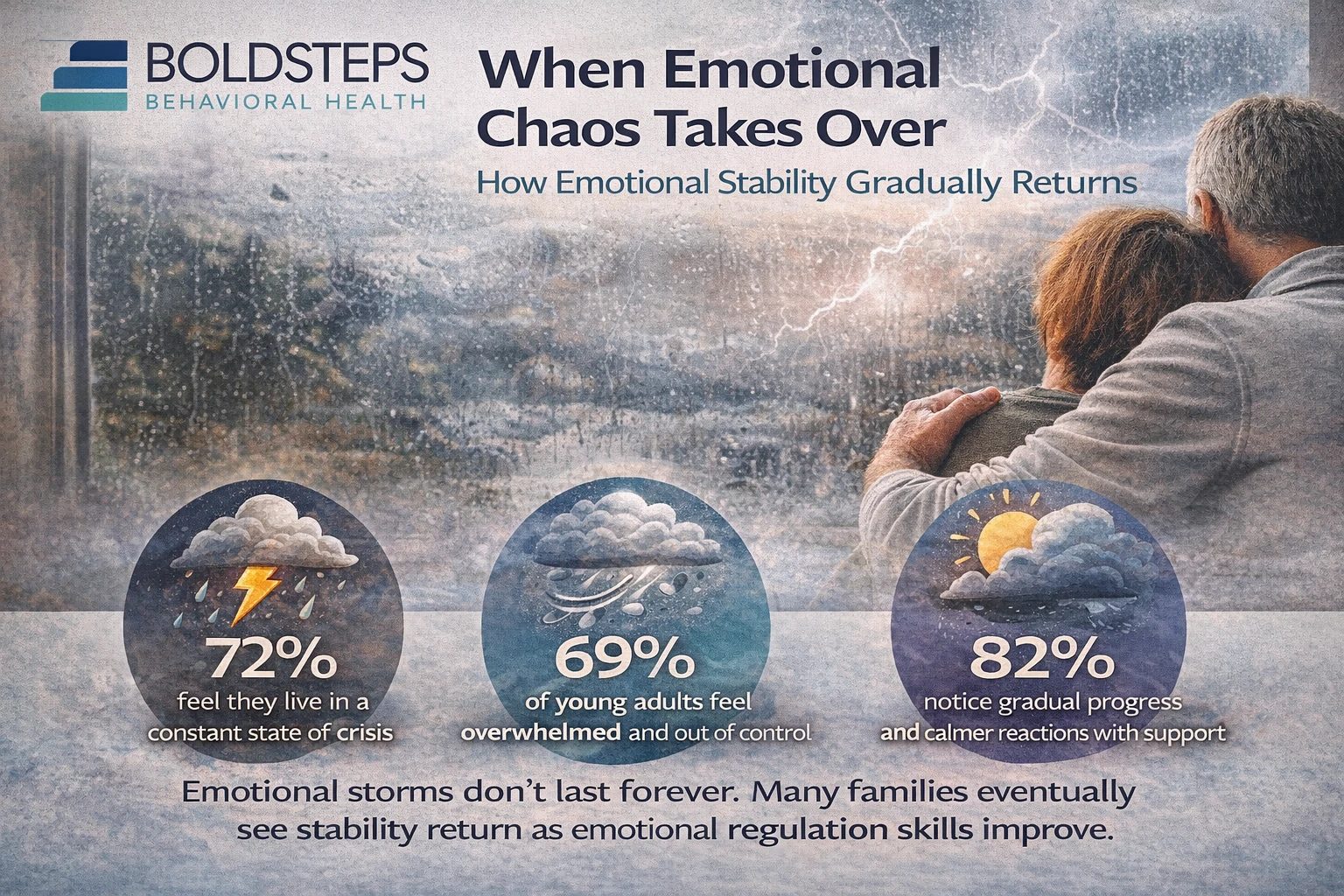
The truth is that emotional chaos often looks permanent when you’re inside it. But many young adults eventually learn how to navigate those emotional storms more safely. For many families, that turning point begins when their child starts building emotional regulation skills through approaches like dialectical behavior therapy.
Instead of being overwhelmed by every emotional surge, they begin learning how to recognize, slow, and ride those waves.
And slowly—sometimes quietly—stability begins to return.
Emotional Storms Don’t Mean Your Child Is “Choosing Chaos”
One of the most painful parts of watching a young adult struggle emotionally is the unpredictability.
You might notice that:
A minor disagreement suddenly turns into a major conflict.
A small disappointment becomes overwhelming despair.
Your child seems calm one moment and completely overwhelmed the next.
To parents, these reactions can look confusing or even intentional.
But in many cases, young adults caught in emotional storms aren’t choosing chaos. They’re experiencing emotions that move faster than their coping skills can manage.
Their brain is reacting before their reasoning has time to catch up.
Imagine trying to think clearly while standing in the middle of a thunderstorm.
That’s what emotional overload can feel like internally.
Without tools to slow the process down, reactions can spiral quickly.
When Emotions Move Faster Than Logic
During moments of intense emotion, the brain often shifts into survival mode.
The logical part of the mind becomes quieter.
The emotional part becomes louder.
Every reaction feels urgent and immediate.
This is why young adults in crisis sometimes say or do things they later regret.
It’s not that they don’t care about consequences.
It’s that their emotional system is temporarily overpowering their reasoning system.
When this pattern repeats often enough, families begin living in a constant state of anticipation.
Parents start walking on eggshells, hoping to avoid the next emotional explosion.
But emotional storms don’t calm down simply through avoidance.
They calm down when someone learns how to regulate them.
Stability Often Begins With Emotional Awareness
Many young adults experiencing emotional chaos have never been taught how to recognize the early signs of emotional escalation.
Instead, emotions appear suddenly and intensely.
Learning emotional awareness is often the first step toward stability.
When someone begins developing this awareness, they start noticing signals that previously went unnoticed:
A racing heartbeat.
Tightness in the chest.
Rapid negative thoughts.
A sudden urge to react immediately.
These signals are like early warning signs of a storm.
Once someone can recognize those signals, they can begin using skills to slow the escalation before it becomes overwhelming.
Emotions Behave Like Waves, Not Walls
One of the most powerful realizations for young adults in emotional crisis is learning that feelings are temporary.
During moments of distress, emotions can feel endless.
Anger can feel permanent.
Despair can feel inescapable.
Anxiety can feel suffocating.
But emotions actually behave more like waves than walls.
They rise.
They peak.
Then they fall.
When someone learns how to stay present through that process instead of reacting impulsively, emotional storms gradually lose their intensity.
This shift doesn’t erase emotions.
It simply makes them more manageable.
Building Emotional Skills Takes Time
Emotional regulation isn’t something people suddenly master overnight.
It develops gradually through practice.
Young adults begin learning simple but powerful strategies:
Pausing before reacting.
Stepping away from overwhelming situations.
Grounding themselves when emotions spike.
Naming feelings instead of acting on them.
At first, these changes may seem small.
But over time they begin transforming daily life.
Arguments become shorter and less explosive.
Stressful moments become manageable instead of overwhelming.
Communication becomes clearer.
Parents often notice these changes slowly.
But those small shifts can create enormous relief for families.
Parents Often Carry More Stress Than They Admit
When a young adult is struggling emotionally, parents often carry enormous pressure.
You may feel responsible for fixing the situation.
You may replay past decisions and wonder if you missed something.
You may feel exhausted trying to keep everyone safe.
These feelings are incredibly common.
But emotional crises rarely have a single cause.
They often involve a combination of factors:
Mental health challenges
Life transitions
Social stress
Emotional sensitivity
Your role as a parent isn’t to control every emotional storm your child experiences.
Your role is to remain steady while they learn how to navigate their emotions more safely.
That steadiness—your willingness to stay present even during chaos—can make a profound difference.
The First Signs of Stability Are Often Quiet
Parents sometimes expect dramatic transformation.
But the earliest signs of progress are usually subtle.
Your child might pause before reacting in an argument.
They might step away from conflict instead of escalating it.
They might name a feeling instead of acting on it.
These moments can feel small.
But they represent something powerful: awareness.
Once someone can recognize their emotional state, they gain the ability to respond differently.
And once that ability begins developing, emotional storms gradually become less overwhelming.
Families across Essex County, Massachusetts often describe this stage as the moment when things finally begin to feel manageable again.
Not perfect.
But manageable.
Stability Creates Space for Growth
As emotional regulation improves, something else often begins to happen.
Life becomes quieter.
Conversations become calmer.
Conflicts become shorter.
Decisions become more thoughtful.
Parents often notice their child starting to regain confidence.
The same young adult who once felt completely overwhelmed begins recognizing that they can survive difficult emotions without being controlled by them.
Many families throughout Merrimack County, New Hampshire describe this stage as a turning point—when chaos slowly begins giving way to stability.
It doesn’t happen overnight.
But over time, emotional storms lose their intensity, and the family system begins to heal.
Hope Doesn’t Always Arrive Dramatically
When you’re living through emotional chaos, hope can feel distant.
But many families discover that once young adults begin learning emotional regulation skills, the changes gradually accumulate.
The storms become less frequent.
The recovery after conflict becomes quicker.
The sense of safety begins returning.
Sometimes the shift is so gradual that parents don’t notice it immediately.
But one day, they realize something important:
Things are calmer than they used to be.
And that realization often brings the first real sense of relief in a long time.
FAQs
Why does my young adult react so strongly to small problems?
When emotional regulation skills are limited, even minor stressors can trigger intense reactions. The emotional system may activate before the logical part of the brain has time to respond.
Is emotional instability a sign of bad parenting?
No. Emotional crises are influenced by many factors including mental health, stress, biological sensitivity, and developmental challenges.
Can emotional regulation actually be learned?
Yes. Many young adults develop stronger emotional regulation skills through guided practice and structured support.
How long does it take to see improvement?
Every person is different. Some families notice early changes within weeks, while deeper stability may develop over several months.
What should parents focus on during this process?
Consistency, patience, and calm communication are essential. Supporting your child while they develop emotional tools can make a significant difference.
Will emotional explosions eventually stop?
For many young adults, emotional storms become less frequent and less intense once they begin learning how to recognize triggers and regulate their reactions.
Is recovery possible even after severe emotional chaos?
Yes. Many families who once felt overwhelmed eventually experience stability and healing as emotional skills develop.
If your family is living through emotional chaos right now, you are not alone—and stability is possible. Call 603-915-4223 or visit our Dialectical Behavior Therapy in Concord,New Hampshire to learn more about.