

You saw the signs.
Maybe before they said anything. Maybe after.
And now you’re here again—trying to make sense of something that feels like it shouldn’t have happened.
Relapse doesn’t just bring fear. It brings questions that don’t have easy answers.
Wasn’t treatment working?
Did we miss something?
What happens next?
Before your mind runs too far ahead, pause here:
This moment matters—but it’s not the end of the story.
If anything, it’s a chance to understand something that wasn’t fully clear before. And with the right kind of support, like structured therapy focused on thought patterns, that understanding can actually move your child forward—not backward.
Why Your Mind Immediately Goes to the Worst Outcome
Let’s start with you—because this part happens fast.
Your brain doesn’t stay in the present.
It jumps ahead.
You imagine:
- Things getting worse
- Losing control of the situation
- Your child slipping further away
This is what the brain does under stress—it tries to predict danger so you can prevent it.
But that instinct can turn into something heavier.
When your mind keeps jumping to worst-case scenarios, it creates a sense of urgency and fear that can make everything feel unmanageable. This is often connected to patterns like how to stop catastrophizing, where thoughts escalate beyond what’s actually happening right now.
You’re not overreacting.
You’re overwhelmed.
But those thoughts aren’t always helping you respond in a way that supports your child.
Relapse Feels Like Failure—But It Isn’t
It’s natural to think:
“If they were doing better, this wouldn’t have happened.”
But clinically, relapse doesn’t mean everything failed.
It usually means:
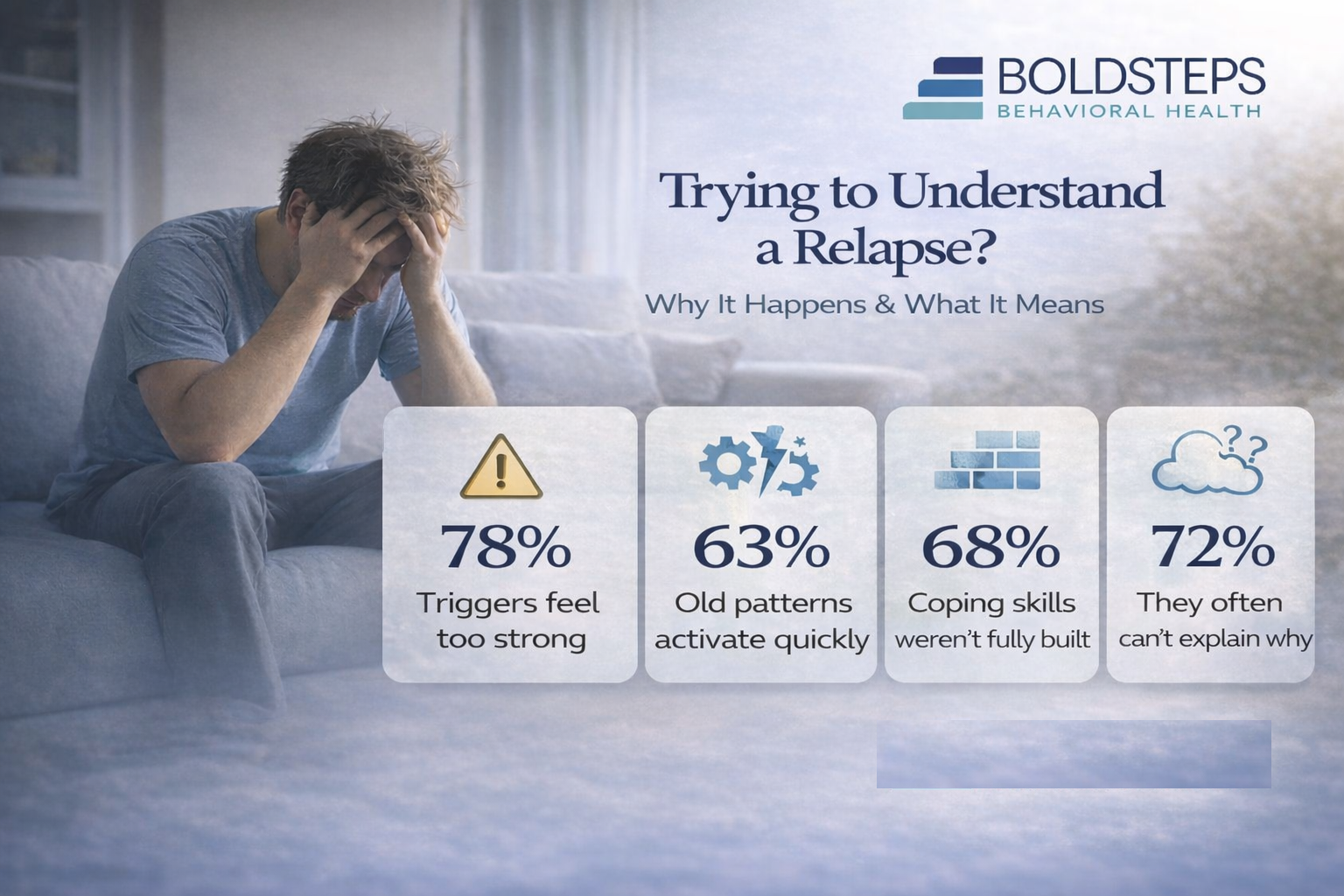
- A trigger showed up that felt too strong
- A coping strategy wasn’t fully built yet
- An old pattern activated faster than expected
That’s not failure.
That’s information.
And information—when you know how to use it—can lead to better outcomes than before.
What Your Child Might Be Feeling (Even If They Don’t Say It)
While you’re trying to understand what happened, your child may be dealing with something quieter—and heavier.
Often, it looks like:
- Shame (“I messed everything up”)
- Avoidance (not wanting to talk about it)
- Defensiveness (pushing you away)
- Confusion (“I don’t even know why I did it”)
That last one is important.
Because many people don’t relapse with a clear, conscious decision.
It happens through a chain of thoughts and reactions that feel automatic.
If they don’t understand that chain, they’re likely to repeat it.
Not because they want to—but because they don’t yet know how to interrupt it.
Understanding What Happened Changes Everything
Instead of focusing only on the outcome, this approach shifts the focus to the process.
Not:
“Why did you do this?”
But:
“What happened leading up to this?”
CBT-based approaches help break that down in a way that feels structured and non-judgmental.
Your child begins to look at:
- The situation they were in
- The thoughts that showed up first
- The emotions that followed
- The action that came next
This creates something powerful:
Clarity.
And clarity reduces guesswork—for both of you.
Why Patterns Matter More Than Willpower
A lot of people believe relapse is about choice.
But more often, it’s about patterns.
Patterns that look like:
- Stress → “I can’t handle this” → escape
- Loneliness → “This will help” → action
- Frustration → “It doesn’t matter anymore” → giving in
These sequences happen quickly.
Too quickly for willpower alone to interrupt them.
That’s why learning to recognize patterns early is more effective than trying to fight them late.
How This Approach Actually Helps Your Child Move Forward
Instead of focusing only on stopping behavior, your child begins to:
- Recognize early warning signs before things escalate
- Identify thoughts that trigger emotional shifts
- Pause long enough to choose a different response
- Build confidence through small, repeated changes
It’s not about controlling everything.
It’s about understanding enough to respond differently.
And over time, those different responses create different outcomes.
What Your Role Looks Like in This Process
As a parent, it’s natural to want to:
- Fix the situation quickly
- Ask direct questions
- Push for immediate change
But in moments like this, pressure can backfire.
What often helps more is:
- Staying steady, even when you’re scared
- Focusing on understanding instead of reacting
- Allowing space for your child to process without shutting down
You don’t have to ignore what’s happening.
But you also don’t have to escalate it.
Your calm can become something they can lean on—even if they don’t show it right away.
This Doesn’t Erase the Progress They’ve Made
It might feel like everything is undone.
But that’s not how growth works.
The progress your child made:
- Still exists
- Still matters
- Still contributes to what comes next
Skills don’t disappear.
Awareness doesn’t reset.
This moment becomes part of their learning—not the end of it.
You’re Not the Only One Facing This
This experience can feel isolating—but it’s more common than people talk about.
Parents across Rockingham County, New Hampshire often find themselves in this exact moment—trying to balance fear with hope after a setback they didn’t expect. Others in Essex County, Massachusetts are asking the same questions you are right now, wondering how to respond in a way that actually helps instead of harms.
There’s nothing unusual about where you are.
It’s just not something people openly discuss.
What Moving Forward Can Look Like—Practically
Moving forward doesn’t mean ignoring what happened.
It means using it.
That might include:
- Identifying specific triggers that led to the relapse
- Strengthening coping strategies that weren’t fully developed
- Practicing new responses in real-life situations
- Building a clearer plan for similar moments in the future
It’s not about perfection.
It’s about progress that’s more informed—and more sustainable—than before.
When Hope Feels Hard to Hold Onto
There’s a moment many parents hit where hope feels fragile.
Where it’s easier to expect the worst than risk believing things can improve.
That’s understandable.
But this is where perspective matters:
Relapse doesn’t erase the possibility of recovery.
It’s often part of how recovery becomes more stable.
Not because it’s easy—but because it reveals what still needs attention.
And once you see that clearly, you can address it.
Frequently Asked Questions
Does relapse mean treatment didn’t work?
No. It usually means there are still patterns or triggers that need to be understood and addressed more deeply. Treatment often evolves after relapse.
How can I help without making things worse?
Focus on staying calm, listening more than reacting, and encouraging support rather than forcing change. Your steadiness matters more than perfect words.
What if my child refuses to talk about it?
That’s common. Giving space while keeping support available often works better than pushing for immediate conversations.
Can patterns like this actually change?
Yes. Thought and behavior patterns are learned—which means they can also be unlearned and replaced with new ones over time.
How long does it take to rebuild after relapse?
There’s no fixed timeline. Progress depends on understanding what happened and building stronger responses moving forward.
What if I feel overwhelmed all the time?
That’s a natural response. Getting support for yourself—whether through guidance or professional help—can make a significant difference in how you navigate this.
You don’t have to carry this fear alone.
And your child doesn’t have to figure this out without support.
Call (603)915-4223 to learn more about our Cognitive Behavioral Therapy in Concord, New Hampshire.
If your mind keeps telling you this is the end—
It’s not.
It’s a moment that can lead to better understanding, stronger skills, and a different path forward.
And that path is still very much possible.