

So… you left.
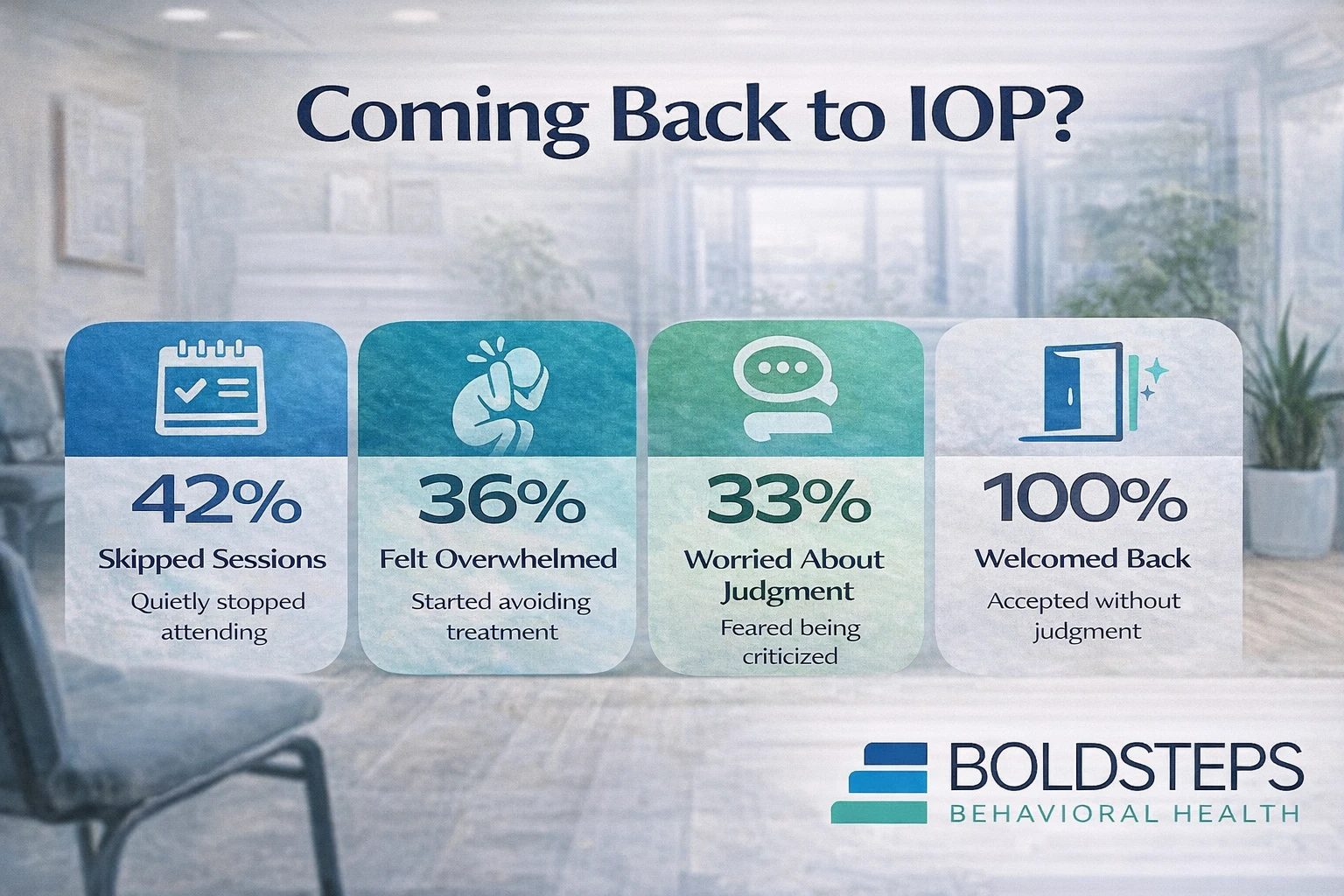
Maybe it was a quiet exit. A skipped session here, a sick day there. Then suddenly, you just stopped going. No big dramatic goodbye. Just silence. And now, something in you wants back in—but the thought of returning? Feels complicated.
Maybe you’re embarrassed. Maybe you feel like you “wasted the spot.” Maybe you’re worried they’ll judge you—or worse, not care at all.
If that’s you, breathe. This isn’t your first start, and it doesn’t need to be your last one either.
Here’s how to return to an intensive outpatient program without pretending you’ve got it all figured out—and why that honesty might be your strongest move yet.
You Don’t Owe Anyone a Perfect Explanation
Let’s start here: disappearing from treatment doesn’t make you weak. It makes you human.
Plenty of people step away from IOP. Sometimes they’re overwhelmed. Sometimes they relapse. Sometimes they just shut down. Avoidance is a form of pain management, too—it just doesn’t get the same compassion as others.
So before you panic about what you’re going to say when you walk back in, remember this: you don’t need a rehearsed story. You don’t need to “make it make sense.” It’s okay to simply say, “I didn’t know how to keep going.”
The right program won’t punish your honesty. They’ll welcome it.
Don’t Let Shame Set the Tone
Shame is sneaky. It tells you you’ve messed up too badly to go back. That the staff probably rolled their eyes when you ghosted. That the other clients have moved on. That there’s no seat for you anymore.
But here’s what shame doesn’t want you to know: the seat is still there.
Shame thrives in silence. Recovery thrives in re-connection.
If it’s been days, weeks, or months since you left, that’s not disqualifying. It’s just a pause. And people come back from pauses all the time.
Especially at Bold Steps, where the team knows what it’s like to circle back. Their intensive outpatient program doesn’t close the door on anyone who still wants healing.
Take the First Step Without Overcommitting
You don’t have to come back with a 10-point plan.
You don’t need to swear you’ll “do it right this time” or promise you’ll never miss another session.
You only need to take one real step: make contact.
A phone call. A message. An email. Something that says, “I think I need to come back.” That’s it.
From there, the support team can help you figure out what re-entry looks like. And if it feels awkward, that’s normal. There’s no need to pretend it’s not. The important thing is that you’re choosing connection over isolation.
That choice is the real progress.
Expect It to Feel Weird—But Don’t Let That Stop You
Returning to IOP after leaving can feel like walking into a room where the conversation kept going without you. It’s natural to wonder:
- “Do they think I failed?”
- “Will the group treat me differently?”
- “Am I starting over from scratch?”
Maybe someone notices you. Maybe no one does. Either way, you’ll likely feel exposed—and that’s okay.
But here’s what often happens: someone makes eye contact. Someone says, “I get it.” Someone shares their own return story. And the weirdness? It breaks. Not all at once, but enough to breathe again.
The truth is, most of the people in that room know exactly what it feels like to disappear. And come back.
Be Real, Not Ready
A common trap after rejoining is trying to act like you’re ready—to show up with perfect insight, sharp reflections, tidy takeaways.
But recovery isn’t about being impressive. It’s about being real.
You’re not here to prove you deserve a second chance. You already do. You’re not here to perform. You’re here to participate.
So when you rejoin, let yourself say the messy stuff:
- “I didn’t want to come back, but I knew I needed to.”
- “I’m scared you’re judging me.”
- “I’m embarrassed I left.”
That’s real. That’s useful. That’s the stuff people connect to.
You’re Not Starting Over—You’re Starting Again
This part matters: you didn’t erase the work you already did. You’re not back at square one. You’re building on what you already lived through—even if it was messy, even if you ghosted, even if you relapsed.
Recovery isn’t a straight line. It’s a rhythm. Some beats are missed. That doesn’t kill the song.
So whether you’re rejoining group, restarting individual sessions, or just peeking back in—it counts. You’re re-engaging. And that matters more than how long you’ve been gone.
If you’re from Hillsborough County, New Hampshire, this kind of re-entry is exactly what Bold Steps is built to support. You’ll never be treated like a dropout. You’ll be welcomed as someone still in the fight—and still worthy of care.
Let It Be Small at First
You don’t have to walk back into IOP guns blazing. You don’t need to make big declarations about being back for good.
You can just come back.
Sit down. Breathe. Listen. Speak when you’re ready. Let yourself re-enter gently, awkwardly, imperfectly.
Letting yourself just be there is the first step toward letting yourself be helped again.
Frequently Asked Questions (FAQs)
What if I left because I relapsed?
Then you’re exactly where you need to be.
Relapse doesn’t mean you failed—it means something needed more support. IOP is built for exactly this. And most clinicians won’t be surprised. They’ll be ready to help you reconnect without shame.
Will I have to explain everything to the group?
Only if you want to.
You can share as much or as little as feels right. A simple “I took a break and I’m back now” is enough. No one’s expecting a full story unless you feel like offering it.
What if the staff is disappointed in me?
Disappointment is often something we project—not something that’s actually there.
Most IOP staff understand the cycle. They’ve seen people leave and come back stronger. They’re not looking for perfect attendance. They’re looking for honest re-entry.
Will I still have my spot?
That depends on the program and how long you’ve been away, but most IOPs—including Bold Steps—try to make re-entry easy when possible. Calling to check in is the best first move. They’ll guide you from there.
What if I ghost again?
There’s no limit on how many times you can try again.
But if you’re worried about disappearing, talk about it early. Let your therapist or group facilitator know what overwhelmed you last time. Building a plan together can make it easier to stay—and come back, if needed.
You’re Allowed Back
You didn’t ruin your shot. You didn’t blow your chance. You didn’t “waste” anything.
You paused. And now you’re thinking about returning. That means something.
You can go back without the act. Without pretending you’re fine. Without a perfectly worded excuse. Just as you are—tired, scared, unsure, hopeful.
That’s more than enough.
Call (603) 915-4223 to learn more about our intensive outpatient program in Concord, New Hampshire.