

From the outside, your life works.
You wake up early.
You meet deadlines.
You show up for meetings, family obligations, and responsibilities.
People rely on you.
In many ways, you’re exactly the kind of person others admire.
But privately, something feels different.
There’s a quiet exhaustion that doesn’t disappear after a good night’s sleep. A pressure that follows you through the day. A routine you’ve built to take the edge off stress, anxiety, or emotional overload.
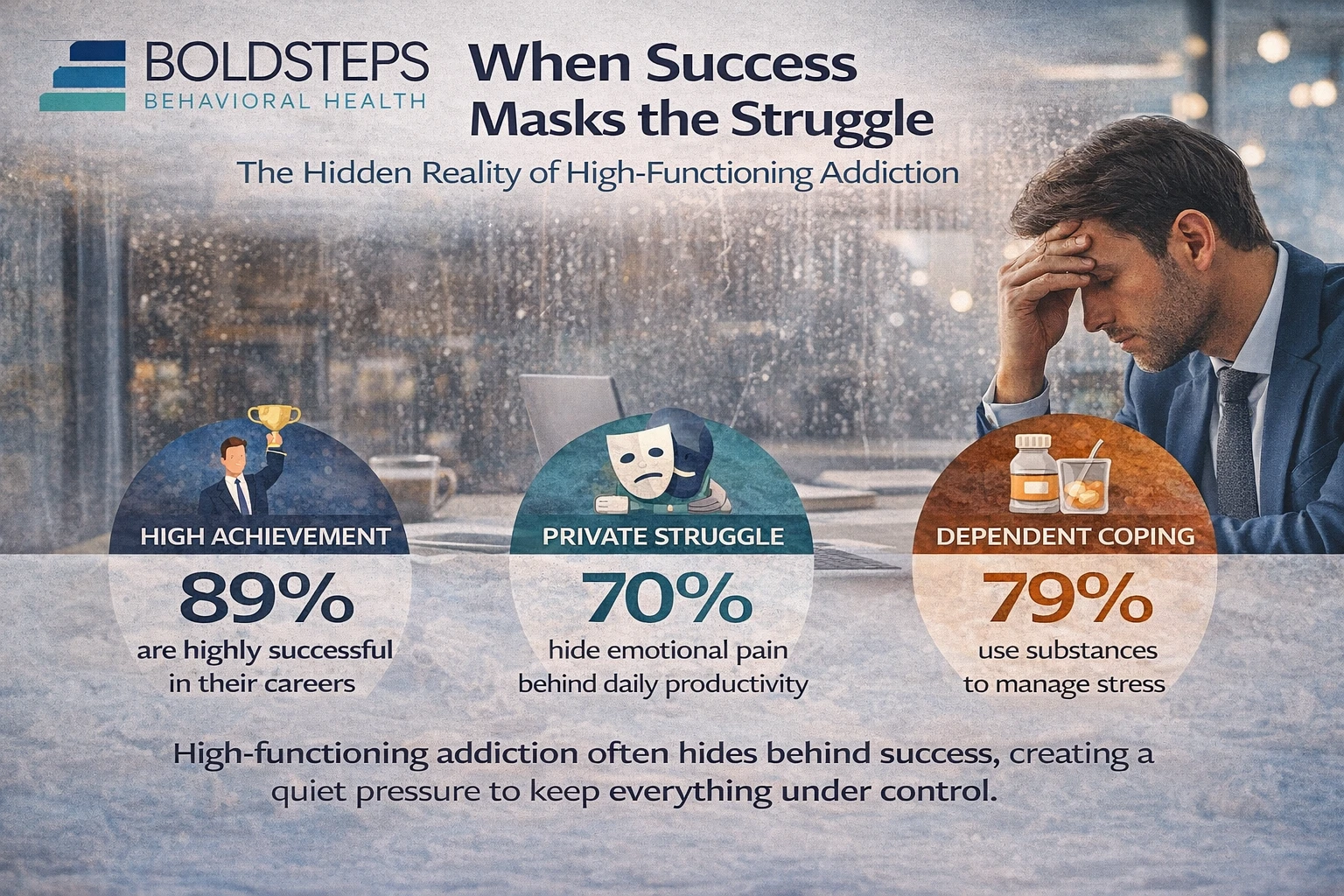
Many high-functioning individuals live in this space for years. They keep succeeding while privately struggling to manage emotional weight that no one else sees.
Eventually, some reach a moment of honesty with themselves. Not a dramatic collapse, but a quiet realization:
Something about the way I’m coping isn’t sustainable anymore.
For many people, that realization leads them to explore emotional skill-building approaches like dialectical behavior therapy. Not because they’ve failed, but because the pressure they’ve been carrying alone finally becomes too heavy to manage without better tools.
And acknowledging that struggle doesn’t erase success—it often strengthens it.
High Achievement Can Hide a Lot of Pain
There’s a common assumption about addiction.
People imagine chaos, instability, or obvious life disruption.
But high-functioning addiction rarely looks like that.
Instead, it hides behind productivity.
You show up to work every day.
You maintain relationships.
You keep responsibilities under control.
From the outside, life appears stable.
But privately, substances may become a way to cope with emotional pressure.
Something to slow racing thoughts after work.
Something to take the edge off anxiety.
Something to make the stress of constant expectations easier to carry.
Because life still works, it’s easy to believe the situation is under control.
But over time, the cost becomes harder to ignore.
The Pressure to Keep Everything Together
Many high-functioning individuals develop a powerful identity around reliability.
You’re the one people count on.
The one who solves problems.
The one who stays composed when things get difficult.
This identity can feel empowering—but it can also create isolation.
When you’re known as the strong one, it becomes harder to admit when something isn’t right.
Instead of asking for help, you manage the stress privately.
You push through exhaustion.
You minimize the emotional weight you’re carrying.
You tell yourself you just need to stay disciplined.
Over time, that pressure builds.
And the coping strategies that once helped relieve stress may slowly become something you depend on.
When Coping Turns Into Survival
Many high-functioning people don’t start using substances to escape life.
They start using them to manage it.
Long workdays.
Constant expectations.
The quiet fear of making a mistake that could disrupt everything you’ve built.
Substances can temporarily quiet that noise.
They can slow racing thoughts or ease emotional tension.
But eventually, what once felt like relief can become another layer of pressure.
Instead of simply relaxing, you begin organizing parts of your life around coping.
You start noticing how much effort it takes to keep everything appearing normal.
And the energy required to maintain that balance becomes exhausting.
The Quiet Moment of Realization
For many high-functioning individuals, the turning point doesn’t happen during a dramatic crisis.
It often happens during a quiet moment.
Maybe it’s late at night after another long day.
Maybe it’s realizing that the things that once energized you now feel draining.
Maybe it’s noticing how much emotional energy goes into maintaining the appearance that everything is fine.
That moment can feel unsettling.
But it can also be the beginning of something important.
Because acknowledging that something needs to change is often the first step toward building a healthier relationship with stress and emotion.
Emotional Regulation Changes Everything
One of the most powerful shifts people experience when developing emotional skills is learning how to respond differently to pressure.
Instead of reacting automatically to stress, they begin noticing the signals their body and mind send before emotional overwhelm sets in.
They start recognizing patterns:
The buildup of tension during the workday.
The negative self-talk that appears under pressure.
The urge to numb uncomfortable feelings instead of processing them.
Once those patterns become visible, they become easier to interrupt.
Instead of relying on substances to cope, people learn ways to move through stress with more awareness.
This doesn’t remove life’s challenges.
But it makes those challenges easier to manage.
Real Strength Isn’t Silence
High-functioning individuals often believe strength means handling everything alone.
You solve your own problems.
You maintain control.
You avoid burdening others with your struggles.
But over time, that silence can become its own source of pressure.
True strength often looks different.
It looks like honesty about what you’re experiencing.
It looks like recognizing that you deserve support.
It looks like choosing growth instead of continuing a pattern that quietly drains your energy.
For many individuals across Hillsborough County, New Hampshire, this moment of honesty becomes a turning point.
Not a collapse—but a shift toward something healthier.
Stability Doesn’t Mean Losing Your Edge
One fear many high-achieving people carry is that addressing their struggles will disrupt their success.
They worry that slowing down or seeking support might affect their career, reputation, or responsibilities.
But the opposite often happens.
When emotional skills improve, people often become more focused, more present, and less overwhelmed by stress.
Decisions become clearer.
Relationships become healthier.
Energy becomes more sustainable.
Many professionals throughout Rockingham County, New Hampshire discover that learning emotional regulation allows them to maintain their ambition without the constant internal pressure that once fueled unhealthy coping.
Success doesn’t disappear.
It becomes sustainable.
The Next Chapter Can Be Different
There’s a common belief that successful people must carry constant pressure in order to achieve their goals.
But that belief isn’t always true.
It’s possible to pursue meaningful work, maintain strong relationships, and build a fulfilling life without relying on coping patterns that slowly drain your well-being.
The qualities that helped you succeed—discipline, intelligence, resilience—don’t disappear when you begin addressing emotional struggles.
If anything, those strengths become clearer when they’re no longer buried under exhaustion.
Recovery isn’t about losing the person you’ve become.
It’s about creating a version of success that doesn’t cost your peace of mind.
FAQs
Can someone be highly successful and still struggle with addiction?
Yes. Many individuals maintain careers, relationships, and responsibilities while privately dealing with substance use challenges.
Why do high-functioning individuals often hide their struggles?
Pressure to maintain success and fear of judgment often lead people to manage their struggles privately rather than seeking support.
Is high-functioning addiction common?
It’s more common than many people realize. People with demanding careers or high expectations may develop unhealthy coping patterns over time.
Why doesn’t willpower alone solve the problem?
Substance use often develops as a way to manage emotional stress. Without healthier coping strategies, the underlying pressure remains.
Can emotional skills really help someone stay successful?
Yes. Many people find that emotional regulation improves focus, communication, and long-term stability in both personal and professional life.
Is it possible to change while maintaining work and responsibilities?
Absolutely. Many individuals begin addressing these challenges while continuing to manage their careers and commitments.
What’s the first step toward change?
Often it’s simply acknowledging that something about the current pattern isn’t sustainable and being open to exploring healthier ways to manage stress.
If you’re succeeding on the outside but feeling exhausted inside, you don’t have to keep carrying that pressure alone. Call 603-915-4223 or visit our Dialectical Behavior Therapy in Concord,New Hampshire to learn more about.