

After a few years in recovery, something strange can happen.
From the outside, everything looks solid. You’ve stayed sober. You rebuilt trust. You show up for your responsibilities. Life is more stable than it’s been in a long time.
But internally, something feels different.
Not terrible. Not chaotic. Just… flat.
You might wake up one morning and think, I did all this work. Why do I still feel stuck?
A lot of long-term alumni experience this moment quietly. It doesn’t get talked about much because it doesn’t look like a crisis. But it can feel just as confusing.
For many people, this is the point where deeper growth begins—often by returning to tools like cognitive behavioral therapy and examining the thought patterns that quietly shape everyday life.
Recovery didn’t stop working.
You’re just ready for the next level.
The Plateau That Surprises Almost Everyone
Early recovery is intense.
Every day feels like a step forward. Every small win matters. You’re building routines, repairing relationships, and figuring out how to live without the chaos that once dominated your life.
Progress is visible.
But after a while, something changes.
Life stabilizes.
You go to work. You keep your commitments. You show up for family and friends. You’ve built the structure that once felt impossible.
And then, slowly, the momentum fades.
Growth becomes quieter. Breakthroughs happen less often. It can start to feel like you’re simply maintaining instead of evolving.
That’s the recovery plateau.
And it’s more common than most people realize.
Stability Can Quietly Turn Into Stagnation
Here’s the honest truth many alumni discover after a few years.
The habits that helped save your life can sometimes become the routines that keep you stuck.
You follow the same schedule every week.
You stick to conversations that feel safe.
You stop challenging yourself the way you once did.
None of this happens dramatically. It’s subtle.
You’re still doing the right things. But the curiosity that once fueled your growth slowly fades.
Life becomes responsible—but maybe not fully alive.
It’s like driving a long distance on cruise control. The car keeps moving forward, but you’re not really steering anymore.
The Quiet Return of Old Thinking Patterns
Another surprise about long-term recovery is that old thinking patterns don’t disappear completely.
They just get quieter.
Instead of loud self-destructive thoughts, they might show up as small internal assumptions:
“This is probably as good as it gets.”
“I shouldn’t push things too much.”
“Things are fine—why rock the boat?”
These thoughts don’t sound dangerous.
In fact, they can sound reasonable.
But sometimes they hide a deeper belief: that growth has limits.
When someone begins questioning those quiet assumptions again, recovery often starts moving forward in new ways.
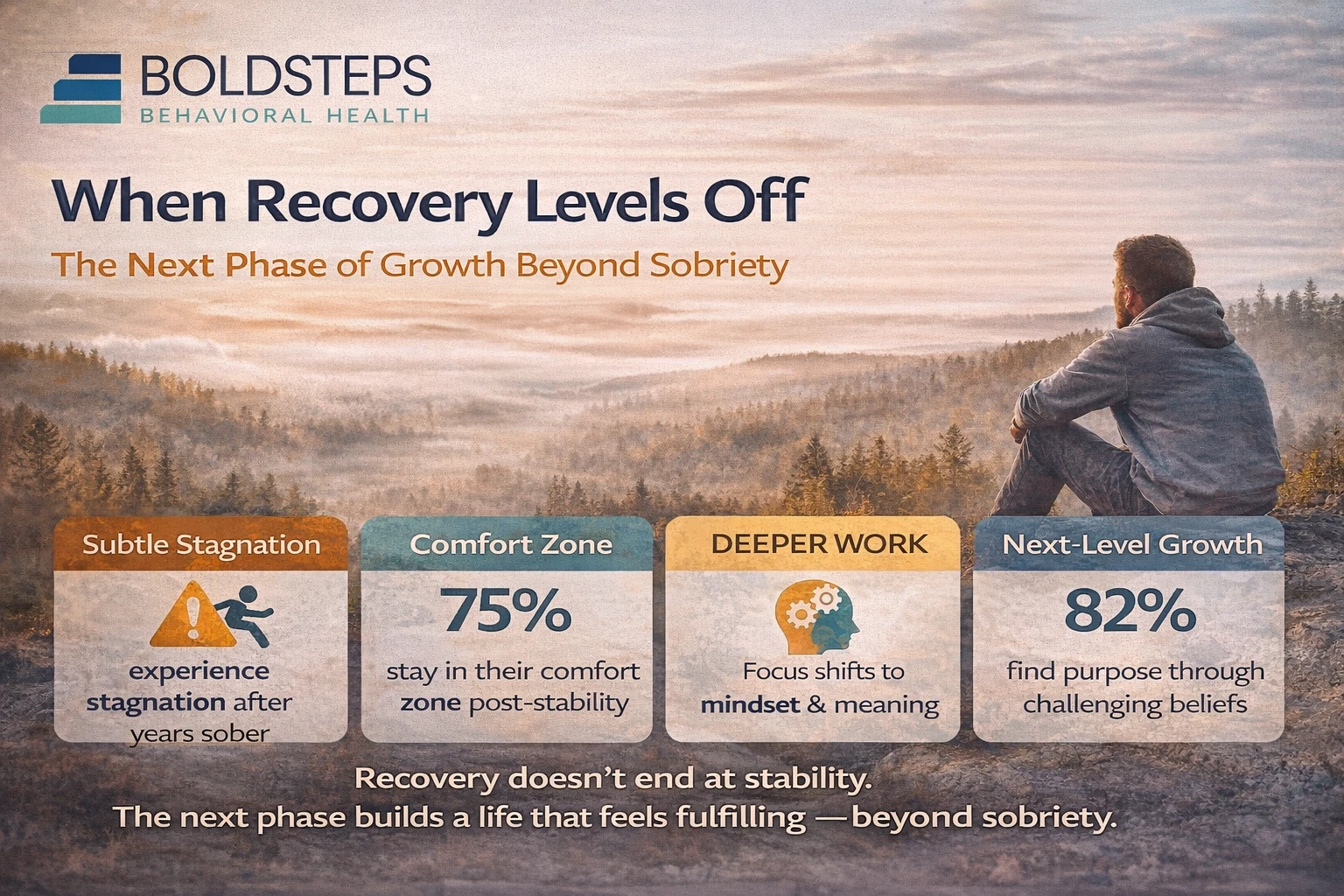
Why the Next Stage of Recovery Is Mental
Early recovery focuses heavily on behavior.
Stay sober.
Avoid old environments.
Build healthy routines.
Those steps are essential.
But long-term recovery often shifts toward something deeper: mindset.
Instead of focusing only on actions, people start examining the thoughts that shape how they see themselves and their future.
Questions start to appear:
Who am I now that the chaos is gone?
What beliefs still hold me back?
What parts of my life still feel small or limited?
That reflection can be uncomfortable—but it’s also where the next phase of growth often begins.
When Growth Feels Uncomfortable Again
There’s a moment many people experience when they push past a recovery plateau.
Things feel uncomfortable again.
Not the kind of discomfort that comes from crisis—but the kind that comes from stretching beyond familiar limits.
You might notice yourself questioning beliefs you’ve carried for years.
You might realize that certain fears still shape your decisions.
You might start seeing that parts of your identity formed during early recovery no longer fit who you’re becoming.
That discomfort isn’t a setback.
It’s a signal that growth has restarted.
Just like muscles ache when they’re used in new ways, the mind stretches when it begins challenging old assumptions.
Recovery Isn’t Just About Avoiding the Past
Many people begin recovery focused on one goal: leaving the past behind.
Avoid the old habits.
Avoid the old environments.
Avoid the old patterns.
But long-term recovery eventually becomes about something different.
It becomes about building something new.
A new identity.
New goals.
New ways of seeing yourself.
That shift can feel empowering—but it can also feel intimidating.
Because building something new means looking closely at the thoughts and beliefs that shape your choices.
And sometimes those beliefs have been quietly limiting your life for years.
The Power of Reexamining Your Thinking
At this stage of recovery, many people start paying closer attention to the thoughts that appear throughout the day.
Thoughts like:
“I’m not the kind of person who can do that.”
“I’ll probably mess that up.”
“It’s safer to stay where I am.”
These thoughts often sound practical.
But they can quietly restrict growth.
When someone starts examining those patterns again, something interesting happens.
Opportunities appear where limitations once existed.
Confidence grows where doubt once lived.
And slowly, the sense of stagnation begins to lift.
The Next Phase of Recovery Often Looks Like Expansion
The first phase of recovery is about survival.
The second phase is about stability.
But the third phase?
That phase is about expansion.
Expansion of your goals.
Expansion of your identity.
Expansion of what you believe is possible.
Across Hillsborough County, New Hampshire, many long-term alumni reach a point where maintaining sobriety is no longer the main challenge.
The new challenge is building a life that feels meaningful and fulfilling beyond simply staying sober.
That’s where deeper self-reflection often begins.
Growth Can Reignite Purpose
When recovery plateaus, it’s easy to assume something is wrong.
But sometimes a plateau simply means you’ve mastered one stage of growth.
You built stability.
Now the next stage asks different questions.
What kind of life do you want to build now?
What fears still shape your decisions?
What beliefs about yourself need to evolve?
Answering those questions can bring a surprising amount of energy back into recovery.
For many people living in Nashua, New Hampshire, this phase of reflection becomes the moment when recovery transforms from something they maintain into something that continues to evolve.
The journey doesn’t end.
It deepens.
FAQs
Is it normal to feel stuck after several years of sobriety?
Yes. Many people experience a plateau once life stabilizes. This doesn’t mean recovery has stopped working—it often means you’re ready for a deeper phase of growth.
Why do recovery plateaus happen?
Early recovery focuses on major life changes. Once stability is established, growth slows naturally, which can make progress feel less noticeable.
Does feeling disconnected mean something is wrong?
Not necessarily. Feeling disconnected can be a signal that you’re ready to explore deeper personal development and revisit thinking patterns that shape your life.
Can recovery continue to evolve after several years?
Absolutely. Many people discover that the most meaningful personal growth occurs long after the initial recovery crisis has passed.
What helps people move beyond a recovery plateau?
Often it begins with curiosity—examining beliefs, thought patterns, and assumptions that may still influence how you see yourself and your future.
Why do old thought patterns sometimes return?
Thinking habits develop over long periods of time. Even after behavioral changes, certain beliefs may still need attention and reflection.
Is it normal to want more growth even after achieving stability?
Yes. Wanting continued growth is a healthy sign that you’re engaged with life and open to becoming more than you once believed possible.
Recovery doesn’t end when life becomes stable. Sometimes the most meaningful growth begins when you start questioning the quiet beliefs that shape how you see yourself and your future.
If you’re feeling stuck in recovery and wondering what the next phase of growth could look like, call 603-915-4223 or visit our Cognitive-Behavioral Therapy in Concord, New Hampshire to learn more.