
When you’re in early recovery—whether from depression, substance use, or both—it can feel like the whole world is moving while you’re stuck in slow motion. People say things like “It gets better” or “Hang in there,” but what you’re really wondering is: When?
When do I actually start to feel better? When does the fog lift? When does the aching stop?
At Bold Steps Behavioral Health in Concord, NH, we hear these questions every day. And they’re not just clinical questions—they’re deeply human ones. Because when you’re hurting, “eventually” doesn’t feel good enough.
This blog is for you if you’ve started treatment and are still waiting for relief. It’s for the ones who cry on their drive home from therapy, or sit quietly in group wondering if they’re the only one who still feels numb. You’re not alone. Not even close.
There’s No Single Timeline—But There Are Patterns
Depression is not a light switch. It’s more like weather: slow to shift, unpredictable, sometimes clearing just enough to let a little sunlight through.
That said, many people experience stages of improvement:
- Weeks 1–3: You might not feel “better,” but you may notice you’re less worse. That could look like fewer emotional crashes, sleeping a little more, or making it through the day without a breakdown.
- Weeks 4–6: Small shifts become more noticeable. You may find yourself responding in new ways—laughing unexpectedly, reaching out when you used to shut down, or feeling just a little less heavy in the mornings.
- Weeks 7–12: For many, this is when things really begin to take hold. Patterns start changing. Hope becomes more than a concept—it shows up in your actions.
And still: every person is different. If it’s taking longer for you, that doesn’t mean treatment isn’t working. It might mean your healing is unfolding at a deeper level.
Why Do I Still Feel So Lonely, Even After Starting Treatment?
Because healing can be isolating.
When you first begin treatment—especially if you’re also newly sober—your emotional world gets shaken up. You may have walked away from toxic relationships. You may not feel ready to open up in group. Even surrounded by people, you might feel like no one really gets it.
That doesn’t mean something’s wrong. It means you’re in the in-between:
- Between who you were and who you’re becoming
- Between survival mode and true connection
- Between numbness and the ability to feel safely again
This is where many people in early recovery from depression get stuck—and where they most need gentle support. If you’re looking for depression treatment in Merrimack County or surrounding areas, you deserve care that holds space for that kind of loneliness. Not fixes. Not platitudes. Just real support, at your pace.
It Might Feel Worse Before It Gets Better
This part can be especially hard to hear.
Sometimes, the early stages of treatment can bring up pain that’s been buried. You’re finally feeling your feelings, and after months or years of emotional shutdown, that can feel like everything’s breaking at once.
It’s not. It’s breaking open.
You might notice:
- More intense crying spells
- Increased dreams or emotional flashbacks
- Sudden anger or irritability
- Feeling overwhelmed by simple tasks
These aren’t signs of failure. They’re signs that your inner world is starting to stir. And that’s where healing lives.
What Are Signs Depression Treatment Is Working?
Progress isn’t always obvious. Sometimes it’s quiet. Sneaky. It shows up in the background before it hits the spotlight.
Here are some early signs you might be missing:
- You return a text instead of ghosting.
- You get out of bed without bargaining.
- You cry and feel clearer afterward—not ashamed.
- You let someone hug you. Or you wish someone would.
- You imagine a future—even if it’s just next week.
These are cracks in the armor depression builds. And through them, light starts to get in.
Why Medication and Therapy Timelines Can Vary
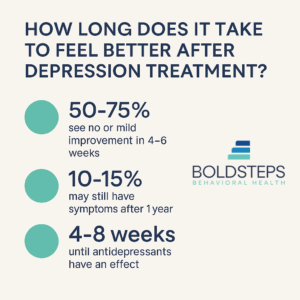
If you’re taking medication, most antidepressants take 4–8 weeks to show full results. Sometimes longer, especially if adjustments are needed. If therapy is your primary path, it may take several sessions just to feel safe opening up.
What helps:
- Keep your appointments, even when you don’t feel like it.
- Share openly with your provider about how you’re feeling.
- Don’t be afraid to ask: “Is this normal?” or “Can we try something different?”
You’re not a bad fit for healing. Healing just takes feedback and patience. If you’re seeking depression treatment in Hillsborough County, NH or Rockingham County, our teams in nearby areas can support you with both therapy and medication management options.
Why “Feeling Better” Might Mean Something Different Now
Healing from depression isn’t about being happy all the time. It’s about:
- Feeling more like yourself
- Regaining choice over your day
- Being able to enjoy something—anything—even just a hot shower or a good song
It’s also about being able to say:
“Today was hard. But I didn’t check out. I stayed. I showed up.”
That’s real progress. Sometimes, that’s everything.
FAQ: Feeling Better After Depression Treatment
How long does it take for depression medication to work?
Most antidepressants begin to show effects within 2–4 weeks, but it may take 6–8 weeks to feel full benefits. Always follow up with your provider if you’re concerned.
What if therapy doesn’t seem to be helping?
Sometimes it takes time to build a therapeutic connection. If you feel stuck after a few months, you might need a different approach, therapist, or setting. That’s not a failure—it’s personalization.
Can I still feel lonely even when treatment is “working”?
Yes. Emotional connection takes time. Group therapy, support groups, or even structured activities can help build new social muscles.
How do I know if my depression is getting worse again?
Warning signs include returning numbness, increasing hopelessness, withdrawal from loved ones, or thoughts of self-harm. These are signs to reach out—not punish yourself.
Is it normal to feel worse before I feel better?
Completely. As you begin to feel more, things can intensify temporarily. This is often a sign that your emotions are thawing, not that you’re going backward.
You’re Not Behind. You’re Becoming.
If you’re asking “When will I feel better?”—that’s not weakness. That’s hope in disguise.
It means part of you still believes that feeling better is possible. Even when depression tells you otherwise.
If you’re in Concord—or looking for depression treatment in Rockingham County or Merrimack County, NH—you deserve a place that meets you in that question. One that doesn’t expect perfection, only presence.
📞 Ready to talk?
Call (603) 915-4223 or visit our depression treatment services page in Concord, NH to learn more. We’ll meet you where you are—no pressure, just possibility.