

I used to walk into therapy rooms with my arms crossed—metaphorically, but sometimes literally. Because I believed therapy was for people with only “psychological” problems, not people whose brains were tangled with drugs and trauma. I believed that since treatment “didn’t work” before, therapy was useless for me. I thought the fault was all theirs.
Then I discovered dual diagnosis treatment—treatment that treats addiction and mental health together. And slowly, therapy didn’t feel pointless anymore. It began to feel like a mirror—one that reflected everything, not just pieces of me.
Here’s my story: how I screwed up the first go, how the right program changed everything, and why therapy finally clicked.
My First Attempts: Therapy and Addiction as Separate Battles
Years ago, I tried therapy in patches. I’d go for weeks or months. We talked trauma. We talked triggers. We talked goals. Then I’d slip. Then I’d disappear. Then I’d feel worse than before.
I blamed the therapists. I blamed their methods. I blamed myself for not being “good enough” or “committed enough.” But mostly, I blamed the idea that therapy should work by itself—when my addiction, my brain chemistry, my shame, my trauma were all working against me.
In those first attempts:
- I never admitted to using—or I half-lied.
- I kept any mention of relapse at arm’s length.
- I assumed therapy would “fix” me if I just stuck with it.
- I didn’t expect the therapist to also deal with cravings, withdrawal, or emotional collapse.
Therapy felt like a patch for one hole in a sinking ship, when the ship had fifteen holes.
What “Dual Diagnosis Treatment” Actually Means
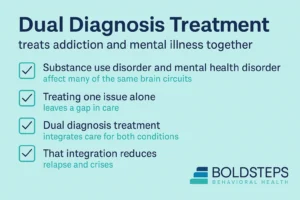
“Dual diagnosis” is a term you’ll hear in serious recovery circles. It means that someone is struggling with a substance use disorder and a mental health disorder (depression, anxiety, PTSD, bipolar, etc.). The two interact. They feed each other. You can’t reliably treat one without addressing the other, especially when the same brain circuits are involved.
A dual diagnosis treatment program integrates care for both conditions—medicine, therapy, relapse prevention, trauma work—in a way that they don’t just coexist. They inform each other. That integration is what changes things.
When you treat addiction and mental illness separately, you leave a gap. That gap becomes the relapse point, the argument point, the crisis point.
How My Second Try Looked Different
I came back with cynicism, bruises, and expectations that nothing would work. But also a smoldering hope I couldn’t quite kill.
This time, I entered a program that said, “We treat both. We expect doubts. We expect relapse. We expect you to test us.” That kind of honesty disarmed me in the best possible way.
The differences:
- Concurrent treatment — my psychiatrist and my addiction counselor worked together, not in silos.
- Medications aligned — antidepressants and supportive meds were chosen with my substance use in mind.
- Therapy that met resistance — we didn’t pretend my anger or cynicism wasn’t there. We leaned into it.
- Relapse understood — I wasn’t kicked out for a slip. They looked at it. We talked about what led to it.
- Bridge to life — discharge wasn’t “go figure the rest out alone.” There were steps, check-ins, outpatient continuity.
The Day Therapy Started to Click
It wasn’t a “light bulb” moment. It was more like the fog lifting a little bit.
I was in a group therapy session. Someone described their cravings, their shame, their self-hatred—and suddenly I heard myself talk about a memory I’d never told anyone else. And I didn’t feel judged. I felt heard.
In that session, someone said, “Your craving is part of your brain’s grief.” In that moment, my addiction and my mental health weren’t enemies. They were parts of the same struggle being named out loud.
Therapy stopped being homework. It became a compass.
What Was Hard Even in the Right Program
Let me be plain: it wasn’t perfect.
There were days when I felt raw, exposed. Medication didn’t balance overnight. Cravings still hurt. I still wondered if I could trust everything I’d been told. I questioned whether relapse was always lurking.
Still, there was something new:
- The cracks were allowed. I didn’t have to pretend I was “fine.”
- My questions mattered. When I asked, “What if I slip?” I got a real answer, not a platitude.
- My pace mattered. Sometimes we slowed. We revisited things. We shifted plans.
- I could see patterns. Not just triggers, but emotional cycles, shame cycles, thinking traps.
So even when it was messy, it was meaningful.
FAQs — What I’d Ask Now (And What You Might Be Wondering)
Q: If therapy failed me before, will dual diagnosis just fail too?
Not necessarily. Therapy fails when the rest of your system isn’t addressed. Dual diagnosis shifts the system. It doesn’t ignore addiction or mental health—they’re woven into treatment. That’s what allows therapy to finally land.
Q: Do I have to believe in dual diagnosis before trying it?
No. Bring your skepticism. Bring your anger. A good program expects resistance. They don’t force you to believe—they ask for honesty, even when it’s “I don’t trust this.”
Q: What if I relapse during treatment?
A quality program uses relapse as a signal—not a failure. You don’t get ejected. You get examined. You and your team look at what led there and adjust. Relapse becomes data, not defeat.
Q: Will I have to choose between addiction care and psychiatric care?
In a proper dual diagnosis setting: no. The goal is seamless care. Your psychiatric treatment and addiction care are in conversation, not competition.
Q: How long until therapy “feels like it’s working”?
Therapy isn’t instant. It’s incremental. You may notice small changes first—less reactivity, more clarity, more ability to sit with discomfort. Those are the signs therapy is working, even if you’re not cured yet.
Why Treatment Skeptics Are the Ones This Works For
When you’ve been burned by treatment, you bring defense, resentment, distrust. That’s not a disadvantage here. It’s pure material to work with.
Dual diagnosis treatment doesn’t want someone who’s responding perfectly. It wants someone who’s real. Someone who doubts, asks hard questions, tests boundaries. Because real healing starts there—not when everything is nice and polished.
Skeptics need this model more than anyone. The people for whom “treatment didn’t work” often just got the wrong version of it.
To Anyone Who Thinks They’ve Already Tried It All
If you’ve walked away from therapy thinking it’s useless, you’re not alone. I did it too. But I also found something—after failing, after slipping—that made it click. Made it feel less like a worthless exercise and more like a lifeline.
If you can, take one more step. Call a center. Ask them directly about dual diagnosis. Ask how they handle relapse, skepticism, shame. Ask what happens after discharge. Ask if you’ll be allowed to be angry or broken.
Because treatment that sees all of you—your addiction, your mind, your history—finally makes therapy make sense.
Call (603)915-4223 to learn more about our dual diagnosis treatment services in Concord, NH. If you’re looking for dual diagnosis treatment services in Merrimack County, NH or nearby in Rockingham County, you have options. Bold Steps is right here—and they get it.
Therapy might have felt pointless before. But when addiction and mental health are treated as one story, therapy becomes a tool you can trust again.