

I really thought I was past it.
Not in a careless way—in a way that felt earned. I had done the work. Sat through the uncomfortable conversations. Faced things about myself I used to run from. I had built something that felt stable.
So when that quiet tension started creeping back in, I didn’t think, I need help again.
I thought, What did I do wrong?
That’s the part no one prepares you for.
The moment where you’re not falling apart… but you’re also not fully okay.
And if you’re reading this, there’s a good chance you know exactly what that feels like.
If you’re considering going back to something like CBT therapy, I want to be honest about what that actually looks like—because it’s not about fixing yourself.
It’s about finally seeing what you’ve been avoiding.
I Was “Fine”—Which Made It Easy to Ignore
From the outside, everything looked steady.
I was functioning. Showing up. Keeping my life together in ways I couldn’t before.
And that became my proof:
See? You’re okay now.
But underneath that, there were small signals I kept brushing past:
- I was more on edge than usual
- Certain conversations made me shut down faster
- I felt this low-level pressure I couldn’t explain
Nothing big enough to justify concern.
Just enough to notice—if I let myself.
For a long time, I didn’t.
The Thought I Kept Pushing Away
There was one thought that showed up quietly, over and over:
What if I didn’t actually deal with everything?
I didn’t like that question.
Because if it was true, it meant I wasn’t as “done” as I thought. It meant there was more underneath—and I didn’t want to go back there.
So I did what most of us do.
I stayed busy.
Stayed productive.
Stayed “fine.”
Avoidance doesn’t always look like running. Sometimes it looks like functioning really well.
Avoidance Can Feel Like Stability
This is the part that’s hard to explain to anyone who hasn’t felt it.
You’re not spiraling. You’re not in crisis.
You’re just… slightly disconnected.
Like you’re living your life, but not fully inside it.
And because nothing is obviously wrong, it’s easy to convince yourself nothing needs attention.
For a lot of people in Rockingham County, New Hampshire, this kind of quiet disconnection gets overlooked—not because it’s not real, but because it doesn’t demand immediate action.
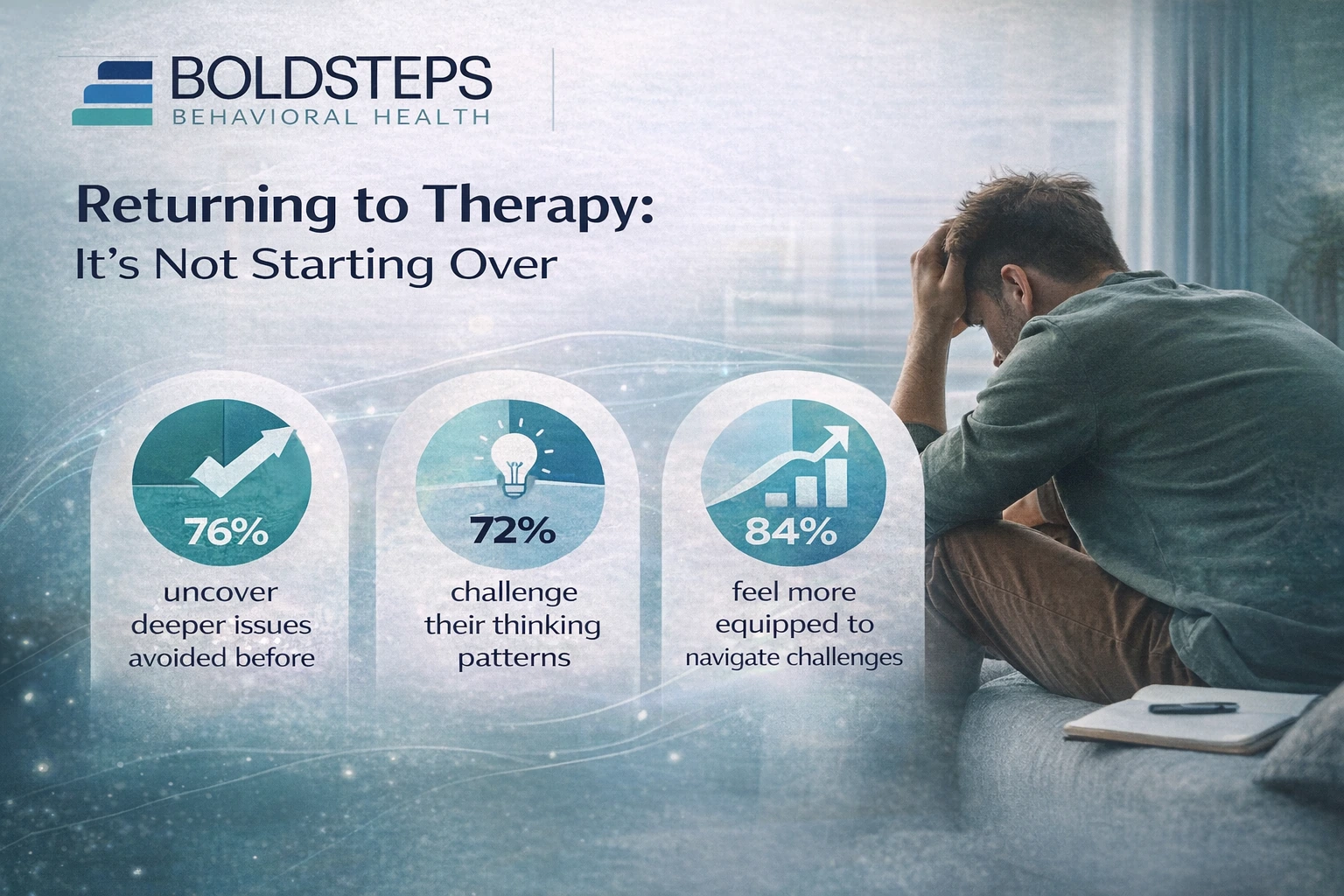
The Moment Everything Shifted
It wasn’t dramatic.
No breakdown. No big realization.
Just a conversation I almost avoided.
Someone asked me something simple—something honest—and I felt that familiar pull to deflect. To give a surface-level answer and move on.
But this time, I noticed it.
That split second where I could either avoid it… or stay.
That’s when it hit me.
I’m still avoiding things. Just in a quieter way.
Going Back Felt Like Failing—At First
I didn’t want to admit I needed help again.
It felt like I was undoing something. Like I had already “graduated” from this part of my life.
There’s a specific kind of shame in that:
- I should be past this
- Why am I here again?
But here’s what I had to learn the hard way:
Going back isn’t failure.
It’s honesty.
It’s recognizing that growth doesn’t stop just because things got better for a while.
This Time, It Was Different
The second time around didn’t feel like starting over.
It felt like going deeper.
I already had the language.
I already had some awareness.
But this time, I wasn’t just trying to feel better.
I was trying to understand what I had been protecting all along.
That changes how you show up.
The Work Wasn’t Where I Expected It
I thought I’d be working on big emotions again.
I wasn’t.
I was working on the quieter stuff:
- The assumptions I didn’t question
- The thoughts that felt “true” but weren’t
- The ways I dismissed my own feelings before they fully formed
Learning to challenge negative thoughts didn’t look like arguing with myself.
It looked like slowing down.
Getting curious.
Asking:
- Why do I believe this?
- What am I avoiding by thinking this way?
That’s where things started to shift.
I Wasn’t Broken—I Just Hit a New Layer
That’s the reframe that changed everything for me.
Nothing went wrong.
I didn’t lose progress.
I didn’t mess it all up.
I just reached a point where the old level of awareness wasn’t enough anymore.
And instead of pushing through it, I finally stopped and paid attention.
For some people searching for support—maybe even something like an anxiety counselor Concord NH—it’s not about falling apart again. It’s about recognizing that quiet tension before it turns into something louder.
It Got Uncomfortable Again—and That Was the Point
I won’t pretend it was easy.
Looking at what I had been avoiding brought things up:
- Doubt I thought I had moved past
- Patterns I didn’t realize were still there
- Feelings I had gotten really good at ignoring
But this time, I didn’t run.
I stayed in it.
And that made all the difference.
The Changes Were Small—but They Stuck
There wasn’t a big breakthrough moment.
No dramatic shift.
Just small changes that started to feel real:
- I answered questions more honestly
- I didn’t shut things down as quickly
- I stayed present in moments that used to overwhelm me
It didn’t feel impressive.
But it felt different.
And more importantly—it lasted.
You’re Not Back at the Beginning
If you’re in this space right now, I want you to hear this clearly:
You didn’t go backwards.
You’re not starting over.
You’re just seeing something you weren’t ready—or able—to see before.
That’s not failure.
That’s growth doing exactly what it’s supposed to do.
Even in places like Merrimack County, New Hampshire, where life keeps moving and it’s easy to stay on autopilot, that quiet awareness is something worth paying attention to.
FAQs
Why do I feel off again after doing so much work?
Because growth isn’t one layer deep. You can work through major challenges and still have underlying patterns that show up later in more subtle ways.
Does going back to therapy mean I failed?
No. It means you’re paying attention. Growth often happens in phases, and returning to therapy can help you address what’s coming up now—not what you already worked through.
Why does this feel different than before?
Because it is. You’re not dealing with the same intensity or circumstances—you’re working through more refined, subtle patterns that require a different kind of awareness.
What does it mean to challenge your thinking?
It means questioning automatic thoughts instead of accepting them as facts. It’s about curiosity, not criticism—understanding where your thinking comes from and whether it’s actually helpful.
How do I know if I’m avoiding something?
Avoidance often shows up as distraction, minimization, or staying “fine” instead of going deeper. If something keeps coming up but you push it aside, that’s usually a sign.
Is it normal to feel resistant to going back?
Yes. Especially if you thought you were past this stage. Resistance doesn’t mean you shouldn’t go back—it usually means there’s something important there.
If something in you recognizes this—if there’s a quiet sense that you’ve been avoiding something deeper—you don’t have to figure it out alone.
Call (603)915-4223 or visit our therapy, cbt services to learn more about our therapy, Cognitive-Behavioral Therapy in Concord, NH.