

Loving someone with a dual diagnosis can feel like trying to hold onto two truths at once: You see who they really are—and you also see how much they’re hurting. They laugh with you one minute, and the next they’re lost in anxiety, anger, or withdrawal. It’s not just one problem. It’s not just one solution. And that’s exactly why dual diagnosis treatment exists.
At Bold Steps Behavioral Health, we understand the complexity that comes when addiction and mental illness show up together. Our dual diagnosis treatment program supports the whole person, and we also support the people who love them—including you.
What Is Dual Diagnosis—and Why Does It Matter?
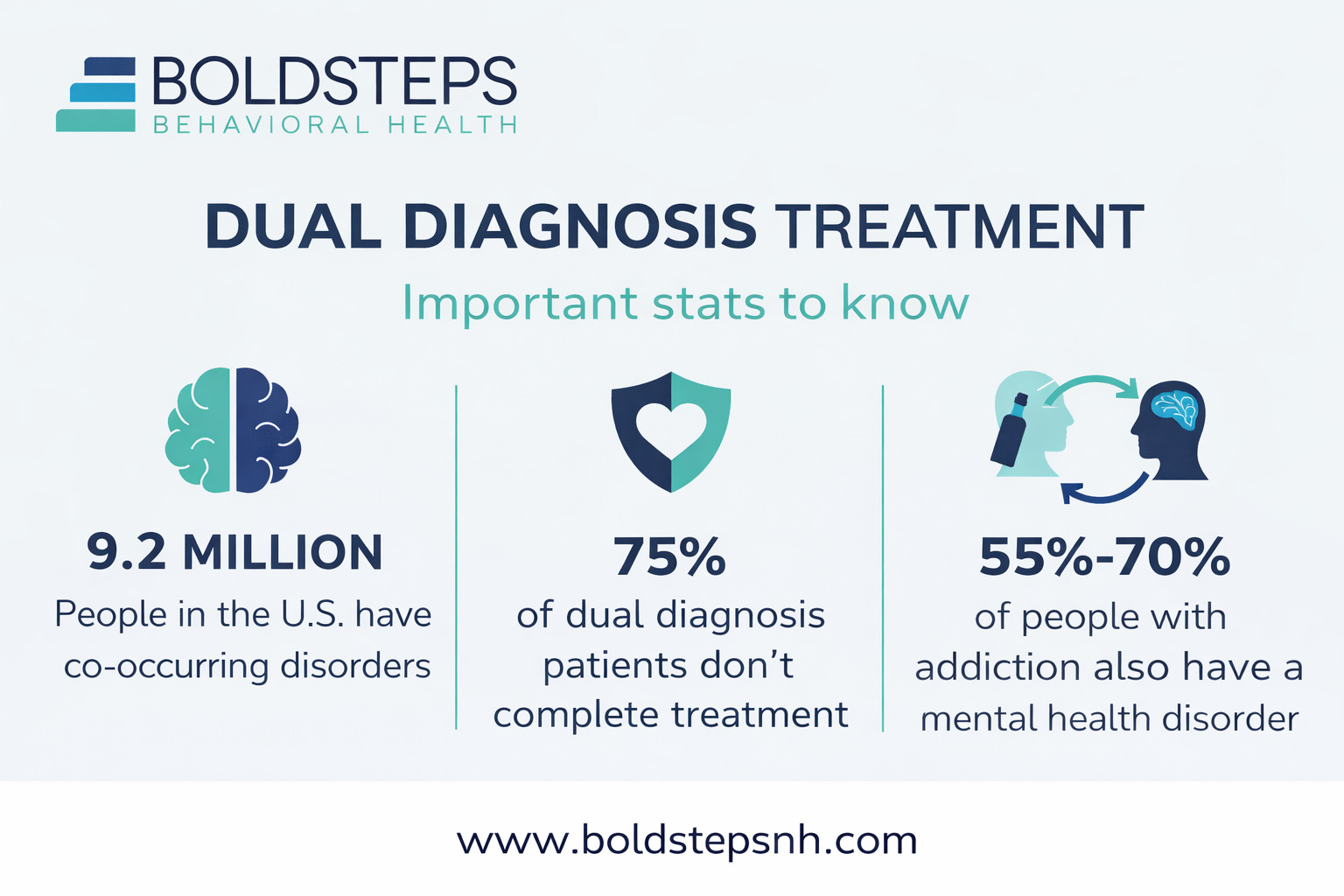
A dual diagnosis means someone is living with both a mental health disorder and a substance use disorder at the same time. It’s more common than many people realize—especially in relationships where things feel like they’re “always on edge.” You may be seeing:
- Depression that never seems to lift
- Drinking or drug use that’s gotten heavier over time
- Anger, withdrawal, or emotional shutdowns
- Shifts in sleep, eating, or work habits
- A sense of constant chaos, followed by emotional numbness
When mental health and substance use overlap, they tend to feed into each other. Someone might drink to quiet their anxiety, only to feel more depressed the next day. Or they might stop using for a while, only to spiral because their underlying PTSD hasn’t been addressed.
Dual diagnosis care is designed to break this loop. It treats both conditions together—not as separate problems, but as parts of a tangled root system that need careful, compassionate support.
What Does Dual Diagnosis Treatment Actually Look Like?
Dual diagnosis treatment isn’t one-size-fits-all. At Bold Steps, we build each plan around the specific needs of the person receiving care. That includes their clinical diagnosis, substance use history, trauma background, and current support system.
Here’s what someone might experience in our dual diagnosis program:
- Comprehensive psychiatric assessment
To identify mental health conditions like depression, anxiety, bipolar disorder, or trauma-related disorders. - Therapeutic support
Including one-on-one therapy, group therapy, and family therapy when appropriate. These sessions often explore how mental health and addiction interact. - Medication management
When clinically appropriate, we provide medication support for mental health symptoms—always with the person’s input and consent. - Behavioral health support
This may include skill-building, coping strategies, relapse prevention, and emotional regulation work. - Family involvement
When loved ones are willing, we help them get the education and support they need to understand dual diagnosis and set healthy boundaries.
No two treatment paths are identical. What stays consistent is the respect, expertise, and hope we bring to every case.
Why Do So Many Couples Miss the Signs of Dual Diagnosis?
Because life doesn’t usually hand us a clear diagnosis—or a clear way forward.
In relationships, we often chalk things up to stress, past trauma, or “a rough patch.” And when substance use is involved, it’s easy to get caught in cycles of blame, rescue, and regret.
You might be thinking:
- “They’re drinking again, but it’s because they’re depressed.”
- “They say they don’t have a problem, and sometimes I believe them.”
- “I know there’s something deeper going on, but they won’t get help.”
It’s normal to question what you’re seeing. But if your gut tells you something isn’t right, you’re not imagining it. And you don’t have to diagnose your partner to seek help. You can call us just to ask questions.
What If They Don’t Want Treatment?
This is one of the hardest and most painful realities many partners face.
You may see the need clearly. They may not. Or they may see it but feel too ashamed or overwhelmed to act. They might say things like:
- “I’m fine, I don’t need help.”
- “It’s not that bad.”
- “You’re the one with the problem, not me.”
In these moments, pressure rarely works. What helps is clarity, consistency, and compassion. Try saying:
“I love you. I see you struggling. I’m not here to control you—but I want you to feel better. I know support is available when you’re ready.”
Sometimes that seed is enough. Sometimes it’s not. But either way, you deserve support too—whether or not they’re ready to seek treatment.
How Does Dual Diagnosis Treatment Support Families?
We know this isn’t just about your partner. It’s also about you—the person who’s been trying to love, help, protect, and survive all at the same time.
At Bold Steps, we support families by offering:
- Education about dual diagnosis and how these conditions affect behavior and relationships
- Family therapy sessions to work through trust, boundaries, and grief
- Connection to community resources like support groups or counseling for loved ones
You don’t have to wait until they’re in treatment to access help. Your pain is real, and it matters.
What If I’m Not Ready to Leave… But I Can’t Keep Doing This?
You are not alone in that feeling. So many partners live in that in-between space:
“I don’t want to give up on them. But I’m losing myself.”
You don’t need to make a decision today. And you don’t need to justify your love. What you do need is clarity, care, and room to breathe.
Support doesn’t always mean ultimatums. Sometimes it means learning what’s yours to carry—and what isn’t.
Supporting Dual Diagnosis Treatment in [Region Placeholder]
Whether your partner is ready for help or not, you don’t have to keep navigating this alone. At Bold Steps Behavioral Health, we offer dual diagnosis treatment that addresses both mental health and addiction with compassion, expertise, and care for the whole family.
If you’re looking for more information about treatment options in Rockingham County, Merrimack County, Hillsborough County, or just need someone to talk to, we’re here.
📞 Call (603) 915-4223 or visit to learn more about our dual diagnosis treatment services in Concord, NH.
Frequently Asked Questions About Dual Diagnosis
What mental health conditions are treated in dual diagnosis programs?
Common conditions include depression, anxiety, bipolar disorder, PTSD, and personality disorders—especially when they exist alongside substance use.
Does insurance cover dual diagnosis treatment?
Many insurance plans do cover dual diagnosis treatment. Our team can help verify your benefits and explain your options clearly.
How long does treatment last?
Treatment length varies based on individual needs. Some people begin with outpatient care and continue for several months; others may step down from more intensive levels over time.
Can someone with dual diagnosis recover fully?
Yes—recovery is absolutely possible. With the right support, people can learn to manage both their mental health and substance use in sustainable, empowering ways.
What if my partner refuses treatment?
You can still get support. Therapy, education, and boundary-setting tools can help you care for yourself—even if your partner isn’t ready yet.