

Loneliness can surprise you in early recovery. The noise fades, the rush is gone—and suddenly, there’s silence. And in that silence, many people begin to grieve not just the alcohol, but the people and places that came with it. If you’re missing the social life you had while drinking—even if it wasn’t always healthy—you’re not the only one. This is a deeply human part of healing.
At Bold Steps Behavioral Health in Concord, NH, we work with clients at every stage of alcohol addiction treatment, including the part that’s rarely talked about: the ache of missing what you left behind. This blog answers common questions about loneliness after treatment—gently, honestly, and without shame.
Is it really normal to miss people I drank with—even if they weren’t good for me?
Yes. It’s not just normal—it’s expected.
Think about it: even if those relationships were built around drinking, they may have offered real emotional moments. The person who always checked on you when you disappeared. The group chats. The inside jokes. The routine. In the absence of alcohol, you may find yourself missing the laughter, the sense of belonging, or even just having “your people.”
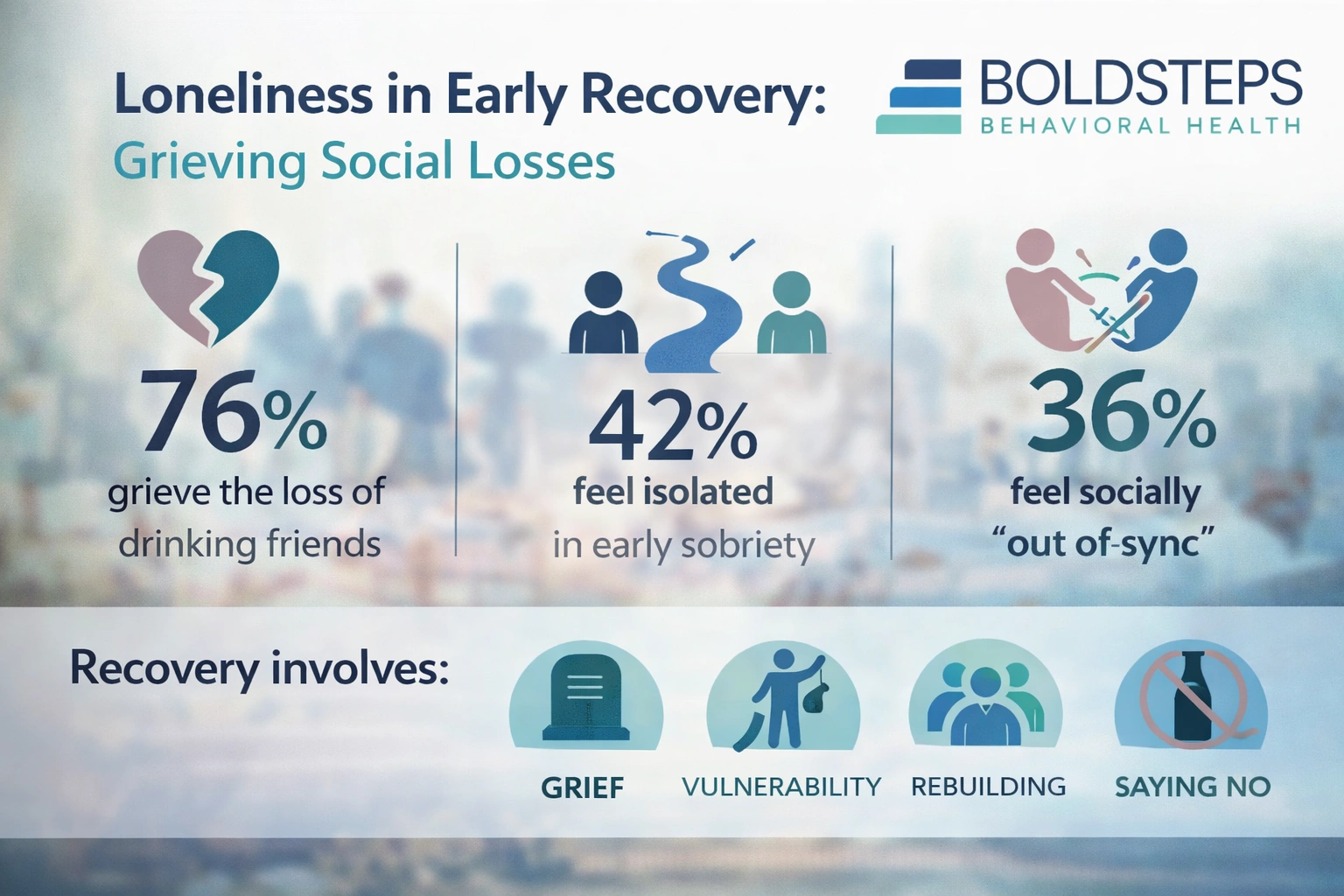
Recovery involves grief. You’re not just letting go of a substance—you’re letting go of a lifestyle. That includes relationships, habits, and even parts of your own identity. Missing it doesn’t mean you want to relapse. It means you’re human and healing.
Why does sobriety feel so isolating at times?
Because in early recovery, you’re often caught in-between.
On one side: the world you left. The bar nights, the social rituals, the familiar chaos.
On the other: a new way of life that hasn’t fully formed yet. You’re trying to build new routines, maybe new relationships, but they don’t feel comfortable yet. That gap—that in-between space—is lonely.
You’re in the process of re-learning how to connect without substances. That takes time, vulnerability, and repetition. It’s also emotionally exhausting in the beginning. But that doesn’t mean it’s not working. It just means you’re in the hard middle part.
“Early sobriety felt like someone had turned off the music at a party I didn’t want to leave. But eventually, I found a new rhythm.”
– Outpatient Client, 2023
Is it dangerous to reconnect with drinking friends after treatment?
It depends—but proceed with care.
Some friendships might have depth beyond drinking. Others may have been bonded solely by substance use. The question isn’t just whether you miss them, but whether being around them supports your recovery or risks it.
Here are a few things to consider:
- Do they respect your sobriety?
- Do you feel safe around them—emotionally and physically?
- Are you tempted to minimize your progress when you’re with them?
- Do they invite you to drink or pressure you to come back to old routines?
You can grieve someone, love someone, and still decide not to be around them. That’s not cold—that’s healthy. And if you’re unsure, talking it through with a counselor can help you see it more clearly.
What makes early sobriety friendships so hard to build?
You’re showing up with raw edges—and that’s brave.
Most people in recovery are learning how to socialize in an entirely new way. There’s no liquid confidence, no familiar escape hatch. That vulnerability can make small talk exhausting and deeper connection feel far away.
It’s also normal to feel socially “out of sync”:
- Others your age might still be drinking casually
- You might feel older than your peers emotionally
- You may avoid certain settings entirely, which limits social exposure
And yet—there are people who will meet you where you are. Many find new friends through recovery groups, creative classes, therapy communities, or faith-based groups. It’s okay if the first few attempts feel awkward. Think of it as re-learning a language you haven’t spoken in a long time.
Will I ever feel close to people again without alcohol?
Yes—but differently. And often, more deeply.
Alcohol can create a sense of instant connection, but it’s often surface-level. Sobriety takes longer to build connection—but what you build is real. It’s based on truth, not performance. Over time, you’ll notice the shift:
- People are remembering what you said the next day
- Conversations have more substance
- Vulnerability feels less terrifying
- Trust deepens slowly, but meaningfully
These are the kinds of relationships that sustain you—not just distract you. The ones where you don’t have to keep a version of yourself hidden. That level of connection doesn’t happen overnight, but it is absolutely possible.
Can I still miss drinking and still be committed to recovery?
Yes. Missing is not the same as wanting to go back.
You can miss the relief, the ritual, the false sense of safety. You can miss the way it filled time or numbed pain. That doesn’t mean recovery isn’t working—it means you’re telling the truth.
Sobriety isn’t about pretending alcohol was all bad. It’s about getting honest about the whole picture—and choosing healing anyway. Recovery invites you to acknowledge the full story, even the parts that still tug at your heart.
“I missed the bar because it felt like family. But family shouldn’t put you in danger. It took me a long time to find a new version of home.”
– Former Client, 2022
How can I start building new community in recovery?
Start small. Start scared. But start.
Here are a few gentle ways to ease into new connection:
- Try a local recovery group, even if you don’t talk at first. Just showing up builds rhythm.
- Join a structured program—like alcohol addiction treatment in Merrimack County or Hillsborough County, NH—that includes group therapy or peer support.
- Volunteer somewhere meaningful. Purposeful connection can sometimes feel safer than purely social spaces.
- Explore a sober meetup group or hobby-based community.
- Get support from a counselor on navigating social anxiety in sobriety.
You don’t have to walk into a room and announce you’re sober. You can just be someone who’s showing up for themselves. The rest can come later.
What if the loneliness doesn’t go away?
Loneliness in recovery often softens—it doesn’t always disappear.
For some, it’s a passing season. For others, it’s a thread that shows up at certain times—holidays, anniversaries, after conflict. But there are things you can do to reduce its grip:
- Name it aloud. Shame thrives in silence. Talk to someone about the loneliness.
- Structure your time. Too much unstructured time can make emotional weight feel heavier.
- Notice glimmers, not just triggers. What moments of connection have you had, however small?
- Reframe solitude. Sometimes, what feels like loneliness is also a doorway to knowing yourself more fully.
And if it starts to feel too heavy to hold, reach out. You don’t have to carry it alone.
How do I know when it’s time to seek more support?
If the loneliness begins affecting your ability to function, feel safe, or stay committed to recovery, it’s time.
Here are some signs:
- You’re isolating more than usual and don’t want to be around anyone
- You’ve lost interest in recovery-related activities or support groups
- You’re fantasizing about drinking again just to feel connected
- You feel hopeless about ever building new relationships
Reaching out isn’t failure—it’s strength. It’s a recognition that your healing deserves backup. Whether that’s outpatient counseling, a support group, or returning to treatment, it’s a step toward wholeness.
What does recovery connection look like at Bold Steps?
At Bold Steps in Concord, NH, community isn’t a side note—it’s part of the healing. Our alcohol addiction treatment services are built to support your whole self, including the part that longs for connection. Whether you’re in group therapy, meeting one-on-one with a counselor, or participating in community-based recovery activities, we help you rebuild trust—starting with yourself, and expanding outward.
Many of our clients come in feeling broken or alone. They leave feeling seen. Not just sober—but known, respected, and understood. That’s the kind of community you deserve.
You Don’t Have to Do This Alone
If you’re missing connection after alcohol addiction treatment, you’re not broken. You’re healing. And help is here. Call (603) 915-4223 or visit our alcohol addiction treatment services in Concord, NH to find real connection that supports your recovery.