

There’s nothing quite like the heartbreak of watching your child fade before your eyes. They’re technically “okay”—alive, fed, sheltered—but something essential has gone missing. You’re not alone if you’ve wondered: Is this depression? And if it is… what do we do now?
At Bold Steps Behavioral Health in Concord, NH, we believe treatment is about more than diagnosis. It’s about helping people come back to themselves—gently, gradually, and with deep respect for their struggle.
Labels Can Help—but They’re Not the Whole Story
A formal diagnosis of depression can offer clarity, especially after months—or years—of trying to understand what’s happening. But labels don’t always come with relief. For parents, they can stir grief, guilt, or questions like:
- “Did I miss something?”
- “Is this my fault?”
- “Will this label follow them forever?”
Here’s the truth: A diagnosis is not a moral judgment or a life sentence. It’s a clinical shorthand that helps guide care. It helps us understand patterns—like changes in sleep, appetite, mood, or energy—and determine what kind of support is most likely to help.
But treatment doesn’t begin and end with a label. And healing certainly doesn’t depend on whether someone “accepts” a diagnosis right away. Sometimes, just naming the pain—without pressure or shame—is the first real step forward.
Depression Looks Different in Young Adults
One of the hardest parts of parenting a 20-something in emotional distress is that it doesn’t always look the way we expect. Some young adults still go to work or school. Others withdraw entirely. Many swing between numbness and irritability, exhaustion and restlessness.
It might sound like:
- “I’m just tired.”
- “Everything feels pointless.”
- “I don’t know what I’m doing with my life.”
It might look like:
- Skipping meals or staying in bed all day
- Losing interest in friends, work, or hobbies
- Letting responsibilities fall through the cracks
- Numbing out with screens, sleep, or substances
These aren’t signs of laziness or disrespect. They’re signs that someone’s internal world is out of sync—and their nervous system is in shutdown mode.
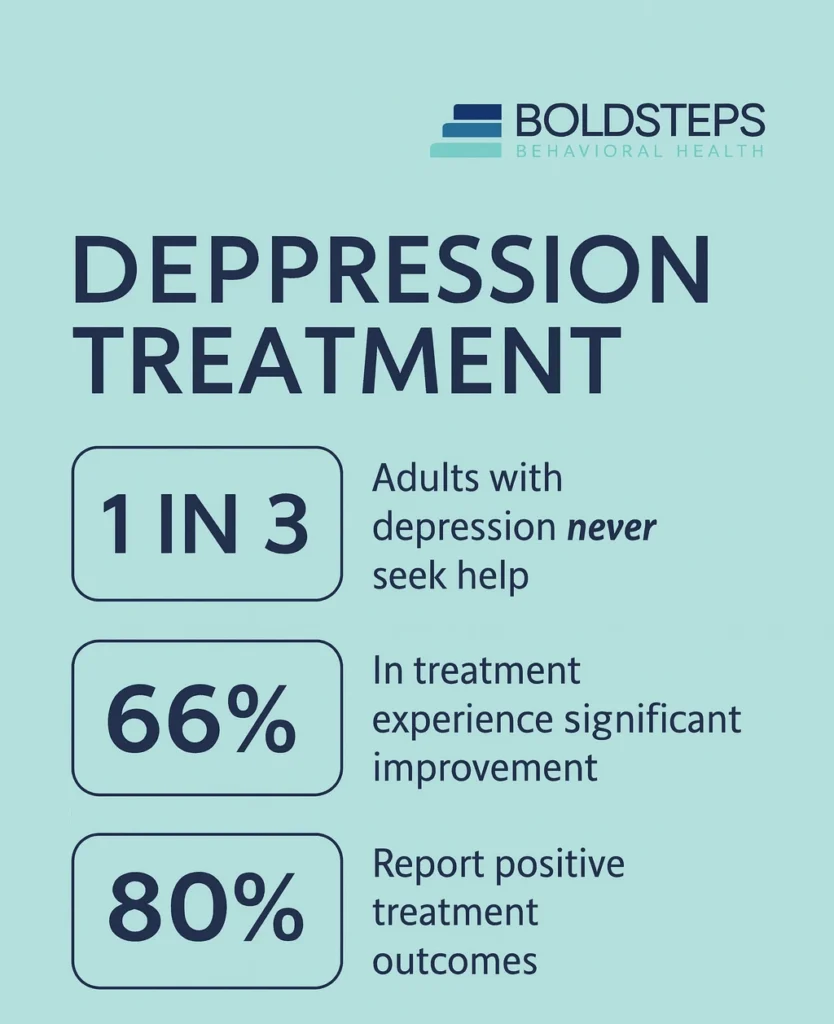
Treatment Isn’t a Quick Fix—It’s a Reconnection
At Bold Steps, we don’t believe in one-size-fits-all care. We offer a range of depression treatment programs in New Hampshire because healing looks different for everyone.
What remains constant is our approach: We meet each client with respect, patience, and a focus on reconnection.
That might mean:
- Talk therapy to process emotions and build coping tools
- Medication support for those whose symptoms are biologically rooted
- Group support to reduce isolation and increase understanding
- Life skills coaching to help young adults build momentum again
No matter the path, the goal is never to “fix” a person—it’s to help them remember they’re not broken. Depression doesn’t erase who someone is. It just covers it up. Treatment gently peels back those layers and helps them reengage with the world around them.
Parents Are Part of the Process—And Deserve Support, Too
We know the toll this takes on families. You may feel helpless, stretched thin, or unsure whether to push or pull back. You might even feel ashamed of how frustrated or disconnected you’ve become.
We want you to know:
- You didn’t cause this.
- You can’t solve it alone.
- Your love still matters—more than you know.
Parents are a vital part of a young adult’s support system, even when things feel tense or distant. That’s why we often involve family support services in our care plans. Not to blame or burden you—but to help you breathe again, too.
Hope Isn’t Naïve—It’s Necessary
Sometimes hope can feel like a cruel word—especially when things have gotten worse after trying to help. But in the context of depression treatment, hope isn’t blind optimism. It’s the small, steady belief that change is possible.
Hope sounds like:
- “Maybe this time will be different.”
- “I don’t have to feel this way forever.”
- “There are people who can help me.”
At Bold Steps, we nurture that hope in realistic, grounded ways. We don’t make big promises. We build small wins—consistently and compassionately. Healing is rarely dramatic. It’s often quiet. But it’s real.
Local Depression Treatment in Concord, NH—and Surrounding Areas
If you’re looking for depression treatment in Rockingham County, Merrimack County, or Hillsborough County, our Concord-based facility is here to help.
We work with young adults and families across the region, offering flexible care options and a stigma-free environment. Our team is deeply experienced in treating depression—not just with professionalism, but with heart.
FAQ: Depression Treatment for Families and Young Adults
What if my child doesn’t want treatment?
It’s common for young adults to feel ambivalent or resistant. We never force participation—but we do create space for curiosity, conversation, and safety. Sometimes just walking through the door or having a low-pressure call is the first win.
Is medication always part of depression treatment?
Not always. Medication can be incredibly helpful for some, but it’s never the only option. At Bold Steps, we assess each person’s needs carefully and collaboratively. Therapy, skill-building, and relational support often work alongside—or instead of—medication.
How involved are parents in treatment?
We value family involvement, especially when it’s safe and constructive. With the client’s permission, we offer parent check-ins, psychoeducation, and guidance on how to support recovery at home without burning out.
What makes Bold Steps different?
We see people—not problems. Our depression treatment programs focus on the full human experience, not just symptom reduction. We don’t rush people through checklists. We walk with them—at their pace, with dignity and respect.
What’s the first step?
Reach out. Whether you call us or fill out a form online, we’ll start with a conversation—no pressure, no assumptions. Just a chance to explore what’s happening and how we might help.
📞 Ready to Take the First Step?
Call (603) 915-4223 or visit our depression treatment page to learn more about our depression treatment services in Concord, NH. You don’t have to figure this out alone—and neither does your child.