

Loving someone who’s struggling hurts in more ways than people know.
Especially when it’s not just depression. Or just addiction. But both—entwined, overlapping, feeding each other in ways that leave you constantly wondering which one to treat first. Or whether treatment would even help if they’re not ready to stop using.
You’re not alone in this. And the answer isn’t simple—but it is hopeful. There are treatment centers that understand both depression and addiction. But knowing what to look for can make all the difference in finding one that actually helps.
At Bold Steps Behavioral Health in Concord, NH, we specialize in treating people who struggle with both. But we also support the people who love them—you. This guide will walk you through what to look for, what to ask, and what it really means to find care that sees the whole person, not just one part of the pain.
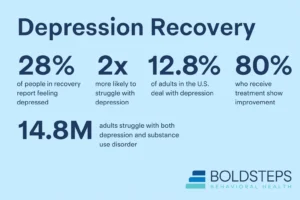
Why Treating Depression Alone Often Isn’t Enough
When someone you love is using and also visibly depressed, it’s tempting to think, “If we can just fix the sadness, maybe they’ll stop drinking.” Or vice versa—“If they stop using, maybe they won’t be so down.”
But the truth is, these conditions often reinforce each other. Depression creates the emotional void; substances numb it. Then the shame from using deepens the depression, and the cycle repeats.
Trying to treat just one piece of that puzzle—without addressing the other—can stall or sabotage the whole process. That’s why dual-diagnosis or “co-occurring disorder” treatment matters. It doesn’t prioritize one issue over the other. It understands that both need care, often at the same time.
Signs Your Loved One May Need a Dual-Focused Program
- They drink or use substances to “cope” with sadness, hopelessness, or numbness
- They’ve tried therapy before, but didn’t address their substance use
- They’ve been to detox or rehab but fell into a depressive episode afterward
- They isolate, cancel plans, or sleep excessively
- They express feeling like a burden or say things like, “Nothing helps anyway”
If this sounds familiar, a depression treatment center that also understands addiction is likely the right fit.
What to Look for in a Depression Treatment Center That Gets It
Not all mental health programs are equipped to deal with addiction. And not all addiction centers handle mood disorders well.
Here’s what you should be looking for when evaluating a center:
1. Integrated Dual-Diagnosis Services
They should clearly state that they treat co-occurring disorders. This isn’t just a bonus—it’s essential. Their clinical team should include therapists and prescribers who are comfortable treating both depression and substance use disorders.
2. Flexible Entry Points
Can your loved one begin treatment even if they’re not fully sober? Some programs require abstinence before enrollment—but many people with co-occurring issues need support before they’re ready to stop using. A good program meets them where they are.
3. Licensed Mental Health and Addiction Clinicians
Check credentials. Therapists should have experience with substance use and trauma, not just general depression or anxiety. The intake team should be able to speak to how they adapt treatment for clients in active use or early recovery.
4. Medication Support
Depression treatment often involves medications. A strong center will have prescribers who understand which meds are safe and appropriate for clients who also use substances—or who are tapering off them.
5. Family-Inclusive Support
You matter, too. The right center should offer family therapy, education, or support groups that help you navigate this with your own health and boundaries intact.
Real Talk: FAQs from Spouses and Partners
Here are some of the most common questions we hear from people just like you—worried, exhausted, still hopeful, but unsure where to turn.
Q: What if my partner is still using—will they be turned away?
Not at Bold Steps. We don’t require people to be fully abstinent to begin depression treatment. In fact, we often see better long-term outcomes when we treat mental health while gently helping someone reduce or stabilize substance use.
Q: They’ve tried therapy before and hated it. What’s different this time?
Many people struggle with early therapy experiences that don’t address their full reality. We use trauma-informed, addiction-aware approaches that focus on safety, respect, and meeting the person—not just the symptom.
Q: I’m scared they’ll lie to the therapists. Should I tell them what’s really going on?
If your loved one consents, you may be invited to share background information. But our team is trained to detect patterns gently and validate pain without shame. We’re not here to trap or confront—we’re here to support healing.
Q: What happens if they relapse during treatment?
We don’t kick people out for being human. If relapse happens, we adjust care—not withdraw it. Many clients stay engaged, recover faster, and deepen their healing after a setback—because they’re not treated like they’ve failed.
Q: Do you offer support for partners and families?
Yes. We believe healing happens in relationship. Whether through family therapy, education about boundaries, or connecting you with a peer support network, we’re here for you, too.
Geography Matters, But Compassion Matters More
If you’re looking for depression treatment in Essex County, or nearby Hillsborough County or Rockingham County, location is often a practical factor. It’s easier to visit. Easier to attend family sessions. Easier to feel connected.
But don’t let geography be the only filter. What matters most is how your loved one is treated once they arrive. A facility five minutes away that doesn’t understand their reality is far less valuable than a place like Bold Steps, where they’ll be seen fully and treated holistically.
It’s Okay If You’re Not Sure They’re Ready
This may not be the first time you’ve tried to get help for them. Maybe it’s the third. Maybe it’s the tenth. And maybe they’re still not ready to walk through the door.
That’s okay. Even reading this is a step. Even calling to ask questions matters. Because when the moment comes—when they say, “Okay, I think I need help”—you’ll know what to do. You’ll know who to call. And we’ll be ready.
What Your Love Can’t Fix, Compassionate Treatment Can Support
You can’t fix this for them.
But you can choose support that treats their whole truth.
You can stop feeling like you have to hold it all together alone.
You can take a step toward relief—for them and for you.
We believe your loved one is not too far gone. Not too complicated. Not too broken to get better.
And we believe you deserve support in this, too.
Call (603)915-4223 to learn more about our depression treatment services in Concord, NH.
We understand depression. We understand addiction. And we honor the people who love through both.