

Some mornings in early recovery, it’s not the cravings that get to you. It’s the quiet.
You wake up sober—and instead of pride or clarity, you feel hollow. The joy people promised hasn’t arrived. You’re not white-knuckling for a drink. You’re white-knuckling through the silence. And if you’ve started to wonder whether depression treatment could help, the honest answer is: yes. It can.
Not because you’re doing recovery wrong—but because staying sober is hard when your inner world still feels heavy. Healing the depression underneath the drinking can be the missing piece that makes everything more bearable, even beautiful.
At Bold Steps Behavioral Health in Concord, NH, we work with people in this exact place. Raw. Lonely. Brave. Wondering if they’re allowed to ask for more help—after already doing the hardest thing of all: getting sober.
Depression Doesn’t Always Look Like Sadness
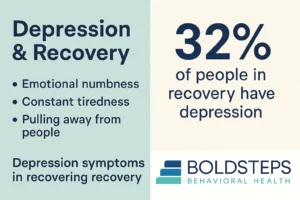
In early recovery, depression can feel like:
- Emotional numbness
- Constant tiredness, even with rest
- Pulling away from people, even the ones you like
- Waking up with no energy and going to sleep with no peace
- Asking yourself, “Is this really all there is?”
You may not cry all day. You may even smile in front of others. But when you’re alone, it’s like the air goes heavy. Every task feels too big. Every silence feels too loud.
That’s not just post-acute withdrawal. That’s something deeper. And depression treatment is where that heaviness finally starts to lift.
You’re Not Weak for Struggling After Getting Clean
There’s a quiet shame that hits some people in early recovery—especially when the substance is gone, but the sadness stays.
You might think:
“Shouldn’t I feel better by now?”
“What if I did all this and I’m still not okay?”
“Does this mean sobriety isn’t working?”
But here’s the truth: you’ve taken away the numbing. Now you’re feeling what was there all along. The pain that drinking kept at bay. The trauma you never got to grieve. The loneliness that’s been building since long before recovery.
This doesn’t mean sobriety isn’t working. It means your body and mind are finally ready to deal with the real stuff. Depression treatment gives you a safe, supportive place to do exactly that—at your own pace, without pressure, without shame.
Mental Health Support Isn’t Extra—It’s Essential
Treating your depression while building your recovery is not a distraction. It’s a foundation.
Too often, people try to “earn” their way into therapy or psychiatry by staying sober long enough. But the pain you feel in the early days? That’s when you most deserve relief.
At Bold Steps, we see early recovery and mental health as two sides of the same healing process. Your brain is rebalancing. Your routines are shifting. You’re doing things without the crutch you once relied on. That’s a lot. You shouldn’t have to white-knuckle your way through the emotional fallout.
When you add depression treatment to your recovery plan—therapy, medication when appropriate, even just a consistent place to talk—you’re not giving up control. You’re taking it back.
Recovery Without Joy Isn’t Freedom—It’s Endurance
Maybe no one ever told you this, but we will:
You’re allowed to want joy—not just sobriety.
You’re allowed to want more than just staying clean. More than just “not drinking.” You’re allowed to want connection. Peace. Real laughter. Rest that actually restores you.
That’s what depression treatment can help unlock. It won’t hand you happiness overnight. But it will start pulling the threads that have you tangled in survival mode.
You begin to feel the difference between surviving and living. Between staying sober for someone else and staying well for yourself.
This Isn’t Just Emotional—It’s Chemical
The science backs this up: your brain chemistry changes during addiction, and again in recovery. Serotonin, dopamine, cortisol—all the neurochemicals that regulate mood—can take time to rebalance. And for many people, especially those with a history of trauma, anxiety, or mood disorders, the adjustment is brutal.
That’s why structured depression treatment—especially with a team that understands addiction—is so critical.
At Bold Steps, we offer:
- Therapists who specialize in co-occurring disorders (meaning they understand how addiction and mental health feed each other)
- Safe, evidence-based medication options for clients who need biochemical support
- Group therapy that reduces isolation without overwhelming you
- Flexible scheduling, because we know showing up consistently is a victory in itself
Whether you’re newly sober or weeks in, this isn’t about adding more work. It’s about creating space to feel okay while doing the hardest thing you’ve ever done.
You Deserve Support in the Quietest Moments
It’s easy to show up when you’re in crisis. When things are falling apart, people rush to help.
But what about when you’re just… numb? When you can’t explain why you feel so empty? When there’s no drama, no fire—but still, you’re struggling to stay upright?
That’s when support matters most.
Whether you’re living in Concord, or looking for depression treatment in Rockingham County, NH or Merrimack County, our team is here for the quiet in-between. The ordinary days that feel impossibly heavy. The evenings that echo with loneliness. The mornings where you want to go back to bed—but choose to reach out instead.
That’s recovery. And we’ll meet you there.
You Don’t Have to Choose Between Sobriety and Sanity
So many people think they can only do one thing at a time:
- Get clean first, then deal with the sadness.
- Get stable first, then talk to someone.
- Survive first, then think about healing.
But you don’t have to pick. In fact, the people who get both kinds of support—mental health and addiction treatment—are the ones who stay sober longer, relapse less, and feel more connected.
You don’t have to push through depression just because you already asked for help once.
You’re allowed to ask again.
Call (603)915-4223 to learn more about our depression treatment services in Concord, NH.
You deserve to feel better—while staying sober. Let us walk with you, one honest step at a time.