

I almost didn’t make the call.
Not because I didn’t need help.
Not because I didn’t know something was wrong.
Because I had convinced myself there was no point.
If you’ve ever completed treatment, felt hopeful for a while, and then found yourself struggling again months later, you may understand exactly what I mean.
The return of depression can feel different the second time around.
The first time, you’re searching for answers.
The second time, you’re carrying disappointment.
You know what it feels like to improve. You know what it feels like to have hope. And when symptoms return, it can feel as though someone quietly pulled the floor out from under you.
For me, the hardest part wasn’t admitting I was struggling again.
It was deciding whether I deserved help again.
That may sound dramatic.
But depression has a way of turning simple questions into impossible ones.
And one of the questions that kept me stuck was surprisingly practical:
“Can I even afford treatment?”
Many people who begin exploring depression treatment and support ask a similar question. What they often discover is that the financial concern is only part of the story.
The bigger challenge is usually finding the courage to reach out.
The Relapse Nobody Could See
When people hear the word relapse, they often think about substance use.
But depression can relapse too.
Not always dramatically.
Sometimes quietly.
For me, it started with exhaustion.
I slept more.
Cancelled plans more often.
Stopped returning messages.
Began saying “I’m just tired” whenever someone asked how I was doing.
The truth was more complicated.
I wasn’t just tired.
I was withdrawing.
Little by little, my world became smaller.
The hobbies that once helped me cope felt pointless.
The routines that once grounded me disappeared.
The future stopped feeling exciting and started feeling heavy.
If you’ve been through treatment before, this part can be especially confusing.
Because you know the warning signs.
You recognize what’s happening.
Yet somehow that doesn’t make it easier to stop.
Depression Is a Skilled Negotiator
One thing I’ve learned is that depression rarely tells you not to get help directly.
Instead, it negotiates.
It whispers.
It delays.
It creates reasons.
Maybe you’ve heard some of them before:
- “It’s not that bad.”
- “Other people need help more than I do.”
- “I should be able to handle this.”
- “Things will probably improve on their own.”
- “Treatment didn’t fix everything last time.”
For me, money became the excuse.
Every time I considered reaching out, another question appeared.
What if insurance didn’t cover it?
What if treatment was too expensive?
What if I went through the entire process only to discover I couldn’t afford it?
These questions felt responsible.
Adult.
Practical.
But looking back, I can see what was really happening.
Fear had simply found a more convincing costume.
The Weight of Starting Over
One reason alumni often struggle to reach out again is because returning can feel like admitting failure.
I know that’s how it felt for me.
I kept thinking:
“I already did this.”
“I should be past this.”
“What will people think?”
Those thoughts carried a surprising amount of shame.
As though needing help again somehow erased every bit of progress I had made.
It took me a long time to realize something important:
Returning for support is not the same as starting over.
A person who returns to treatment is not standing at the beginning of the journey.
They’re standing further down the road with more knowledge, more experience, and more awareness than they had before.
The road may have gotten difficult.
But it hasn’t disappeared.
The Cost Question Was Hiding a Different Question
The funny thing is that I spent weeks worrying about money.
Yet when I finally made the call, I realized I had been asking the wrong question all along.
The question wasn’t:
“Can I afford treatment?”
The question was:
“Can I afford to keep living like this?”
Depression was affecting my relationships.
My work.
My sleep.
My energy.
My ability to enjoy things that once mattered.
The cost wasn’t only financial.
The cost was emotional.
Mental.
Relational.
And every day I delayed asking for help, that cost kept growing.
Many people discover the same thing.
The fear of treatment becomes so large that they stop noticing the price they’re already paying.
The Phone Call I Built Into a Monster
If you’ve been avoiding a call, I understand.
I spent weeks imagining every possible outcome.
I pictured long conversations.
Complicated paperwork.
Pressure.
Commitments.
Stress.
What actually happened?
Someone answered.
They listened.
They asked questions.
They provided information.
The conversation was calm, respectful, and surprisingly simple.
The mountain I had built in my imagination turned out to be a small hill.
Sometimes depression magnifies obstacles until they look impossible.
Reality is often much smaller.
Finding Help Closer Than I Expected
Another thing that surprised me was how accessible support felt once I actually started looking.
Before that, treatment seemed distant.
Like something other people did.
Something happening somewhere else.
But many people find support through local resources and treatment options in Areas We Serve.
For others, learning about available help in Merrimack County NH or nearby communities makes treatment feel less abstract and more achievable.
Distance can feel bigger when you’re depressed.
Even small steps can seem miles away.
Sometimes simply realizing help exists nearby creates enough momentum to move forward.
Why Information Creates Hope
I used to think hope came from feeling confident.
I don’t believe that anymore.
I think hope often comes from information.
When you’re struggling, uncertainty fuels fear.
Questions multiply.
Worst-case scenarios fill the empty spaces.
Information interrupts that process.
A simple conversation can replace assumptions with facts.
A single phone call can replace fear with clarity.
You don’t have to know every answer before reaching out.
You only need enough information to take the next step.
That’s how many people begin moving forward.
Not because they suddenly feel optimistic.
Because they finally feel informed.
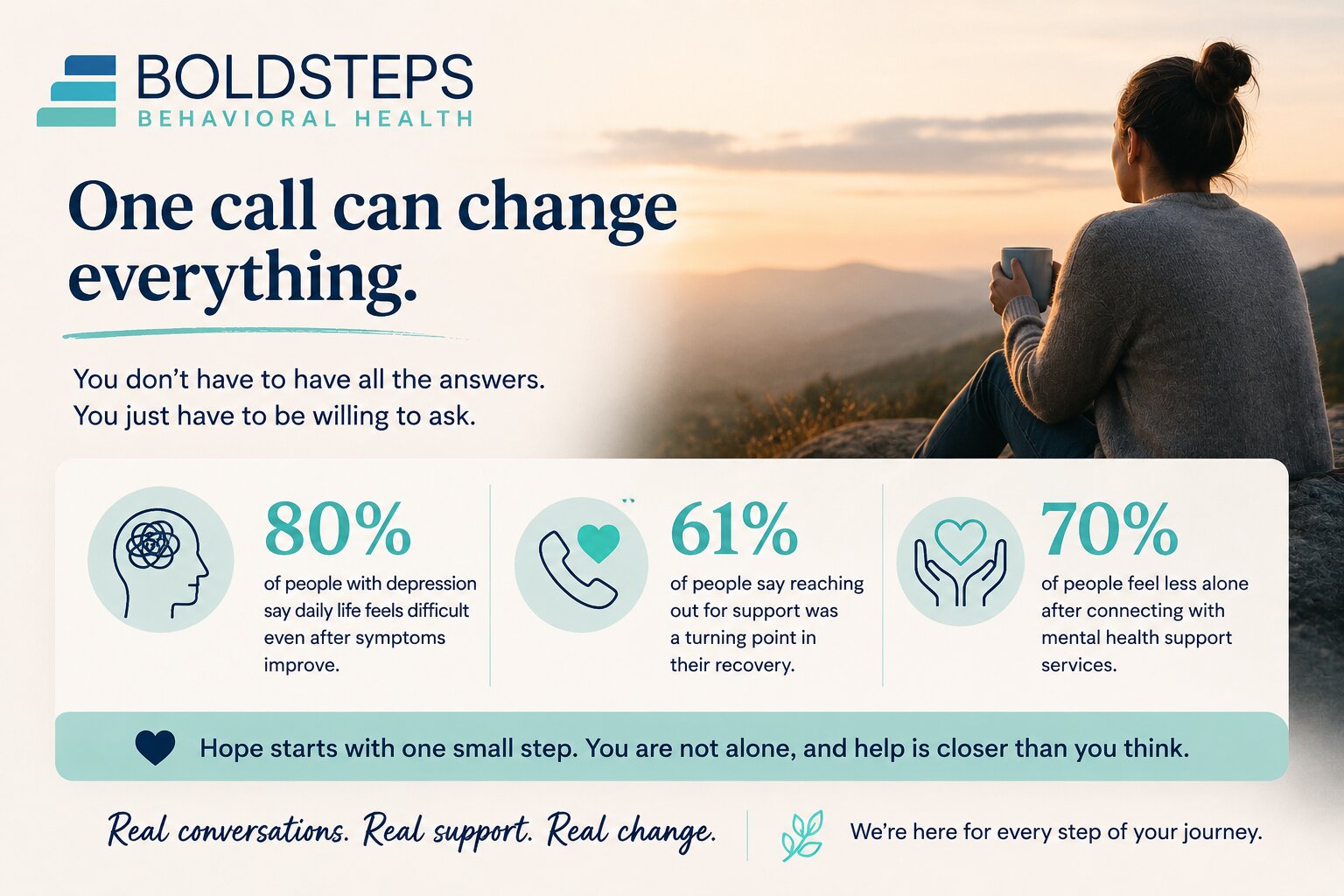
What I Learned About Insurance
One of the biggest surprises was learning how many assumptions I had made.
I had already decided what the answer would be before asking the question.
Many people researching insurance mental health programs NH find themselves doing something similar.
They assume treatment will be inaccessible.
They assume support will be out of reach.
They assume there is no reason to ask.
But assumptions are not facts.
Questions are not commitments.
Gathering information doesn’t obligate you to anything.
It simply gives you a clearer understanding of your options.
And clarity is often the first step toward hope.
The Moment I Stopped Carrying Everything Alone
Looking back, recovery didn’t begin because I became stronger.
It began because I stopped pretending I had to do everything alone.
That distinction matters.
Many people think strength means independence.
I’ve learned that real strength often looks different.
Sometimes strength means admitting you’re struggling.
Sometimes strength means answering a difficult question honestly.
Sometimes strength means picking up a phone when every part of you wants to avoid it.
The call didn’t solve every problem.
But it interrupted the isolation.
And isolation had been doing far more damage than I realized.
You Are Not Back at Square One
If you’re reading this as someone who has received help before, I want you to hear something clearly.
You are not back at the beginning.
Depression may be louder right now.
Symptoms may have returned.
You may feel discouraged.
But none of that erases what you’ve learned.
The coping skills are still yours.
The insight is still yours.
The growth is still yours.
A storm may hide the path temporarily.
It doesn’t remove the path.
You may simply need help finding it again.
The Call I Almost Didn’t Make
Today, when I think about that period of my life, I don’t remember the paperwork.
I don’t remember the logistics.
I don’t remember the insurance questions.
What I remember is how close I came to staying silent.
That’s the part that still gets my attention.
Because silence was keeping me stuck.
The call wasn’t magical.
It didn’t transform everything overnight.
What it did was create movement.
And movement matters.
Especially when depression has convinced you nothing can change.
If you’re debating whether to reach out, remember this:
You do not need certainty.
You do not need confidence.
You do not need a perfect plan.
You only need enough willingness to ask one question.
Sometimes that’s where healing begins.
Frequently Asked Questions
Does insurance usually help cover depression treatment?
Coverage varies depending on the insurance plan and treatment needs. Many people are surprised to learn they have more options than they initially assumed. Reaching out can help clarify what may be available.
Why do so many people delay getting help?
Fear, uncertainty, shame, financial concerns, and the symptoms of depression itself often contribute to delays. Many people struggle longer than necessary because they assume treatment isn’t possible or accessible.
Is it normal to need help again after feeling better?
Yes. Mental health recovery is rarely a straight line. Many people experience periods of improvement followed by new challenges. Seeking support again does not mean previous progress was lost.
What if I feel embarrassed about returning for treatment?
You’re not alone. Many alumni worry about judgment when seeking help again. In reality, providers understand that setbacks and symptom recurrence are common parts of many recovery journeys.
How do I know if it’s time to reach out?
If depression is affecting your daily life, relationships, work, motivation, or overall well-being, it may be worth exploring your options. You don’t need to wait until things become unbearable.
What happens during the first phone call?
Typically, someone listens, answers questions, and helps explain potential next steps. The goal is usually to provide information and guidance—not pressure.
Call (603)915-4223 or visit our depression services to learn more about our conditions, depression services in Nashua, NH.