

I still remember the first week after I stopped showing up.
At first, it felt like relief.
No more appointments.
No more group discussions.
No more difficult conversations.
No more rearranging my schedule.
For a few days, I convinced myself I had made the right decision.
Then reality started creeping back in.
The stress that pushed me toward treatment in the first place didn’t disappear. The cravings didn’t magically vanish. The anxiety was still there. The same thoughts I had hoped to escape slowly found their way back into my life.
If you’ve stepped away from treatment, ghosted your counselor, or quietly stopped attending sessions, I want you to know something:
You’re not the first person to do it.
And you won’t be the last.
Many people searching questions about schedules and time commitments aren’t actually trying to compare programs. They’re trying to figure out whether recovery can realistically fit into the life they’re already struggling to manage.
Maybe that’s why you’re here too.
Maybe you’re wondering whether treatment requires more time than you can give.
Maybe you’re considering coming back after leaving.
Or maybe you’re trying to understand what recovery support actually looks like before making another commitment.
Many people begin exploring flexible addiction treatment options because they need help that works alongside real life—not instead of it.
Step 1: Be Honest About Why You Left
When I first stopped attending treatment, I blamed my schedule.
Work was busy.
Life was complicated.
There were too many responsibilities.
Some of that was true.
But it wasn’t the whole truth.
What I didn’t admit was that treatment had started getting uncomfortable.
Not because people were judging me.
Because I was finally confronting things I’d spent years avoiding.
The shame.
The fear.
The anger.
The disappointment.
Sometimes people leave treatment because of scheduling conflicts.
But many people leave because healing starts touching painful places.
If you’ve stepped away, spend a moment asking yourself:
“Was it really about time?”
Or was it about something deeper?
There is no wrong answer.
But there is power in being honest.
Step 2: Understand That Treatment Is Meant to Fit Into Real Life
One of the biggest misconceptions I had was believing recovery support would consume my entire week.
I imagined something close to a full-time job.
I pictured endless appointments and no room for anything else.
That’s not how many people experience treatment.
Support is often structured to allow individuals to continue working, attending school, caring for family members, and managing everyday responsibilities.
The goal isn’t to remove you from life.
The goal is to help you participate in life more effectively.
For many people, that distinction changes everything.
Recovery isn’t supposed to replace your life.
It’s supposed to help you get your life back.
Step 3: Learn What a Typical Week Might Look Like
One reason people search for outpatient rehab hours per week is because uncertainty feels intimidating.
When we don’t know what something requires, our minds tend to imagine the worst.
The reality is that schedules vary.
Some individuals participate several days each week.
Others attend fewer sessions depending on their needs and progress.
A typical week may include:
- Group counseling sessions
- Individual therapy appointments
- Relapse prevention education
- Recovery skill development
- Accountability and support meetings
- Goal-setting and progress reviews
The exact schedule depends on the person.
But most people discover that treatment is far more manageable than they originally feared.
The bigger challenge usually isn’t finding the hours.
It’s making the decision to use them.
Step 4: Stop Waiting for Life to Calm Down
This was my favorite excuse.
I told myself I would return when things settled down.
After work got easier.
After family stress improved.
After finances stabilized.
After I felt more motivated.
The problem?
Life rarely becomes perfectly convenient.
There is always another deadline.
Another responsibility.
Another unexpected problem.
Waiting for the perfect moment often becomes a way of postponing change indefinitely.
One counselor told me something I hated hearing at the time:
“Recovery doesn’t begin when life gets easier. Recovery helps life become more manageable.”
Years later, I realized he was right.
If you’re waiting for everything to calm down before getting support, you may end up waiting forever.
Step 5: Remember That Consistency Matters More Than Perfection
When people think about treatment, they often imagine success as perfect attendance and flawless progress.
Real recovery doesn’t usually work that way.
People miss sessions.
People struggle.
People have setbacks.
People make mistakes.
The individuals I know who have maintained recovery long-term weren’t perfect.
They were persistent.
When they stumbled, they came back.
When they felt discouraged, they stayed connected.
When things became difficult, they asked for help instead of disappearing.
That consistency mattered far more than perfection ever could.
Recovery is less like a sprint and more like tending a garden.
Missing one day of watering doesn’t destroy everything.
Walking away completely is what causes problems.
Step 6: Don’t Confuse a Setback With a Final Decision
One of the most dangerous thoughts I had after leaving treatment was:
“I’ve already messed this up.”
That belief kept me away longer than necessary.
Because once I viewed leaving as failure, returning felt embarrassing.
I imagined everyone would be disappointed.
I imagined judgment.
I imagined lectures.
What I found instead was compassion.
Treatment providers see people leave and return all the time.
Recovery isn’t a straight road.
It’s full of detours, wrong turns, and course corrections.
Leaving treatment doesn’t erase the progress you made.
It simply means you may need to reconnect with support.
There is a difference.
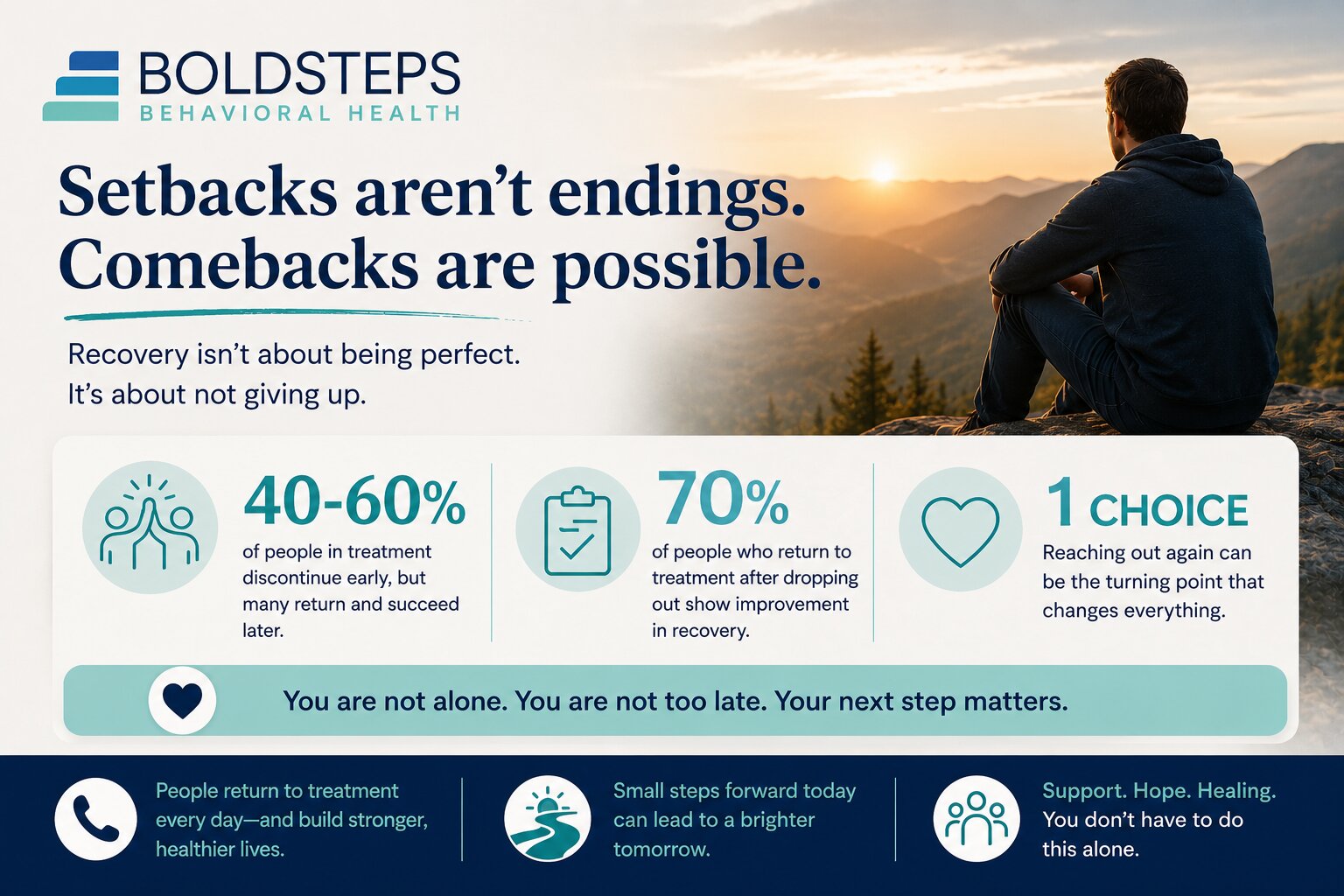
What Happened When I Finally Came Back
Walking back through the door was harder than attending any session.
Not because anyone made it difficult.
Because my pride was screaming at me.
I expected questions.
I expected criticism.
Instead, I heard something simple:
“We’re glad you’re here.”
That’s it.
No lecture.
No punishment.
No shame.
Just support.
Looking back, I wish I had returned sooner.
The weeks I spent convincing myself I had failed accomplished nothing except prolonging my struggle.
Sometimes the hardest step isn’t entering treatment for the first time.
It’s coming back after you’ve left.
The Success Stories Nobody Talks About
When people hear recovery stories, they often imagine dramatic transformations.
Someone enters treatment.
Everything clicks.
Life improves.
The end.
Real stories are usually messier.
I’ve met people who:
- Left treatment twice before completing it
- Missed weeks of sessions
- Relapsed after early progress
- Stopped answering calls
- Convinced themselves treatment wasn’t working
Many of those same people eventually built stable, meaningful lives.
Not because they never struggled.
Because they kept returning.
One man I knew disappeared for nearly three months after leaving treatment.
When he came back, he was convinced everyone would see him as a failure.
Instead, he found people ready to help him continue where he left off.
Today, he’s years into recovery.
His success didn’t come from never falling down.
It came from refusing to stay down.
The Question Beneath the Question
Most people searching schedule-related questions believe they’re asking:
“How much time will this take?”
But often the deeper question is:
“Can someone like me actually make this work?”
Someone with a job.
Someone with responsibilities.
Someone who’s already left treatment once.
Someone who’s scared.
Someone who’s embarrassed.
Someone who’s not sure they deserve another chance.
The answer is yes.
Not because recovery is easy.
Not because treatment solves everything overnight.
Because people return every day.
People rebuild every day.
People start over every day.
And many of them once felt exactly the way you feel now.
How to Take the First Step Back
If you’ve been away from treatment, don’t focus on the next six months.
Focus on the next ten minutes.
Make one call.
Send one text.
Ask one question.
Schedule one conversation.
That’s all.
Recovery doesn’t require you to solve your entire future today.
It only asks you to take the next step.
Sometimes that next step is simply deciding not to disappear anymore.
And if you’re reading this, there’s a good chance part of you already knows that.
Frequently Asked Questions
How many hours per week does outpatient treatment usually require?
The number of hours varies depending on individual needs, goals, and recommendations. Many people attend treatment multiple days each week while continuing to manage work, school, or family responsibilities.
Can I keep working while attending treatment?
Yes. Many recovery programs are specifically designed for people who need support while maintaining employment and other daily responsibilities.
What if I already dropped out once?
You’re not alone. Many people leave treatment and later return. A previous dropout does not prevent you from benefiting from support in the future.
Will treatment providers judge me for coming back?
Most providers understand that recovery is rarely linear. Their focus is typically on helping you move forward rather than criticizing what happened in the past.
Is missing sessions considered a failure?
No. Missing sessions can create challenges, but it does not erase your progress or mean recovery is impossible. What matters most is reconnecting with support when you’re ready.
How do I know if I need more support?
If you’re struggling to maintain recovery, experiencing cravings, feeling overwhelmed, or finding it difficult to manage daily life, additional support may be helpful.
Call (603)915-4223 or visit our intensive outpatient program services to learn more about our intensive outpatient program services in New Hampshire.