

You don’t always hear this fear spoken out loud.
Most people assume the hardest part of recovery is quitting the substance. Or facing the consequences. Or rebuilding life after everything falls apart.
But for a lot of thoughtful, creative, emotionally intense people, the deeper fear sounds different.
What if sobriety changes who I am?
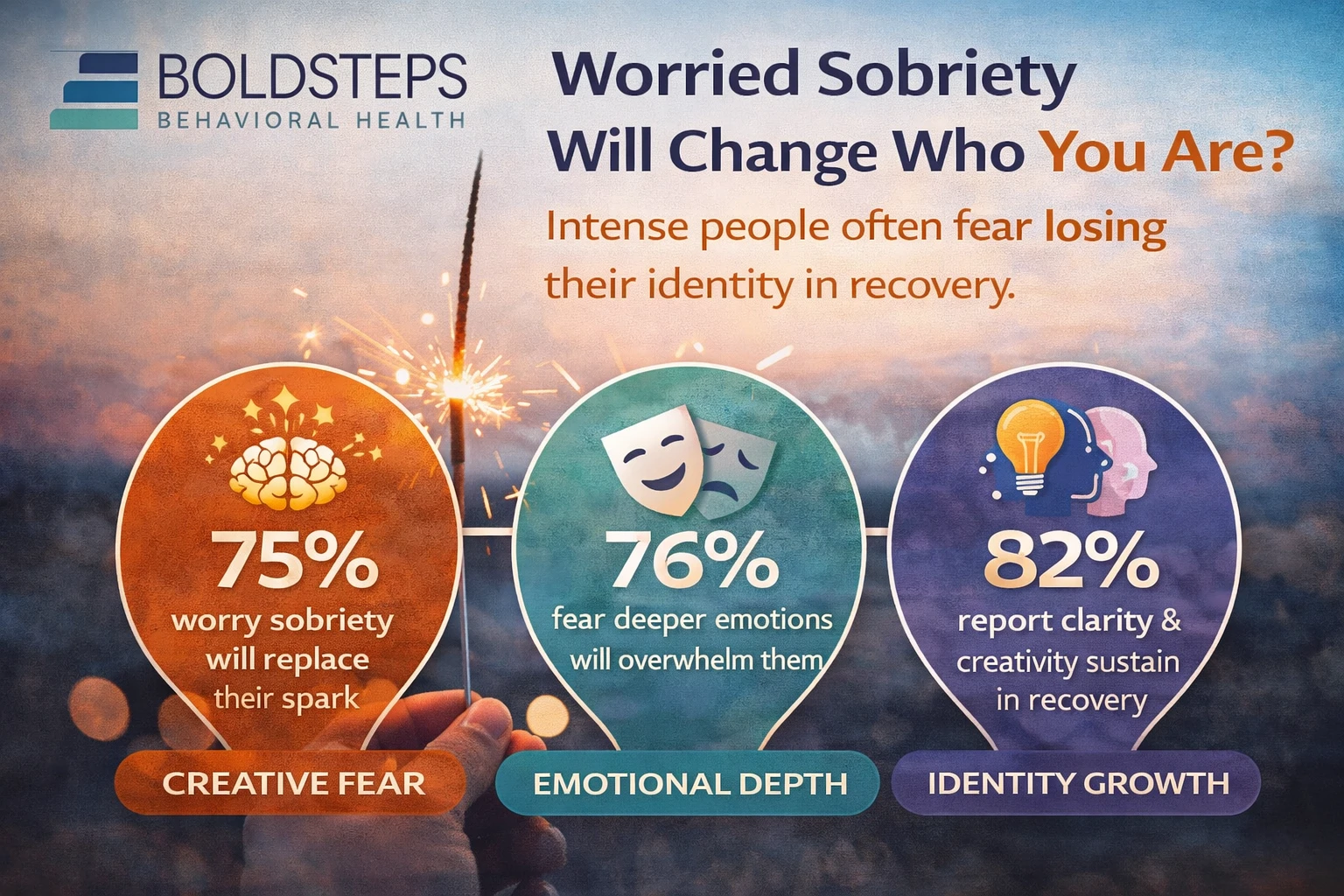
I’ve heard this question from musicians, writers, designers, entrepreneurs, and people who simply feel life more deeply than others. They worry that the spark—the humor, the emotional depth, the late-night ideas, the fearless honesty—might disappear if substances leave their life.
It’s a very human fear.
And it deserves to be taken seriously.
The truth is that recovery isn’t meant to replace your personality. It’s meant to help you hold onto the parts of yourself that matter while learning how to navigate intense emotions in healthier ways. Many people begin exploring those emotional tools through approaches like dialectical behavior therapy, which helps people stay connected to their identity while learning how to manage overwhelming emotional waves.
And often, what people discover along the way is something unexpected:
The real version of themselves was never the part that needed to disappear.
The Quiet Myth That Sobriety Makes People Boring
One of the most persistent fears about recovery is the idea that sobriety turns people into a flatter version of themselves.
People imagine routine replacing spontaneity.
Predictability replacing creativity.
Safety replacing emotional depth.
For someone whose identity revolves around curiosity, intensity, or artistic expression, that image can feel like a loss.
They might think:
Will I still feel things deeply?
Will I still be interesting?
Will the part of me that creates disappear?
These questions don’t come from weakness. They come from self-awareness.
Many creative or emotionally driven people know that their sensitivity is part of what makes them who they are. The idea of losing that sensitivity can feel terrifying.
But the truth many people discover in recovery is this: emotional depth doesn’t disappear. It becomes clearer.
Why Intense People Often Fear Losing Themselves
People who feel things deeply often experience the world differently.
They notice small emotional shifts in conversations.
They react strongly to music, art, or ideas.
They process life in vivid emotional colors rather than quiet shades of gray.
That emotional intensity can be a strength. It fuels creativity, empathy, and originality.
But without tools to navigate those emotions, intensity can also become overwhelming.
Substances sometimes feel like they soften the edges. They can temporarily amplify expression or quiet anxiety.
Over time, though, they often blur the very clarity people are trying to access.
Instead of helping emotions move through someone, substances can trap them in cycles of chaos.
Recovery doesn’t remove emotional intensity.
It simply gives people healthier ways to live with it.
Expression and Escape Are Not the Same Thing
In early conversations about recovery, many people worry that they will lose their ability to express themselves.
They remember moments where music, writing, or conversation flowed easily after using substances.
Those experiences can make it feel like substances unlock something important.
But over time, many people begin noticing a difference between expression and escape.
Expression helps emotions move outward in a meaningful way.
Escape temporarily numbs or intensifies emotions but rarely resolves them.
One of the goals of emotional skill-building is learning how to stay present with feelings rather than avoiding them.
That presence allows creativity and identity to come from a grounded place instead of a chaotic one.
Identity Is Not a Fixed Thing
Another fear people carry is that their identity will disappear if they stop living the way they always have.
But identity isn’t fixed.
It evolves constantly.
The person you were five years ago isn’t the person you are today. Experiences change us. Relationships shape us. Growth expands who we are.
Recovery is simply another phase of that evolution.
Instead of losing identity, many people discover that they gain the opportunity to choose their identity more intentionally.
They begin asking questions like:
Who do I want to be when I’m fully present?
What values matter most to me now?
What kind of life do I want to build?
These questions often lead to a deeper understanding of self.
Learning to Hold Two Truths at the Same Time
One of the ideas many people encounter through dbt is the concept of holding two truths simultaneously.
You can be emotionally intense and want stability.
You can value creativity and want healthier coping strategies.
You can love parts of your past while choosing a different future.
This concept helps remove the false choice that recovery sometimes seems to create.
You don’t have to become someone completely different.
You simply learn how to live with your emotional depth without letting it control your life.
When the Noise Gets Quieter
Something interesting happens for many people once the chaos of substances begins to fade.
The noise quiets.
At first, that quiet can feel uncomfortable.
For years, life may have been filled with constant stimulation—late nights, intense conversations, emotional highs and lows.
When that intensity fades, people sometimes worry they’ve lost something important.
But as the mind settles, something else often emerges.
Clarity.
Ideas become easier to follow.
Creative work becomes more focused.
Conversations become more present.
The intensity doesn’t disappear—it simply becomes more manageable.
Many individuals across Hillsborough County, New Hampshire who explore recovery discover that once emotional tools replace chaos, creativity often becomes more sustainable rather than less.
The Version of You That Never Had Room
Sometimes substances become so central in someone’s life that it’s difficult to imagine who they are without them.
But once the chaos fades, new parts of identity often appear.
People rediscover interests they abandoned years ago.
They reconnect with curiosity, humor, or creativity that had been buried under stress and instability.
They form relationships that feel more honest and grounded.
This process doesn’t erase identity.
It expands it.
Many people living in Rockingham County, New Hampshire describe this stage of recovery as meeting themselves again for the first time.
Not the version shaped by survival—but the version shaped by intention.
Recovery Isn’t a Personality Replacement
One of the most important truths people discover is that recovery doesn’t erase personality.
The sensitivity, humor, insight, and creativity that define someone rarely disappear.
In many cases, those qualities grow stronger once they’re no longer tangled in chaos.
When people learn to navigate their emotions instead of fighting them, they gain access to deeper self-understanding.
That understanding often fuels creativity, relationships, and purpose in ways that feel far more stable than before.
Recovery isn’t about becoming someone else.
It’s about becoming more fully yourself.
FAQs
Is it normal to worry that sobriety will change your personality?
Yes. Many people worry that sobriety will remove qualities they value about themselves, especially creativity or emotional depth. These fears are extremely common and understandable.
Do creative people lose their inspiration in recovery?
Most people discover the opposite. Creativity often becomes more consistent and sustainable once emotional chaos and instability decrease.
Why do substances feel connected to identity?
When substances become part of daily routines, social environments, or creative habits, they can start to feel like a defining part of identity. Recovery helps separate those habits from the person themselves.
Can emotional intensity still exist without substances?
Absolutely. Emotional intensity doesn’t disappear in recovery. Instead, people learn healthier ways to manage and express it.
How long does it take to feel like yourself again?
This varies for each person. Many people begin rediscovering parts of their identity as emotional stability increases and new coping tools develop.
What if I’m afraid recovery will make life feel dull?
That fear is common. Over time, many people discover that stability actually creates more room for meaningful experiences, creativity, and connection.
Does recovery change how people see themselves?
Often yes—but usually in positive ways. Many individuals gain a clearer understanding of their values, strengths, and identity as they move through recovery.
If you’re worried that recovery might take away the parts of yourself that feel most alive, you’re not alone. Many people share that fear before discovering that healing often strengthens identity rather than erasing it.
Call 603-915-4223 or visit our Dialectical Behavior Therapy in Concord,New Hampshire to learn more about.