

Sometimes becoming sober curious doesn’t start with a dramatic moment.
It starts with a quiet shift in awareness.
You might notice certain friendships revolve around habits you’re questioning. Maybe some conversations feel heavier than they used to. Maybe you’re beginning to ask yourself whether the way you connect with people actually reflects who you want to be.
For many people exploring sobriety, relationships become one of the biggest areas of reflection. It’s not about abandoning people or judging the past. It’s about noticing how thoughts and beliefs shape the way we interact with others.
With guidance through approaches like cognitive behavioral therapy, many people start recognizing how their thinking patterns influence their friendships, family dynamics, and romantic relationships. Once that awareness develops, the way we approach connection can begin to shift in healthier directions.
This process isn’t about becoming a different person. It’s about becoming a more honest version of yourself.
Step 1: Start Noticing the Stories Your Mind Creates About People
Every relationship comes with internal narratives.
We all carry quiet assumptions about the people in our lives. These stories often form over time and operate automatically in the background.
You might notice thoughts like:
- “They expect me to act a certain way.”
- “If I say no, they’ll think I’m boring.”
- “I’m the one who keeps this group together.”
- “If I change, they might leave.”
These thoughts can quietly shape our behavior.
Sometimes we stay silent when something bothers us. Sometimes we go along with plans that don’t feel right. Sometimes we hide parts of ourselves because we’re afraid of how others might react.
The first step in rethinking relationships is simply noticing those mental narratives.
Because once you recognize them, you gain the ability to question them.
Step 2: Identify Patterns That Keep Repeating
When people begin reflecting on their relationships, they often discover repeating patterns.
Maybe certain friendships revolve around partying or substances. Maybe you often feel responsible for managing other people’s emotions. Maybe arguments with family members follow the same script every time.
Patterns like these usually develop slowly.
They’re often reinforced by beliefs about our role in relationships.
For example, someone might carry thoughts like:
“I’m the one who keeps everyone happy.”
“It’s easier if I don’t rock the boat.”
“I don’t want to disappoint anyone.”
These beliefs may have helped maintain peace in the past. But over time they can also create pressure to act in ways that don’t align with your current values.
Recognizing repeating patterns helps you understand why certain situations keep unfolding the same way.
Awareness is the beginning of change.
Step 3: Practice Pausing Before You React
Many relationship dynamics are fueled by automatic reactions.
A comment from a friend triggers defensiveness.
A misunderstanding sparks frustration.
A request leads to an immediate yes—even if you don’t want to say yes.
When people begin examining their thinking patterns, they often learn the power of pausing.
Before responding, they ask themselves a few simple questions:
“What am I assuming right now?”
“Is that assumption actually true?”
“What do I want in this moment?”
This pause creates room for intentional decisions rather than automatic reactions.
Over time, these pauses can completely change the tone of conversations and relationships.
Instead of reacting based on old habits, you begin responding based on clarity.
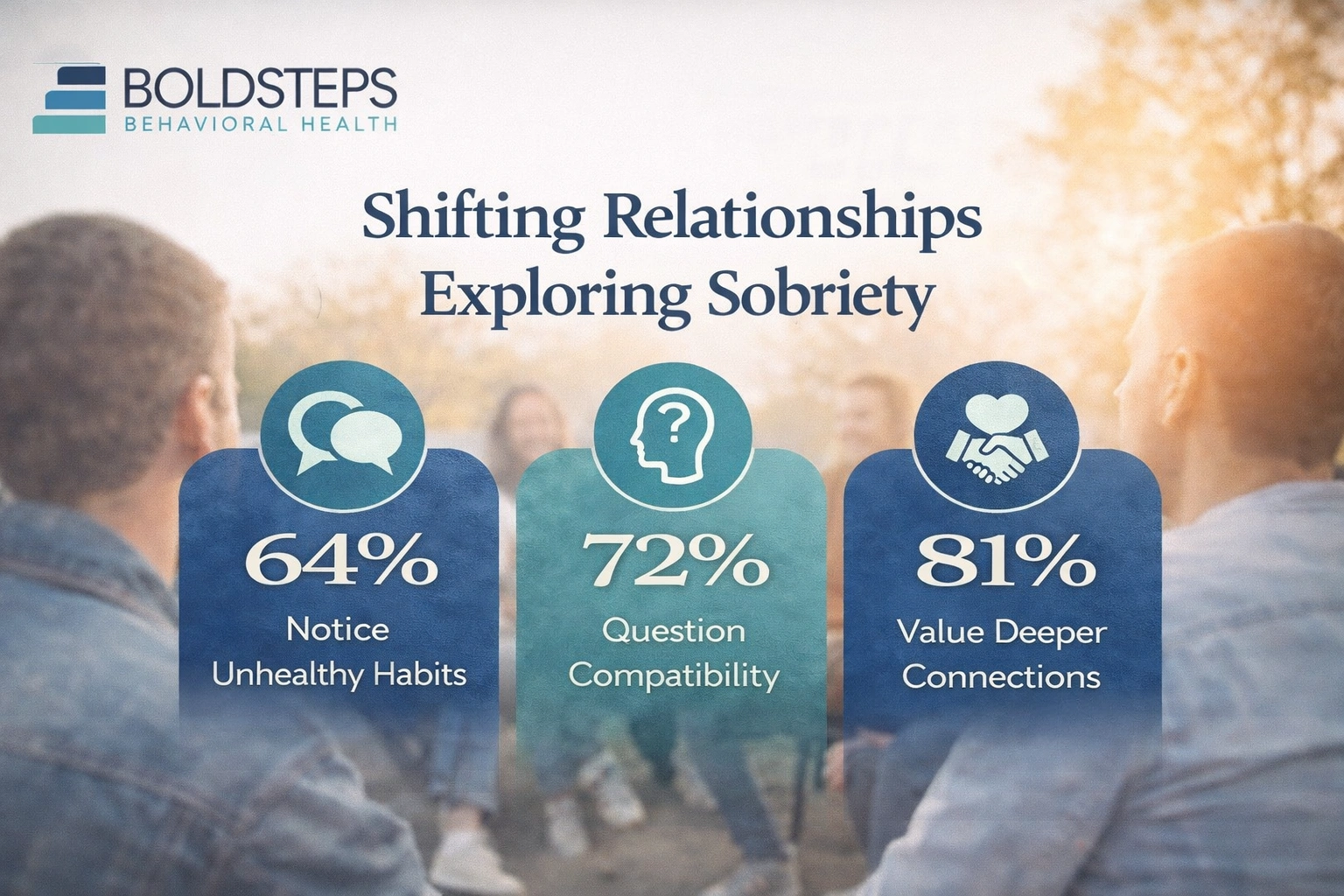
Step 4: Experiment With Small Boundaries
One of the most important shifts people experience while exploring sobriety is learning how to set boundaries.
Boundaries aren’t about pushing people away. They’re about being honest about your needs and limits.
And they rarely start with dramatic declarations.
Often they begin with small adjustments:
“I’m heading home earlier tonight.”
“I’m taking a break from that for a while.”
“I can’t help with that this weekend.”
These simple statements can feel uncomfortable at first, especially if your relationships have always followed certain patterns.
But small boundaries allow you to test something important: whether your relationships can adapt as you grow.
Healthy connections usually can.
Step 5: Reconsider What Connection Really Means
Many people realize that their definition of connection has been shaped by routine activities.
Going out together.
Sharing certain habits.
Meeting in environments that revolve around substances.
When those habits change, it can create uncertainty.
You might wonder whether certain friendships will still feel meaningful. You might question how to spend time together in new ways.
But connection doesn’t disappear just because the setting changes.
In fact, many people discover that conversations become deeper when they’re no longer centered around distractions.
You may find yourself having more honest discussions, learning more about the people around you, and building connections that feel more genuine.
Step 6: Allow Relationships to Evolve Naturally
Growth often changes relationships.
Sometimes friendships become stronger when people see your authenticity. Other times, certain connections naturally fade because they were built around circumstances that are no longer part of your life.
This can feel bittersweet.
It’s important to remember that relationships aren’t meant to stay exactly the same forever. As people grow and change, connections evolve as well.
Allowing that evolution to happen naturally often leads to healthier, more balanced relationships over time.
Many people exploring sobriety eventually realize something surprising: when they stop forcing themselves to fit into old roles, they create space for new connections that feel more aligned with who they are becoming.
Step 7: Build Relationships That Reflect Your Values
As your thinking patterns shift, you may start prioritizing different qualities in relationships.
You might begin valuing:
Honesty over convenience.
Support over shared habits.
Depth over routine.
This shift can feel empowering.
Instead of maintaining connections out of obligation or habit, you begin choosing relationships that reflect your values.
That doesn’t mean your social circle changes overnight.
But over time, the relationships that remain often feel more meaningful.
Across Rockingham County, New Hampshire, many individuals exploring sobriety find that this shift leads to healthier communication with family members and more authentic friendships.
When people begin thinking differently about themselves and others, their relationships often follow that transformation.
Step 8: Be Patient With the Process
Rethinking relationship dynamics doesn’t happen instantly.
The roles we play in friendships and families often develop over years. Changing those patterns takes time.
You may occasionally fall back into old habits. Conversations may still feel awkward at first. Some people in your life may need time to adjust to the changes they see.
That’s normal.
Personal growth rarely follows a straight line.
Over time, however, many people begin noticing that their interactions feel calmer and more balanced. They feel less pressure to perform a role and more freedom to be themselves.
For individuals across Merrimack County, New Hampshire, exploring new thinking patterns often leads to deeper self-awareness and healthier connections.
It’s a gradual process—but it’s one that can reshape how you experience relationships for years to come.
FAQs
Is it normal to rethink relationships while exploring sobriety?
Yes. Many people who become sober curious begin examining their social dynamics more closely. When habits change, it often leads to reflection about friendships, family interactions, and boundaries.
Will changing my thinking cause me to lose friends?
Not necessarily. Some friendships deepen when honesty increases. Others may evolve or drift apart as lifestyles change. Both outcomes are natural parts of personal growth.
Why do the same relationship patterns keep happening?
Repeating patterns are often connected to long-standing beliefs about yourself or your role in relationships. Once those beliefs are recognized, it becomes easier to create new dynamics.
How do thinking patterns affect relationships?
The way we interpret situations shapes our emotional reactions, communication style, and boundaries. Shifting those interpretations can dramatically improve relationship dynamics.
What if setting boundaries makes people uncomfortable?
That’s common in the beginning. When relationships have followed certain patterns for years, change can feel unfamiliar. Healthy relationships usually adapt over time.
How long does it take for relationships to feel different?
It varies from person to person. Some changes appear quickly, while others develop gradually as communication patterns shift.
Can personal growth improve family relationships too?
Yes. When individuals begin examining their thinking patterns, they often communicate more clearly and respond less reactively. This can lead to calmer and more constructive family conversations.
Exploring sobriety often opens the door to a deeper understanding of how your thoughts shape the way you connect with others. When you begin recognizing those patterns, you gain the ability to build relationships that feel more honest, balanced, and supportive.
If you’d like to explore how new thinking patterns can strengthen your relationships, call 603-915-4223 or visit our Cognitive-Behavioral Therapy (CBT) in Concord, New Hampshire to learn more.