

Watching your child struggle can feel like living inside a loop.
Things improve for a little while.
They promise they’re going to do things differently.
You see glimpses of the person you know they can be.
Then slowly, almost quietly, the same choices start appearing again.
For many parents, this is the most confusing part. From the outside, it can look like stubbornness or a lack of effort. But the deeper reality is often more complicated.
Lasting change rarely comes from controlling behavior alone. Real progress often begins when someone learns to examine the thoughts that drive their decisions in the first place. That deeper layer is why many treatment approaches explore thinking patterns alongside behavior, something explored through approaches like cognitive behavioral therapy.
As a clinician, I often remind parents of something important: behavior is usually the last domino to fall. Long before it happens, a series of thoughts, beliefs, and emotional reactions are already moving in the background.
Behavior Is the Symptom Parents Can See
Parents are naturally focused on what’s visible.
You notice the late nights.
The missed responsibilities.
The arguments that seem to come out of nowhere.
The promises that don’t hold.
Those behaviors are real and painful to watch.
But behavior rarely appears out of thin air. It’s usually the final expression of something happening internally.
Before someone acts, their mind is already interpreting the situation.
Maybe they’re telling themselves:
“This isn’t a big deal.”
“I can manage it this time.”
“No one would understand anyway.”
“I’ll deal with the consequences later.”
Those thoughts influence emotions. And emotions influence decisions.
So if someone tries to change behavior without addressing the thoughts feeding it, the change often doesn’t last very long.
It’s like trying to hold a beach ball underwater. Eventually it pushes back up.
Why Logical Conversations Often Hit a Wall
Parents frequently try reasoning with their child.
You explain what you see happening.
You point out the risks.
You try to help them understand the consequences.
And sometimes the response you get is confusion, defensiveness, or frustration.
That can feel incredibly discouraging.
But the issue usually isn’t that your child is ignoring logic. The issue is that their internal thinking framework may already be shaping how they interpret everything you say.
For example, if a young adult is thinking:
“My parents don’t trust me anyway,”
then even a calm conversation may feel like an accusation to them.
If they believe:
“I’ve already messed everything up,”
then encouragement might feel pointless.
When these beliefs sit in the background, they quietly filter every interaction.
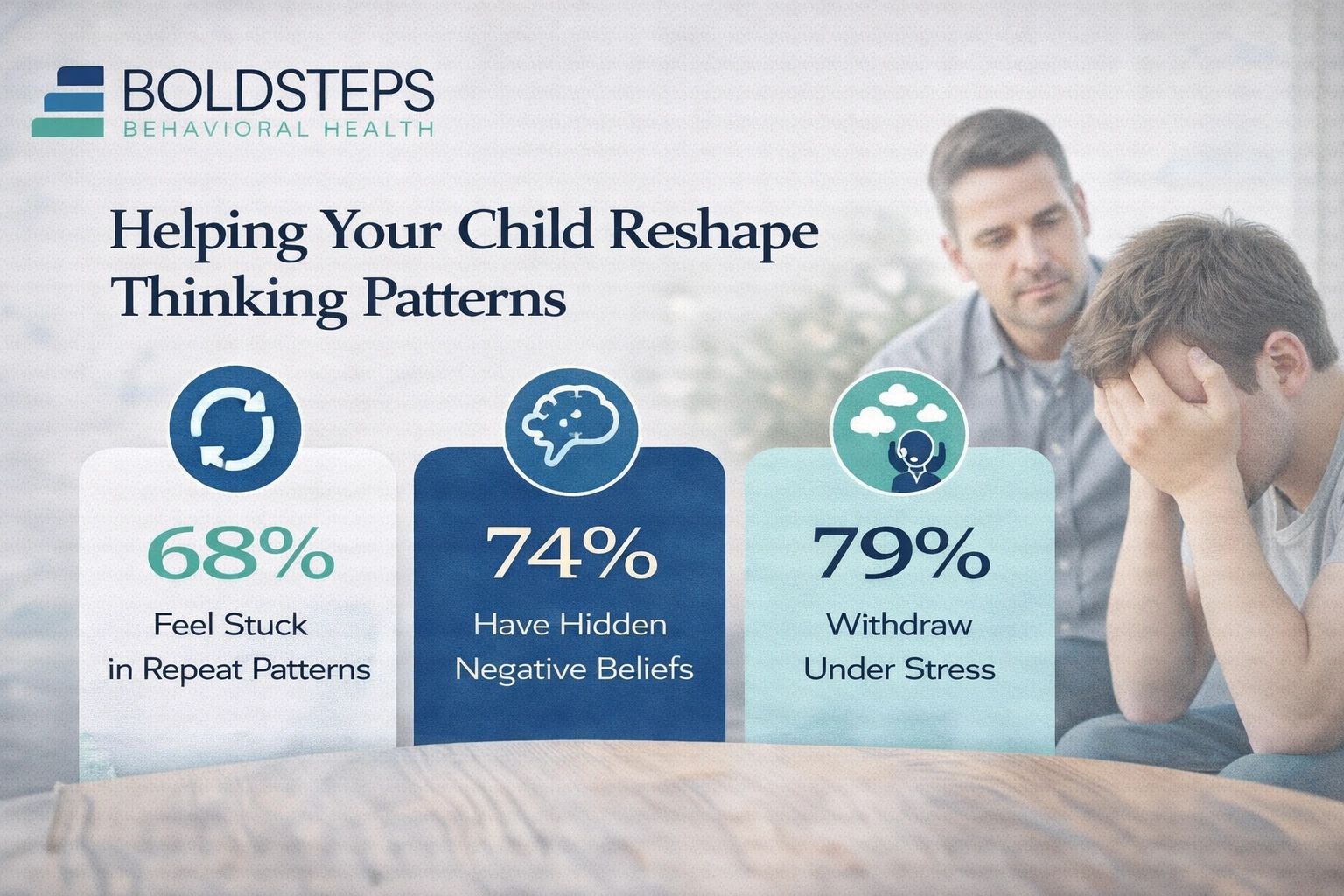
Hidden Beliefs Can Quietly Shape Decisions
Many young adults who struggle carry powerful beliefs about themselves.
These beliefs aren’t always obvious. In fact, they’re often deeply internalized.
They may think:
“I’m the problem in the family.”
“I never live up to expectations.”
“No one really gets what I’m dealing with.”
“I’ve already disappointed everyone.”
These beliefs can create emotional pressure that leads to risky decisions.
When someone believes they’ve already failed, they may stop protecting their future.
When someone believes they’re misunderstood, they may withdraw instead of reaching out.
From the outside, these choices can look confusing or irrational.
But inside their mind, those decisions may feel consistent with the story they’re telling themselves.
Parents Often Notice the Pattern First
One painful reality is that parents frequently recognize patterns earlier than their child does.
You might notice the subtle changes.
Maybe they stop talking about plans for the future.
Maybe their mood shifts more quickly.
Maybe they withdraw from family conversations.
Because you care deeply, your instinct is to intervene.
You ask more questions.
You try to guide them.
You push harder to get through to them.
But when someone feels overwhelmed or ashamed, increased pressure can make them pull back even further.
It’s not because your concern is wrong.
It’s because shame often makes people defend themselves instead of reflecting.
Changing Thoughts Can Slow Emotional Reactions
When someone begins examining their thinking patterns, something important happens.
The emotional intensity that drives impulsive behavior can begin to slow down.
Instead of reacting instantly, they start noticing the thoughts appearing in their mind.
They may begin asking themselves questions like:
“Is that thought actually accurate?”
“Have I seen evidence that contradicts it?”
“What usually happens when I follow this thought?”
Those questions introduce something powerful: pause.
That pause gives the brain space to make a different decision.
It doesn’t happen overnight. It happens through repetition and practice.
But over time, those mental pauses can dramatically change how someone reacts to stress, disappointment, or conflict.
Why This Work Can Feel Slow
Parents often hope for visible change quickly.
That’s understandable. Watching your child struggle is exhausting, and you want to see improvement as soon as possible.
But internal thinking patterns take time to shift.
Some beliefs may have been developing for years. They’re reinforced by past experiences, social pressures, and emotional memories.
Rewriting those beliefs takes patience.
At first, the changes are subtle.
Your child might start questioning their own assumptions.
They might pause before reacting emotionally.
They might show curiosity about their own thinking.
These moments may seem small.
But they’re often the early signals that deeper change is happening.
Parents Carry More Guilt Than They Should
One of the most heartbreaking things I see in parents is the weight of guilt they carry.
You may wonder if you missed warning signs.
You may replay past decisions and question whether you handled things the right way.
But human thinking patterns are shaped by countless influences.
Friends, school experiences, social pressures, disappointments, identity struggles, and personal challenges all shape the way someone sees themselves and the world.
Parents are part of that story, but they are rarely the whole story.
Your role now isn’t to rewrite your child’s thinking for them.
Your role is to stay present while they learn to examine it themselves.
That presence matters more than you might realize.
Support Systems Can Help Rebuild Perspective
Young adults who begin exploring their thinking patterns often benefit from environments where reflection is encouraged.
In these settings, they can step back from daily stress and examine their thought patterns with guidance.
For families throughout Hillsborough County, New Hampshire, many parents have found that when their child starts recognizing their own thinking habits, it opens the door to conversations that previously felt impossible.
Instead of reacting defensively, the young adult begins to see their reactions with curiosity.
That shift can change the tone of family relationships dramatically.
Change Often Begins With Small Realizations
Parents sometimes expect transformation to happen all at once.
But in reality, the most important breakthroughs often look simple.
A young adult might say:
“I think I jumped to conclusions there.”
Or:
“I noticed I assumed the worst.”
Those moments may seem small, but they’re actually powerful. They signal that the person is starting to step outside their automatic thinking patterns.
When that happens, new choices become possible.
Progress Isn’t Always Linear
Even when someone begins recognizing their thinking patterns, progress rarely moves in a straight line.
There may still be setbacks.
Old reactions may return under stress.
But each time someone notices those patterns and reflects on them, they’re strengthening their awareness.
That awareness is often one of the most powerful tools in long-term recovery.
It creates the ability to step back from emotional storms instead of being swept away by them.
Families across Essex County, Massachusetts often find that understanding this process helps them approach their child’s struggles with more patience and less panic.
FAQs
Why focus on thinking patterns instead of just stopping harmful behavior?
Behavior is often the result of underlying thoughts and beliefs. Addressing those deeper patterns can create longer-lasting change because it targets the root of decision-making.
Can someone really change the way they think?
Yes. The brain is capable of forming new mental patterns through repeated reflection and practice. Over time, healthier thought habits can become more automatic.
Why does my child become defensive during conversations?
Defensiveness often comes from feelings of shame or fear of judgment. When someone feels criticized, their brain shifts into protection mode rather than reflection.
How long does it take for thinking patterns to change?
There’s no single timeline. Some people notice early shifts in weeks, while others take months or longer. The key factor is consistent practice and support.
What can parents do while their child works through this process?
Focus on maintaining calm communication, healthy boundaries, and emotional support. You can’t control their thinking, but you can create a safe environment for growth.
Is it normal to feel emotionally drained during this process?
Yes. Supporting a child through these challenges can be deeply exhausting. Seeking support for yourself is just as important as supporting your child.
Why does change sometimes seem to disappear after progress?
Old thinking patterns can reappear under stress. This doesn’t mean progress is lost. It often means the person is still learning how to apply new thinking habits consistently.
Watching your child struggle with the same patterns can be heartbreaking, especially when it feels like you’ve tried everything. But when someone begins examining the thoughts shaping their decisions, real change often becomes possible.
If you’d like to learn more about approaches that help young adults explore and reshape their thinking patterns, call 603-915-4223 or visit our Cognitive-Behavioral Therapy (CBT) in Concord, New Hampshire to learn more.