

I could wake up on time.
I could show up, crack a joke, crush a deadline.
I could make you believe I was fine—even when I wasn’t sleeping, wasn’t eating, wasn’t feeling much of anything except numb.
I could run my life just fine.
Until I couldn’t.
And no one knew but me.
I didn’t lose a job. I didn’t wreck a car. I didn’t get caught.
What I lost was subtler—my ability to breathe without effort. My ability to be alone without needing something to take the edge off. My ability to feel good without reaching for a drink.
That unraveling? It didn’t look dramatic. But it felt like drowning while standing up.
It wasn’t until I landed in an intensive outpatient program that I realized how long I’d been performing wellness instead of actually living it.
I Could “Hold It Together”—But I Was Hollow
I wasn’t the kind of person anyone thought would need treatment.
I showed up for meetings. I answered texts. I smiled in photos.
But behind all that?
I was building my days around the next drink. Not blackout-level. Just the slow, quiet kind of drinking that numbs you just enough to function, but not enough to rest.
I didn’t miss appointments. I missed myself. That version of me who used to be excited about things. Who used to laugh without needing anything to loosen up first.
And if I’m being honest—my success became the perfect alibi for my denial. If I was doing well, how bad could it really be?
The Breaking Point Wasn’t Obvious. But It Was Real.
I remember the night I realized something had to change.
It wasn’t dramatic. It was a Tuesday. I had just closed my laptop after working late—for no real reason other than avoiding my own thoughts.
There was a drink in my hand before I even noticed. Just habit. But I paused. I looked at it. And this weird, quiet thought crossed my mind:
“What would happen if I just… didn’t?”
And I couldn’t answer. Because I honestly didn’t know if I could go one day without it. That’s what finally got me to call.
IOP Was Built for People Like Me
I thought treatment meant vanishing from my life, quitting my job, telling everyone. I thought it meant rock bottom.
Turns out, that’s rehab. What I needed was IOP—an intensive outpatient program that let me stay in my life while finally learning how to live it differently.
I still worked. Still fed my dog. Still paid my bills.
But for three nights a week, I sat in a room (and later a screen) and told the truth.
I listened to people who looked just like me—people who were also high-functioning, exhausted, and quietly losing themselves.
This wasn’t about labels or rock bottoms. It was about reclaiming clarity. Learning how to stop surviving and actually start living again.
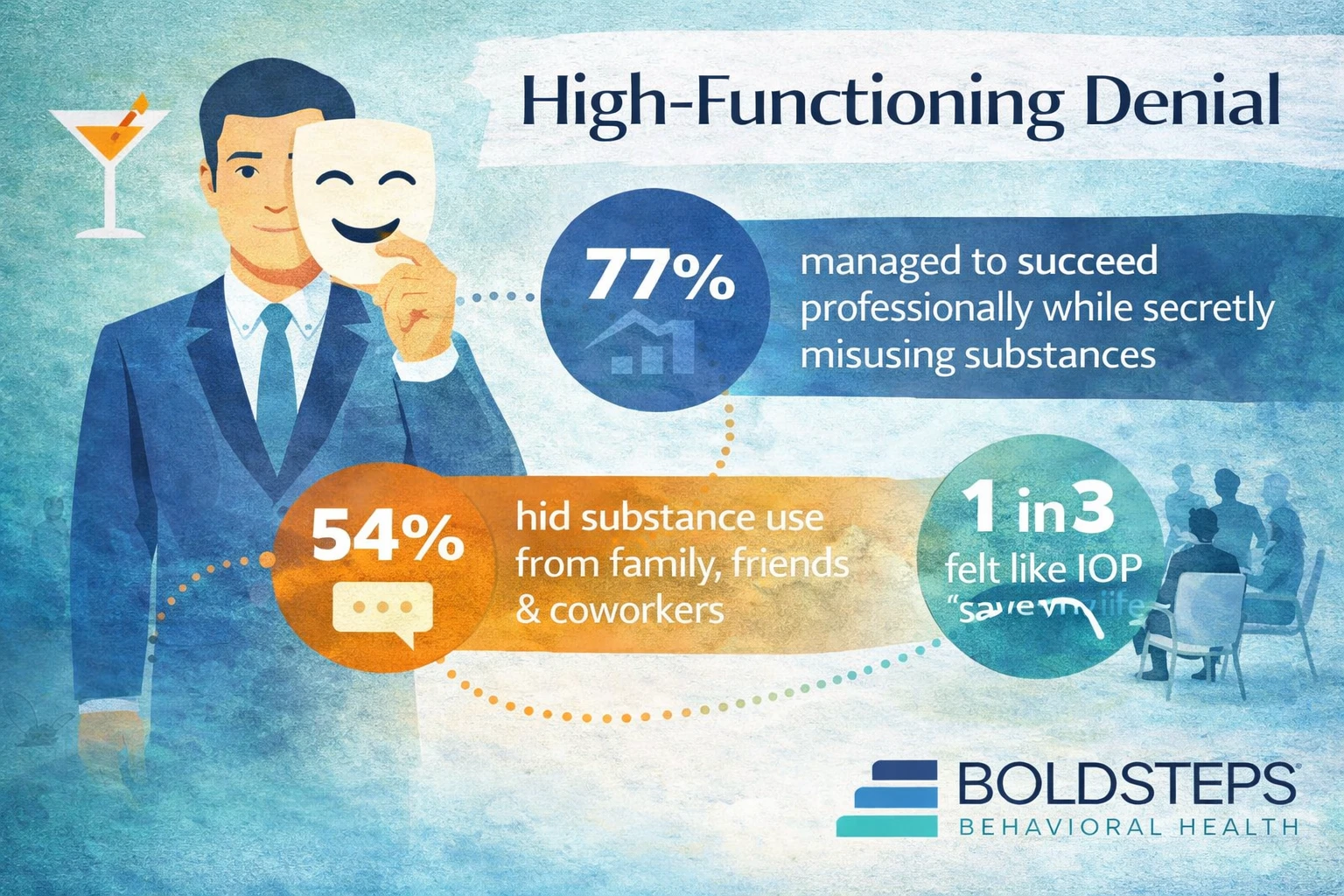
Denial in a Suit and Tie Is Still Denial
Here’s what I learned fast:
Just because you’re high-functioning doesn’t mean you’re healthy. It just means you’re hiding it well.
You can have a full calendar and an empty heart. You can perform joy while feeling nothing. You can be everyone’s go-to and have nowhere to go with your own pain.
The most dangerous part? No one calls you out. Because you look fine. Maybe even great.
That’s why IOP was a lifeline—because it gave me a space to say, “I’m not okay” without having to prove it with a crisis.
And if you’re reading this from Rockingham County, NH, know this: even when your life looks manageable on the outside, you deserve help if the inside feels like chaos.
I Thought Group Therapy Wasn’t for Me. I Was Wrong.
When I first heard “group,” I cringed. I imagined folding chairs and strangers crying. I didn’t want to be the sad story in a circle.
But group surprised me.
It wasn’t pity or oversharing. It was honesty—sharp, smart, sometimes funny honesty—from people who got it. People who could manage a household and still drink themselves numb every night. People who loved their jobs and hated going home. People like me.
Group became the one place I didn’t have to fake it. I could show up messy, unsure, and still be seen. Not as a failure—but as someone figuring it out.
Sobriety Wasn’t the Destination—It Was the Door
I used to think the goal was to stop drinking. That if I could do that, I’d be okay.
But IOP taught me that sobriety isn’t the finish line—it’s the beginning.
It’s the part where you finally start noticing why you needed to escape in the first place.
For me? It was about anxiety I’d never dealt with. Grief I’d buried under ambition. A deep, aching loneliness I thought success would fix.
Removing alcohol wasn’t the whole answer. But it let the real questions finally surface. And answering them? That’s what actually changed my life.
You Don’t Have to Wait to Fall Apart
This is the part I wish someone had told me sooner:
You don’t have to lose everything to get help.
You don’t have to collapse. You don’t have to hit bottom. You just have to be willing to stop lying to yourself.
If you’re hiding your habits, dreading the evening, or wondering if your life is smaller than it looks—trust that.
Because real recovery doesn’t just save lives. It gives them back.
And if you’re holding it all together in Merrimack County, NH but feel like you’re barely staying afloat inside, please know: you’re not too “put-together” for treatment. You’re exactly who it was made for.
FAQ: IOP for High-Functioning Professionals
Do I have to stop working to do IOP?
No. Many programs—including Bold Steps—offer evening or flexible options so you can keep working while getting care. IOP is built to fit your real life.
What if I’m not sure I qualify?
If you’re drinking or using regularly, secretly, or just to function—it’s enough. You don’t need a diagnosis or disaster to get support.
Is it embarrassing to be in group?
Not at all. Most people in IOP are just like you—navigating life while trying to heal. It’s not shameful. It’s brave.
How long is the program?
Most intensive outpatient programs last 6–12 weeks. Your path might include group sessions, individual therapy, and check-ins. We adjust based on you.
What if I tried therapy before and it didn’t help?
IOP is different. It’s immersive, structured, and community-based. You’re not alone in it. That can make all the difference.
You don’t have to wait for a disaster to start healing.
Call (603)915-4223 to learn more about our intensive outpatient program services in Concord, New Hampshire. No rock bottom required.