
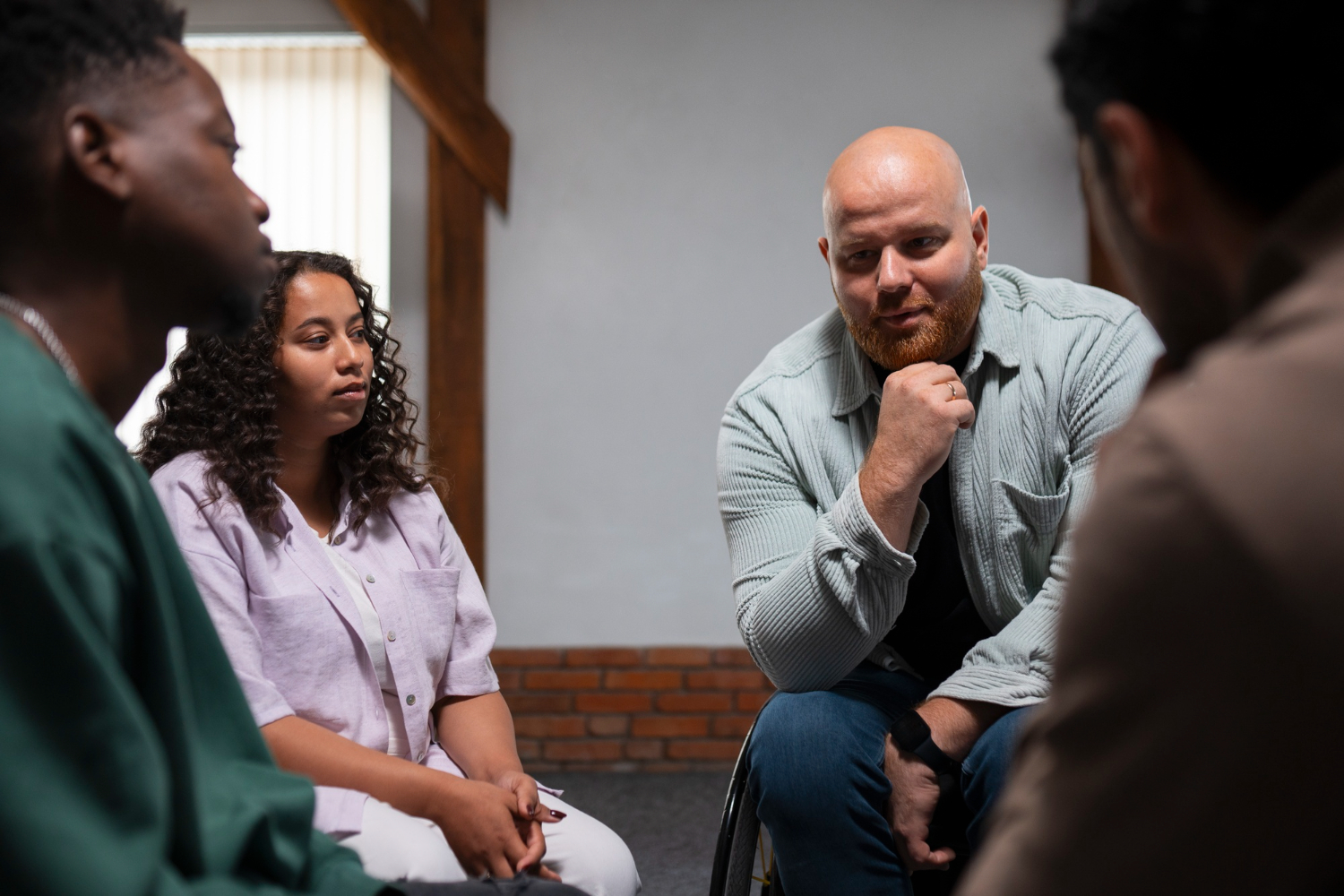
You left. And now you’re thinking about coming back.
Maybe it was mid-treatment. Maybe you ghosted after intake. Maybe you felt ashamed, overwhelmed, or just… done. Whatever the reason, if you’re wondering whether you’re allowed to return, the answer is simple: yes.
This is not about what went wrong. This is about what’s possible now.
At Bold Steps Behavioral Health NH, our intensive outpatient program is here when you’re ready—even if this isn’t your first try. You don’t have to explain away the time you were gone. You don’t have to promise you’ll never leave again. You just have to take one real step forward.
You’re Not the Only One Who Left
Most people don’t finish treatment in one clean sweep. Life doesn’t organize itself around recovery. Work gets hectic. Emotions bubble up you weren’t ready for. Or things feel better for a bit, so you back off—and then things unravel.
That doesn’t make you flaky or broken. It makes you human.
At Bold Steps, we’ve seen it all. People who left after one week. People who disappeared mid-group. People who came back years later with tears in their eyes saying, “Do I still count?”
Yes. You still count.
What Happens When You Reach Out Again?
This is one of the biggest fears we hear: “Will they judge me?”
Short answer? No.
You won’t get a lecture. You won’t have to rehash your past. You’ll talk to someone who understands the courage it takes just to make the call. We’ll ask what you need now, not why you left then. Maybe we’ll restart your clinical assessment. Maybe we’ll pick up right where you left off. We’ll figure it out together.
How an Intensive Outpatient Program Works (The Second Time Around)
An intensive outpatient program (IOP) blends structure and freedom. It’s designed for people who need consistent support but still live at home, go to work, or care for others. Most IOPs meet 3–5 days a week for several hours at a time. It’s real work—without full-time confinement.
What does it look like day-to-day?
- Group therapy that’s honest, raw, and grounded
- Individual therapy where you can say the quiet things out loud
- Skills building sessions focused on real-life challenges
- Clinician check-ins that adapt with your needs
When you’re rejoining after leaving, we take the time to assess what still fits. Maybe your needs shifted. Maybe you’re dealing with new triggers. Maybe you’re just tired and need a softer re-entry. That’s valid.
You’re not restarting from scratch. You’re building from experience.
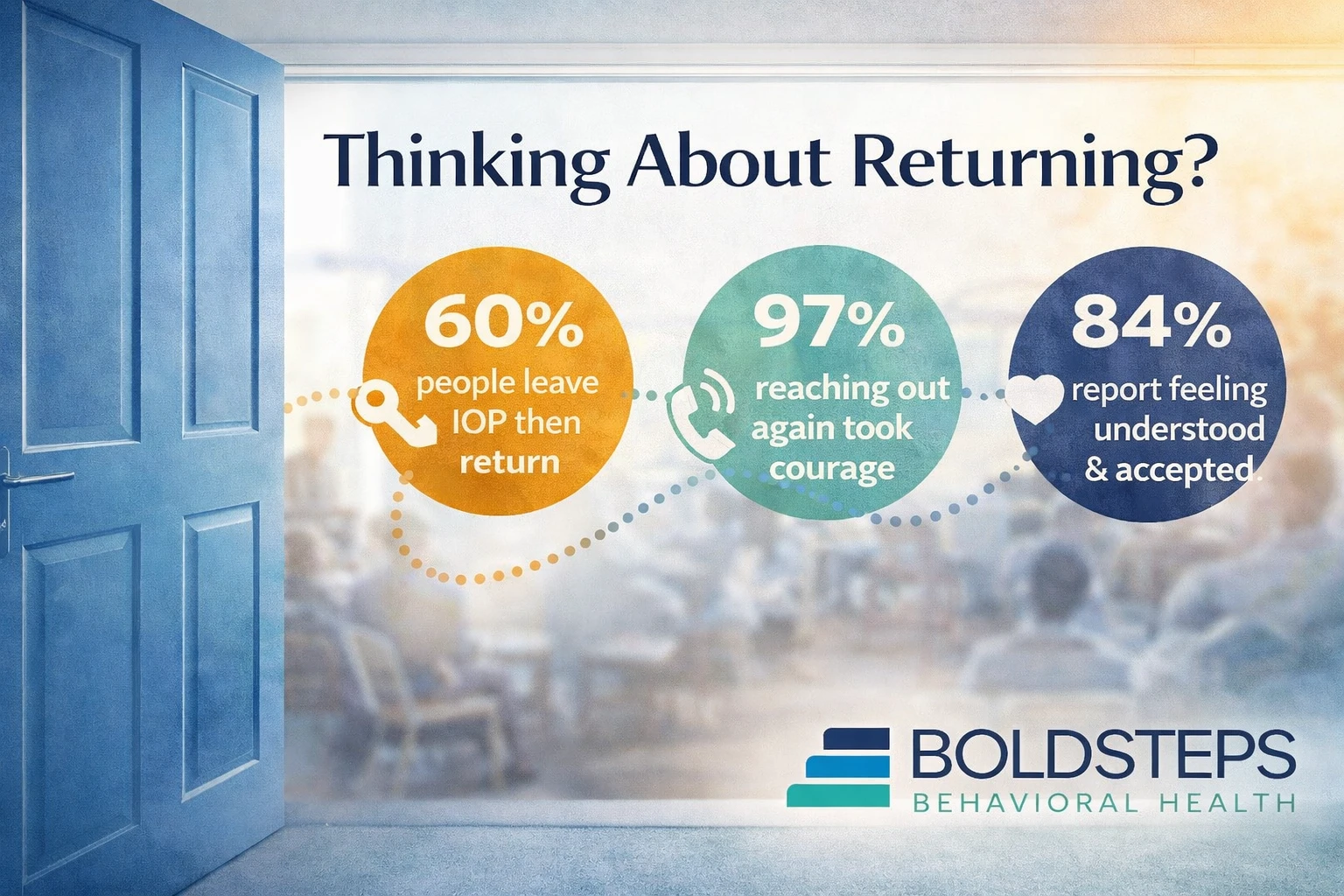
If You’ve Been Using Again, It’s Still Okay to Come Back
Let’s say it plainly: You don’t need to be sober to rejoin IOP.
We don’t expect you to clean yourself up before getting help. That’s like telling someone to stop bleeding before they go to the ER.
If you’ve been using again—whether occasionally or heavily—we’ll talk openly about the safest next step. Sometimes that means a brief stabilization phase. Sometimes that means straight back into IOP. Either way, your reentry is not a failure. It’s a decision to care about yourself again.
This is especially true for people in Hillsborough County, NH, where access to flexible, community-based care like IOP can help avoid long inpatient waits or travel disruptions. If you’re nearby, we can often coordinate a return quickly and locally.
“But I’m Embarrassed to Come Back…”
Yeah. That makes sense.
Shame has a way of making the door look closed, even when it’s not. You might wonder what your group members will think. Or whether your therapist will be disappointed. Or whether you’ll have to explain too much.
Here’s the truth: You’ll be met with more nods than questions. Most people in group have been there—gone quiet, skipped sessions, ghosted their support systems. There’s no grand welcome-back ceremony because… it’s not weird. It’s part of how recovery looks sometimes.
And if group feels like too much too soon, we’ll slow things down. There’s more than one way back in.
You Don’t Have to Re-Tell Your Whole Story
Another common worry is the re-intake dread. Like you’ll be asked to dig up your whole history all over again. We don’t do that here.
If you’ve already been with us, we keep your original care plan, notes, and history on file. We’ll update anything that’s changed, but you don’t have to relive everything. You get to decide what’s helpful to share now—and what can stay in the past.
That said, if something big has shifted (a new diagnosis, a legal situation, a shift in relationships), we’ll work it in without re-traumatizing you. You lead the pace.
Coming Back Is Proof You Still Want Something Better
Let’s flip the narrative: coming back isn’t a sign you failed. It’s a sign you still believe something better is possible.
You didn’t disappear because you didn’t care. You disappeared because something got too heavy, too fast—or too quiet. The fact that you’re reading this right now means the part of you that still wants care… won.
And that part of you? That’s the part we work with.
Maybe you’ve moved since we last saw you. If you’re now closer to Essex County, MA, we can explore remote participation options or refer you to collaborative care in your region. Your history with us still matters—and your next step still belongs here.
FAQs: Coming Back to IOP After Leaving
Will I be judged for leaving or using again?
No. We don’t judge, punish, or shame clients for needing time. If you’ve been using, we’ll support your return safely. Treatment isn’t about perfection—it’s about persistence.
Can I return even if I left months ago?
Absolutely. Whether it’s been two weeks or two years, you can reconnect. We’ll update your plan and reorient you to the program at a pace that works.
Do I have to re-do all my paperwork or start over completely?
Not necessarily. If you’ve been with us before, we have much of your intake info. We’ll check what’s still accurate, update what’s changed, and keep it focused on now.
What if I’m not ready to return full-time?
That’s okay. We can explore transitional steps, reduced schedules, or support outside of group until you’re steady enough for full IOP. This is your pace.
How do I know if IOP is the right level of care this time?
We’ll help you assess that during your re-engagement. If you need a higher or lower level of care, we’ll guide you—no pressure, just clarity.
One Last Thing—The Door Really Is Still Open
We don’t care how long it’s been.
We don’t care how messy it feels.
We care that you’re here now, asking the question: Can I come back?
Yes. You can. And we’re still here, waiting to walk with you—not ahead of you, not behind you, just beside you.
If you’re nearby and looking for support in Rockingham County, NH or Merrimack County, NH, we understand the local needs—and we’re ready to meet you where you are.
Ready to come back without the shame?
Call (603)915-4223 to learn more about our intensive outpatient program in Concord, New Hampshire. You’re always welcome here.