

When I first heard the words dual diagnosis treatment, my stomach dropped.
Not because I didn’t believe in mental health care. And not because I thought I didn’t need support. But because I had just been diagnosed—and suddenly it felt like everything about me was being explained in medical terms I didn’t fully understand yet.
Someone gently suggested I look into dual diagnosis treatment, since my anxiety and substance use were tangled together. They said treating both at the same time could help me feel more stable.
What I heard instead was: They’re going to make me take medication.
And that fear almost kept me from going.
I was newly diagnosed and terrified of losing myself
The diagnosis itself already felt heavy. Like something had been stamped onto my identity without my permission.
I was still trying to understand what it meant—what parts of me were “me,” and what parts were symptoms. Adding medication into that mix felt overwhelming. I worried I’d be changed before I even had time to understand who I was.
I didn’t want to feel numb.
I didn’t want to feel controlled.
I didn’t want to disappear.
What scared me most wasn’t medication itself—it was the idea that I wouldn’t have a say.
I walked in expecting pressure and found patience instead
I showed up to treatment braced for a fight I didn’t want to have.
I was ready to defend myself. Ready to say, “I’m not against medication, I’m just not ready.” Ready to explain that I needed time.
But no one rushed me. No one cornered me. No one said, “This is what we do here.”
Instead, I was asked questions.
Not diagnostic ones. Human ones.
What scared me.
What I hoped for.
What I didn’t want to lose.
That alone made me feel safer than I had in months.
Dual diagnosis treatment wasn’t about forcing anything
One of the biggest misunderstandings I had was thinking dual diagnosis treatment meant medication was mandatory.
It wasn’t.
What it actually meant was that my mental health and substance use were treated as connected—without assuming a single solution. Therapy, group work, coping skills, education, structure. Medication was discussed honestly, but it wasn’t treated like the answer to everything.
It was framed as a tool, not a requirement.
And tools are optional.
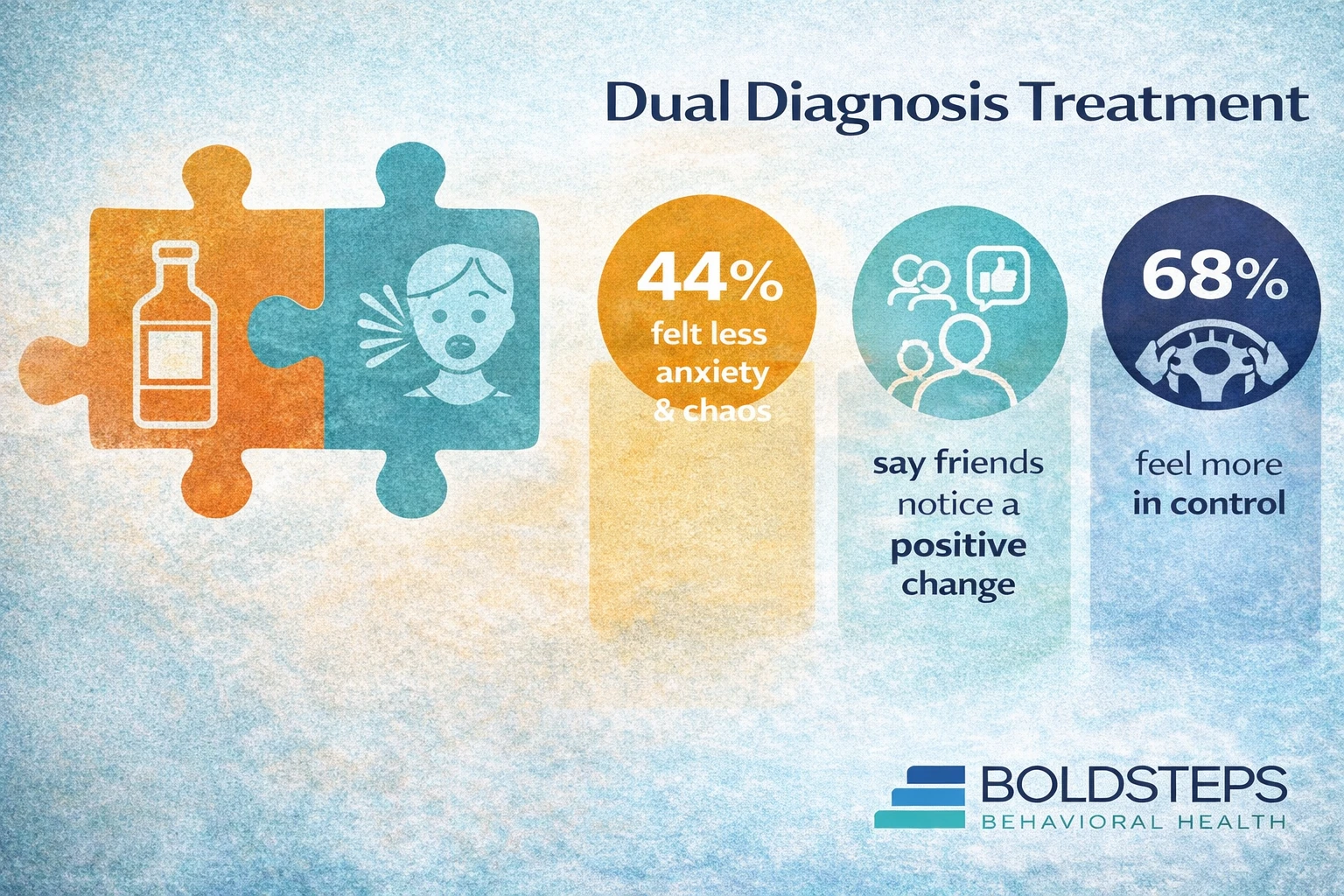
I learned that fear of medication is common—and valid
At one point, I finally admitted it out loud:
“I’m scared medication will change me.”
No one laughed. No one minimized it. No one tried to logic me out of the fear.
They explained something that stuck with me: the goal isn’t to take something away from you. The goal is to quiet the noise enough so you can show up.
That reframed everything.
I didn’t say yes to medication right away—and that was okay
This matters.
I didn’t start medication immediately. I stayed in treatment anyway.
I focused on therapy. On learning what my anxiety actually looked like in my body. On understanding how substances had become a shortcut for relief. On building coping skills that didn’t rely on numbing out.
And no one treated my hesitation like resistance. It was treated like discernment.
Over time, I felt more grounded. More informed. Less afraid.
When I eventually tried medication, it was on my terms
Weeks later—not days—I decided to try a low-dose option.
Not because I was pressured. Because I felt supported enough to choose.
We talked through everything. What side effects to watch for. How long to try it. When to reassess. What “not okay” would look like.
And the biggest surprise?
I didn’t feel erased.
I didn’t feel flat.
I didn’t feel like someone else.
I felt steadier. Like the constant internal static had been turned down just enough for me to breathe.
Therapy finally started to land
Something changed once my nervous system wasn’t constantly on edge.
I could stay present in sessions. I could listen without spiraling. I could reflect instead of react.
The medication didn’t fix me. It gave me space to do the work.
And that distinction matters.
I found care that respected autonomy close to home
Before starting, I assumed this kind of thoughtful care only existed in big cities or specialized centers far away.
But I found it locally, including support that respected my fear and autonomy in Hillsborough County, NH. The clinicians didn’t rush me or label my hesitation as a problem. They treated my fear as part of the process—not something to overcome, but something to understand.
That made all the difference.
Hearing other stories helped me trust my own pace
In group, I met others who shared my fears—especially someone who had come from Essex County, MA and was just as worried about being pushed into medication.
Their experience mirrored mine. Space. Choice. Conversation. No ultimatums.
Hearing that helped me trust that my pace was okay. That there wasn’t one “right” way to heal.
Dual diagnosis treatment didn’t take my voice—it gave it back
That’s the part I didn’t expect.
I thought agreeing to treatment meant handing over control. Instead, I learned how to advocate for myself. How to ask questions. How to notice what worked and what didn’t.
I learned that saying “not yet” was allowed.
I learned that curiosity counts as progress.
I learned that healing doesn’t have to be loud or dramatic.
Sometimes it’s just quieter inside.
FAQs for Anyone Newly Diagnosed and Unsure
Will I be forced to take medication in dual diagnosis treatment?
No. Medication is an option, not a requirement. Ethical programs respect consent and choice at every step.
What if I’m afraid medication will change my personality?
That fear is common and valid. The goal is to help you feel more like yourself—not less. If something doesn’t feel right, it should be addressed immediately.
Can I start treatment without deciding about medication?
Yes. Many people begin with therapy and support alone and revisit medication later—or not at all.
What if I try medication and don’t like it?
You can stop. Adjustments can be made. Your comfort matters.
Is dual diagnosis treatment still helpful without medication?
Absolutely. Therapy, group work, and skill-building are core components regardless of medication use.
If you’re newly diagnosed and scared that treatment might take something from you, I want you to hear this clearly:
You are allowed to be cautious.
You are allowed to ask questions.
You are allowed to move slowly.
The right kind of dual diagnosis treatment won’t force you into anything. It will meet you where you are—and help you figure out what you need, in your own time.
Call (603)915-4223 to learn more about our dual diagnosis treatment in Concord, NH.