

Watching your child use again — especially when they’ve already struggled — can feel like heartbreak on repeat.
You might feel scared. Guilty. Helpless. And above all, you might be asking yourself: Is this my fault? Did we miss something? Is there even a path forward from here?
Your worry matters. Your love matters. And what you’re feeling is real.
If you’re reading this, you’re likely considering what comes next — and that’s brave. One of the steps many families find helpful is exploring depression treatment, not as a retreat or an admission of defeat, but as a forward‑moving form of care rooted in hope.
In this guide, we’ll talk gently and clearly about why depression treatment can be a constructive next step for someone who’s relapsed, how it works, and how it supports healing in a way that’s compassionate and effective.
This is for parents who are tired, worried, and still holding on with care.
Relapse Doesn’t Erase Progress — It Signals a Need for a New Kind of Support
When a young adult relapses after a period of sobriety or partial healing, many parents fear it means everything was in vain.
That’s not true.
Relapse is not a sign of failure.
It’s a signal — not of weakness, but of unmet emotional needs. For many young adults, relapse is tied to untreated or undertreated mental health challenges, especially depression.
Depression doesn’t always show up as sadness. For young adults, it can look like:
- Emotional flatness masked by busyness
- A sense of disconnection from life
- Exhaustion that doesn’t respond to rest
- Loss of enjoyment in things they once cared about
- Increased reliance on substances to feel something different
Your child may not be able to put this into words yet — but the behaviors you’re seeing could be a cry for help rooted in deeper emotional pain.
Depression Treatment Is Not a Step Back — It’s a Different Kind of Strength
Some parents hesitate at the idea of mental health treatment because they worry it looks like giving up.
Here’s the truth: seeking support is courageous, not backward.
Depression treatment is not about labeling someone as “broken.” It’s about giving them tools to understand themselves better, process what they’re feeling, and build resilience that lasts.
This kind of treatment helps in ways that impact both:
- Emotional regulation
- Decision‑making
- Stress management
- Communication and relationships
When a young adult uses again, it’s often because they are trying — imperfectly — to manage something they can’t fully name.
Depression treatment helps them name it, understand it, and move forward with clarity.
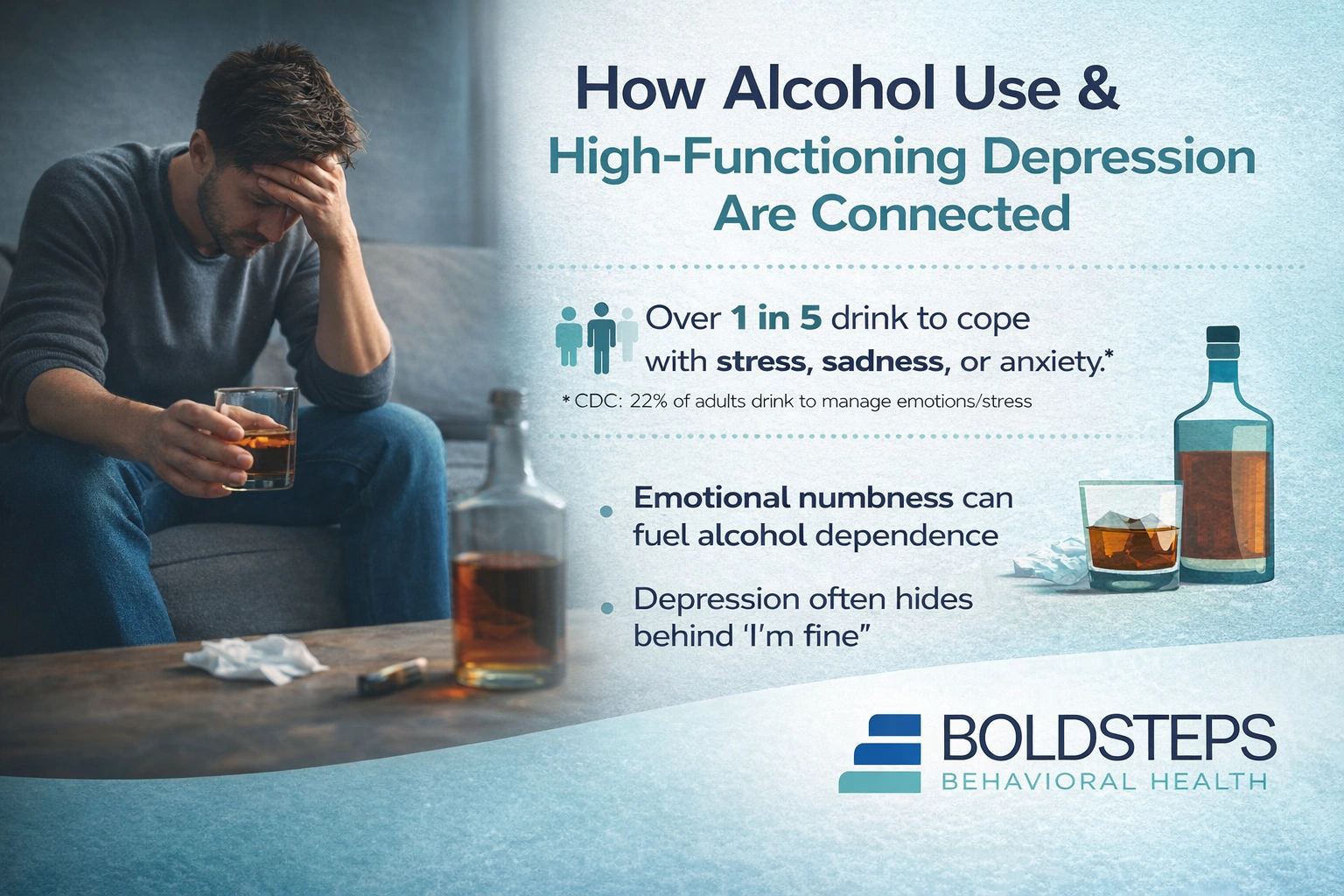
How Depression and Relapse Are Connected
It’s common for young adults (especially around age 20) to be navigating intense identity formation, life transition stress, social pressures, and emotional fluctuations.
That’s normal.
But when these normal challenges meet untreated depression, the risk of unhealthy coping mechanisms — like substance use — increases.
Depression and relapse can feed each other:
- Depression creates emotional pain
- Alcohol or drugs quiet the pain temporarily
- The temporary relief reinforces substance use
- The underlying depression remains or deepens
- Relapse becomes more likely
This cycle isn’t proof of weakness. It’s proof of unmet emotional needs.
That’s where depression treatment comes in — by providing tools that lead to genuine, lasting shifts, not short‑term relief.
What Depression Treatment Looks Like in the Real World
When you hear the phrase “mental health treatment,” you might picture a clinical setting with labels and cold protocols.
The reality — especially at Bold Steps Behavioral Health NH — is more human.
Here’s what depression treatment actually involves:
- Compassionate assessment: We start by listening. Not judging. Not labeling. We want to understand your child’s experience.
- Collaborative care planning: We build a plan with your young adult — not to them.
- Therapeutic support: Talk therapy is a space to explore thoughts, beliefs, and emotional patterns.
- Medication management (when appropriate): Some people benefit from medication to stabilize mood — but it’s never forced or assumed.
- Holistic life support: Sleep, nutrition, social connection, purpose, and routine play big roles in healing.
- Progress pacing: Everyone heals at their own pace. We don’t rush.
There’s no stigma here. There’s space to be honest — even about not knowing exactly how you feel.
Whether your child is in Concord, Merrimack County, Rockingham County, or beyond, care is about meeting them where they are — not where someone else thinks they should be.
Looking for depression treatment in Merrimack County or nearby?
If your family is surrounding areas like Merrimack County, NH, Essex County, MA or Rockingham County, NH, Bold Steps provides depression care that meets young adults where they’re at — with warmth, respect, and personalized support.
Depression treatment can be a foundation your child didn’t have before — one that supports emotional regulation, reduces the urge to self‑medicate, and builds real connection with themselves and others.
The Parent Heart: What You’re Really Feeling
You might be thinking:
- Why is this happening again?
- Did I miss a sign?
- Will this ever get better?
- Is it worth trying again?
All of those feelings are valid. Being a parent in this season is heavy.
But here’s something important: your child’s emotional challenges are not a reflection of your worth.
There is no perfect parent. There is no flawless roadmap.
What matters most now isn’t blame — it’s care.
Depression treatment gives your young adult a partner in healing — a place where they can develop insight, coping strategies, and the emotional stamina to navigate life with less pain and more purpose.
How to Talk About Depression and Treatment With Your Young Adult
Talking to your child about depression and treatment can feel daunting. You might worry about saying the wrong thing.
Here are phrases that open doors rather than shut them:
- “I’ve noticed you haven’t seemed like yourself lately.”
- “I care about how you’re feeling — not just what you’re doing.”
- “You don’t have to figure this all out alone.”
- “I’m here with you — not judging you.”
You don’t need to diagnose or interpret their feelings.
You simply need to show up with curiosity, empathy, and presence.
Sometimes that is the most healing thing a young adult can hear.
What Happens When a Young Adult Begins Depression Treatment
Starting treatment doesn’t mean everything changes overnight.
But it does mean:
- Your child has someone to talk to who is trained to help
- They begin learning patterns that feed distress
- They get tools to manage emotions without substances
- They explore hope beyond numbness
- They build strength, not self‑criticism
Depression treatment isn’t a quick fix — it’s a sustainable way forward.
It transforms responses from avoidance and survival to understanding and growth.
When Should You Consider Depression Treatment?
You might consider seeking care if:
- Your child withdraws from activities they once enjoyed
- They talk about feeling empty or “numb”
- Mood shifts seem persistent, not situational
- They use substances to manage emotions
- Sleep, appetite, or energy patterns have shifted
- They seem disconnected even when life “looks fine”
None of these are signs of blame. They are signs that longer, gentler support can make a real difference.
FAQ: Understanding Depression, Relapse, and What Treatment Offers
Is depression treatment only for people with obvious sadness?
No. Depression can show up as flatness, numbness, irritability, exhaustion, or emotional detachment — even while someone is functioning on the outside.
Does treatment mean medication?
Not always. Some people benefit from therapy alone. Medication is one option that may be helpful — but it’s chosen collaboratively, not assumed.
Will starting treatment make my child feel “labeled”?
Effective care is about empowerment — not stigma. The goal is self‑understanding, not a box on a chart.
Is relapse a sign that treatment failed?
No. Relapse is a sign that emotional needs were still present — and that different or deeper support might help.
Can depression treatment help reduce the urge to self‑medicate?
Yes. By addressing the emotional roots of distress, treatment helps shift coping from avoidance (like substance use) to understanding and resilience.
How long does treatment take?
It varies. Recovery is not a race. Progress is measured in clarity, self‑awareness, and capacity — not speed.
Depression Treatment Is Not a Retreat — It’s a Path With Purpose
Choosing care isn’t giving up.
It’s choosing support.
It’s choosing understanding instead of confusion.
It’s choosing tools over trials.
It’s choosing connection over isolation.
For a young adult navigating relapse, depression treatment can be a game‑changer — not because it erases pain, but because it teaches how to feel through it, and beyond it.
You are not alone in this.
You are not failing.
And your willingness to explore care — even in the midst of fear — is love in action.
When you’re ready to explore compassionate depression care for your young adult:
Call (603) 915‑4223 to learn more about our depression treatment services in Concord, NH.
This step forward is not a retreat — it’s a path toward healing that honors both your child’s struggle and their potential for growth.